We use cookies and other tracking technologies to improve your browsing experience on our website, to show you personalized content and targeted ads, to analyze our website traffic, and to understand where our visitors are coming from.
⚠️
GDPR & Cookie Policy Notice
In accordance with data protection regulations; the use of mandatory cookies is required for the core functions of our website to operate, ensure data security, and perform analytics. If you reject the use of cookies, it is not possible to benefit from the services on our website due to technical limitations and data synchronization interruptions. You must consent to the use of cookies to access the content on our site.
Structural Patterns: System Modernization with Adapter and Facade
Integrating legacy systems that have accumulated technical debt into modern technologies and making them modular is a critical requirement for sustainability. One of the biggest obstacles encountered during the system modernization process is the incompatibility of the existing codebase with new interfaces and the tight coupling between system components.
The Adapter and Facade structural design patterns, defined by the Gang of Four (GoF), are fundamental tools used to overcome such architectural bottlenecks. This article examines the in-depth technical analysis, roles in modernization projects, and implementation strategies of both patterns.
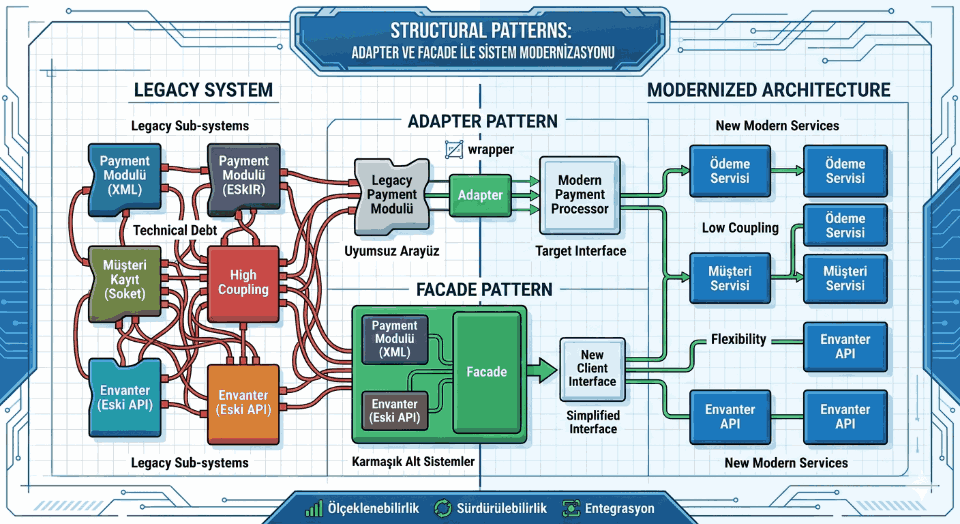
Figure 1: Structural Patterns: System Modernization with Adapter and Facade.
The Adapter pattern converts the interface of a class into another interface that the client expects. It is commonly used in modernization projects through “wrapping” when external libraries need to be updated or when a legacy class must be integrated into a new system.
1.1. Technical Structure and Working Principle
The Adapter pattern can be implemented in two ways: Class Adapter (via inheritance) and Object Adapter (via composition). Modern software principles (Composition over Inheritance) encourage the use of the Object Adapter because it is more flexible.
Target: The domain-specific interface used by the client.
Adaptee: The existing class that has an incompatible interface.
Adapter: The class that implements the Target interface and contains a reference to the Adaptee.
1.2. Application Scenario: Integration of a Legacy Payment System
Suppose an old banking module (LegacyPaymentSystem) needs to be adapted to a modern IPaymentProcessor interface. In the legacy system, payments are performed in XML format with a different parameter order.
// Target Interface (New System)publicinterfaceIPaymentProcessor{
void ProcessPayment(decimal amount, string currency);
}
// Adaptee (Legacy System - Immutable)publicclassLegacyPaymentSystem{
publicvoid ExecuteTransaction(string xmlData)
{
Console.WriteLine($"Legacy System Processing: {xmlData}");
}
}
// Adapter (Bridge Class)publicclassPaymentAdapter : IPaymentProcessor
{
privatereadonly LegacyPaymentSystem _legacySystem;
public PaymentAdapter(LegacyPaymentSystem legacySystem)
{
_legacySystem = legacySystem;
}
publicvoid ProcessPayment(decimal amount, string currency)
{
// Logic to convert modern data into the format expected by the legacy system (XML)string xmlPayload = $"<payment><amt>{amount}</amt><cur>{currency}</cur></payment>";
// Delegation _legacySystem.ExecuteTransaction(xmlPayload);
}
}
1.3. Critical Role in Modernization
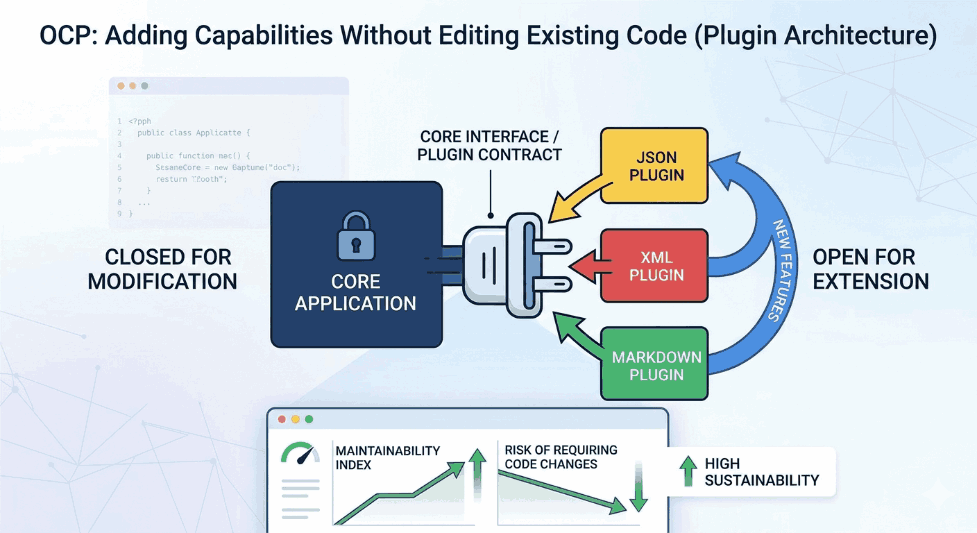
The Adapter enables legacy components to be integrated into a new architecture using a “plug-and-play” logic without affecting the rest of the system (Open/Closed Principle). It is particularly ideal for microservice transformations, allowing the APIs of old monolithic services to be adapted to new service contracts.
2. Facade Pattern: Hiding Complexity and Providing a Simple Interface
As systems grow, the interaction between sub-systems becomes chaotic. The Facade pattern provides a high-level, simplified interface to this set of sub-systems.
2.1. Architectural Layering
The Facade is a single window facing outward for a library, framework, or a complex group of classes. The client does not need to know the lifecycle or the sequence of method calls for dozens of objects in the background.
2.2. Application Scenario: Smart Home Automation
Imagine a smart home system with dozens of independent sub-systems such as lights, air conditioning, security cameras, and sound systems. When the user activates the “Leave Home” mode, all of them must work in coordination.
Legacy systems often have a “Spaghetti Code” structure. When designing a modern interface, rather than leaking all the complexity of the old system directly into the new code, a Facade layer is created. This layer keeps the new code clean and minimizes the dependency on the old system.
3. Adapter and Facade: Comparative Technical Analysis
Although both patterns fall into the “Wrapper” category, their purposes and the solutions they offer differ.
Feature
Adapter
Facade
Primary Goal
Convert an incompatible interface into an expected one.
Present a complex sub-system with a simplified interface.
Interface Change
Changes/adapts an existing interface.
Creates a new interface that covers existing interfaces.
Relationship Count
Generally wraps a single object.
Coordinates numerous sub-system objects.
When to Use
When two different modules cannot talk to each other.
When the system is too difficult and complex to use.
4. Applications in Modern Software Libraries
4.1. Adapter Examples in Java
The java.util.Arrays#asList() method within the Java Standard Library (JDK) is an example of an Adapter. It adapts an array structure to the List interface. Additionally, InputStreamReader adapts an InputStream object to the Reader interface.
4.2. Spring Framework and Facade
RestTemplate or WebClient within the Spring framework can be seen as Facades that simplify complex HTTP protocol operations (connection management, serialization, error handling). The user exchanges data by simply specifying the URL and method.
5. Advanced Strategies for System Modernization
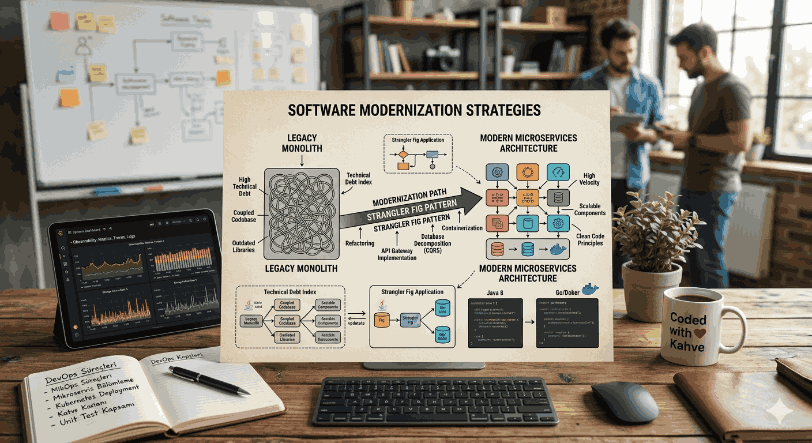
The combination of these two patterns is frequently applied during the modernization process. While applying the “Strangler Fig” pattern, parts of the old system are gradually moved to new services.
5.1. Creating an Anti-Corruption Layer (ACL)
In the Domain-Driven Design (DDD) approach, an ACL is used to protect communication between different domains. Technically, an ACL is a combination of a Facade and multiple Adapters. This layer prevents the “clean” domain model of the new system from being corrupted by the “dirty” data models of the old system.
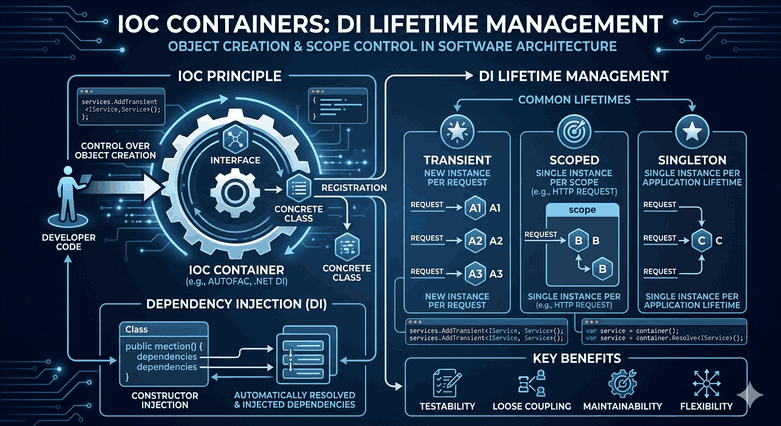
5.2. Dependency Injection (DI) Integration
In modernized systems, Adapter and Facade classes should be registered in DI containers. This allows “Mock” objects to be used instead of actual legacy system components during unit test processes.
// Startup.cs or Program.csservices.AddScoped<IPaymentProcessor, PaymentAdapter>();
services.AddSingleton<LegacyPaymentSystem>();
6. Performance and Scalability Notes
Every wrapper layer theoretically introduces a certain amount of overhead. However, in modernization projects, this cost is negligible compared to the readability and maintainability of the code.
Memory Overhead: Adapter and Facade classes should generally be designed as “stateless.” This simplifies memory management.
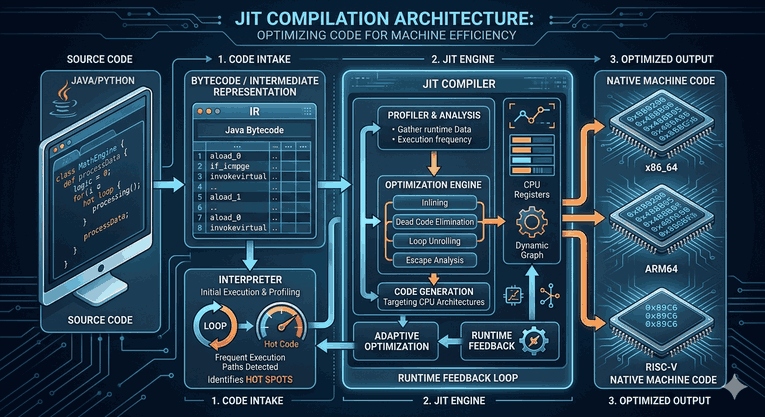
Method Dispatch: Since virtual method calls (vtable lookup) are optimized in modern CPUs and JIT compilers, performance loss is minimal.
Error Handling: The Facade layer is the most appropriate place to convert different error types coming from sub-systems into a centralized error format.
Important Note: A Facade class should not become a “God Object” (a giant class that does everything). If the Facade becomes too large, it should be logically divided into smaller Facade parts.
7. Conclusion
Adapter and Facade patterns are the architect’s most powerful defense mechanisms in legacy system modernization projects, which can be called software archaeology. While the Adapter enables communication by solving technical incompatibilities, the Facade reduces structural complexity to a manageable level.
These patterns, when implemented correctly, extend the lifecycle of systems, increase the speed (velocity) of adding new features, and support agile transformation by minimizing dependencies between teams. Managing technical debt is not just about deleting code, but ensuring the system evolves through such structural patterns.