We use cookies and other tracking technologies to improve your browsing experience on our website, to show you personalized content and targeted ads, to analyze our website traffic, and to understand where our visitors are coming from.
⚠️
GDPR & Cookie Policy Notice
In accordance with data protection regulations; the use of mandatory cookies is required for the core functions of our website to operate, ensure data security, and perform analytics. If you reject the use of cookies, it is not possible to benefit from the services on our website due to technical limitations and data synchronization interruptions. You must consent to the use of cookies to access the content on our site.
Reflection and Meta-Programming: Runtime Code Inspection and Dynamic Object Management
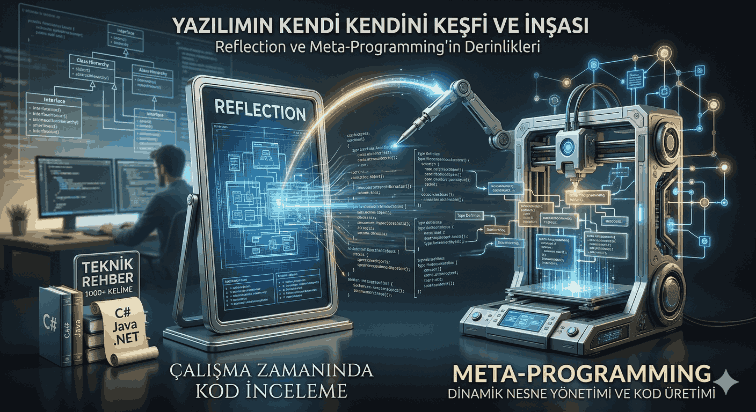
In modern software architectures, flexibility and extensibility are achieved by relaxing the rigid rules imposed by static typing at runtime. Reflection and Meta-Programming are advanced techniques that allow systems to analyze their own structures, modify them, and exhibit new behaviors during execution.
Figure 1: Reflection and Meta-Programming: Runtime Code Inspection and Dynamic Object Management
1. Reflection: Self-Discovery of the Type System
Reflection is the ability of a program to examine its own structure (classes, methods, properties, interfaces) at runtime. In static languages (C#, Java), metadata that is normally determined at compile-time becomes queryable at runtime thanks to Reflection.
Metadata and Manifest Analysis
Every compiled module (Assembly or JAR) maintains a metadata table that contains detailed information about types. The reflection engine can scan this table to determine what parameters a class that has not yet been instantiated takes or which private members it possesses.
Technical Note: Because Reflection requires direct memory access and metadata scanning, it is more costly than standard method calls. “Caching” strategies should be implemented to reduce this cost.
2. Meta-Programming: Code Writing Code
Meta-programming is the process in which programs treat other programs as data and manipulate them. While Reflection only “reads” the existing structure, meta-programming can “modify” this structure or generate entirely new code blocks at runtime.
Compile-time Meta-programming: Generating code during the compilation phase, such as C++ Templates or Rust macros.
Runtime Meta-programming: Modifying object behavior through dynamic object creation, method injection, or decorators.
3. Dynamic Object Management and Invocation
Performing operations on an object without knowing its type at runtime is usually accomplished with System.Reflection (C#) or java.lang.reflect (Java) libraries.
Practical Application: Dynamic Method Invocation with C#
The following example shows how to instantiate a class at runtime based on its name and trigger a private method:
using System;
using System.Reflection;
publicclassCoreEngine{
privatevoid ExecuteInternal(string command)
{
Console.WriteLine($"Hidden command executed: {command}");
}
}
publicclassProgram{
publicstaticvoid Main()
{
// Type information is obtained via string Type type = typeof(CoreEngine);
object instance = Activator.CreateInstance(type);
// Access to the private method is provided MethodInfo method = type.GetMethod("ExecuteInternal",
BindingFlags.NonPublic | BindingFlags.Instance);
// Parameters are passed as an array and the method is invoked method.Invoke(instance, newobject[] { "RECOVERY_MODE" });
}
}
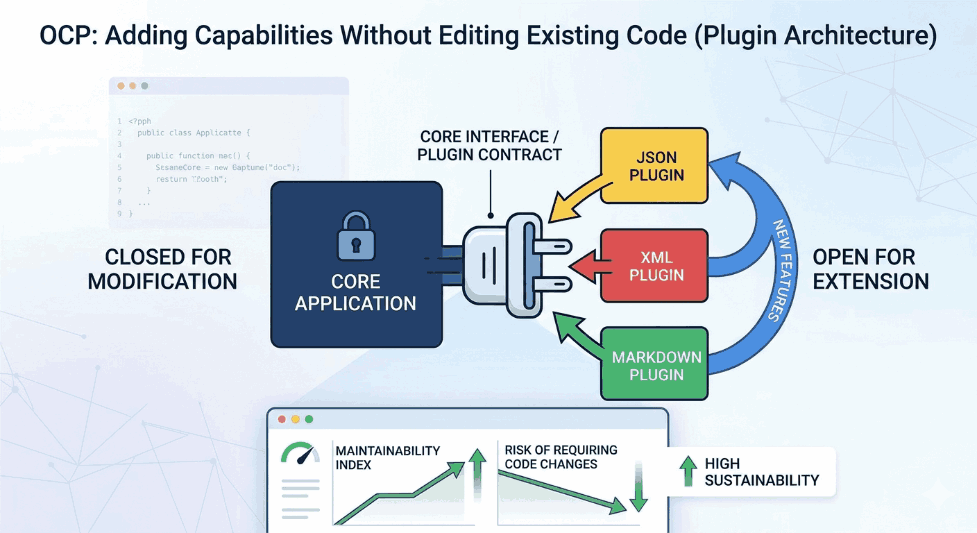
This mechanism allows the main application to load and run external libraries that have not yet been written, especially in plugin-based architectures.
4. Attribute-Based Programming
One of the most powerful uses of Reflection is declarative programming. Meta-tags (Attributes/Annotations) added to code are read by Reflection at runtime to ensure custom business logic is executed.
Validation: Checking whether a property can be empty.
Routing: Determining which method an HTTP request should go to in web frameworks.
ORMapping: Mapping database tables to classes.
5. Intermediate Language (IL) Emitting and Dynamic Proxy
In meta-programming scenarios requiring real-time performance, the IL Emitting technique is used to overcome the slowness of Reflection. This involves generating intermediate language codes (MSIL or Java Bytecode) that are close to the processor level and loading them into memory at runtime.
Creating a Dynamic Proxy
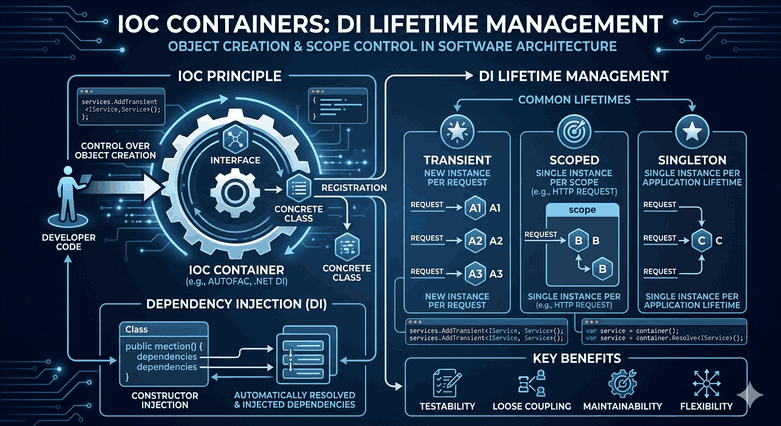
Modern Dependency Injection (DI) containers and ORM libraries (Hibernate, Entity Framework) use Dynamic Proxy to add “Lazy Loading” or “Logging” layers on top of objects. A derivative of the original class is created at runtime, and method calls are managed by intervening (interception).
6. Advanced Libraries and Tools
Some critical libraries that facilitate Reflection and Meta-programming processes and provide performance optimization include:
PostSharp (C#): Provides “Aspect-Oriented Programming” (AOP) support by performing code injection at compile-time.
Byte Buddy (Java): A low-level library used to modify and create Java classes at runtime.
Castle DynamicProxy: The industry standard for intercepting method calls in the .NET ecosystem.
Roslyn (C# Compiler API): A powerful compiler platform that can analyze and regenerate C# code as data.
7. Security and Performance Risk Analysis
High flexibility brings serious risks. When using these techniques, the following points should not be ignored:
Breach of Encapsulation: Access to private fields can disrupt the internal consistency of the class and cause code to break during version updates.
Loss of Type Safety: Code that does not error at compile-time may crash at runtime due to incorrect type matching.
Performance Overhead: Each Invoke operation can be approximately 10-50 times slower than a standard call. Therefore, the use of Reflection in dense loops should be avoided; Delegates or Expression Trees should be preferred instead.
8. Expression Trees
Expression Trees, one of the most elegant forms of meta-programming, is the representation of code as a tree data structure. This structure makes it possible to analyze the code itself and translate it into another language (e.g., SQL). LINQ providers work with this logic; the C# code you write is converted into an SQL query and sent to the database.
// Creating an expression treeExpression<Func<int, bool>> isPositive = x => x > 0;
// Analyzing the expression treevar binaryBody = (BinaryExpression)isPositive.Body;
Console.WriteLine($"Operator: {binaryBody.NodeType}"); // GreaterThan
Conclusion and Architectural Evaluation
Reflection and Meta-programming are the keys to getting rid of repetitive code blocks called “boilerplate” and creating high-level abstractions. However, this power must be restrained with architectural discipline. These tools, which are indispensable for a framework developer, should only be used in end-user application code when necessary (plugin systems, dynamic validations, etc.).
A good software engineer is someone who knows when to stay in the safe harbor of static typing and when to set sail into the dynamic waters of Reflection. The hybrid use of these two worlds in modern systems ensures that both performance and flexibility are maintained.
Note: Debugging processes for code generated at runtime are quite complex. It is critical to establish comprehensive logging and unit test mechanisms when designing such systems.