We use cookies and other tracking technologies to improve your browsing experience on our website, to show you personalized content and targeted ads, to analyze our website traffic, and to understand where our visitors are coming from.
⚠️
GDPR & Cookie Policy Notice
In accordance with data protection regulations; the use of mandatory cookies is required for the core functions of our website to operate, ensure data security, and perform analytics. If you reject the use of cookies, it is not possible to benefit from the services on our website due to technical limitations and data synchronization interruptions. You must consent to the use of cookies to access the content on our site.
Event-Driven Architecture and Asynchronous Messaging in Modern Systems
In today’s distributed systems, with the transition from monolithic structures to microservice architectures, communication strategies between services have begun to play a decisive role in the scalability and resilience of the system. Traditional HTTP-based (REST or gRPC) synchronous communication models can create a “bottleneck,” especially in high-traffic scenarios where dependency between services is high. This is precisely where Event-Driven Architecture (EDA) comes in, offering a high-performance working environment by enabling systems to communicate asynchronously.
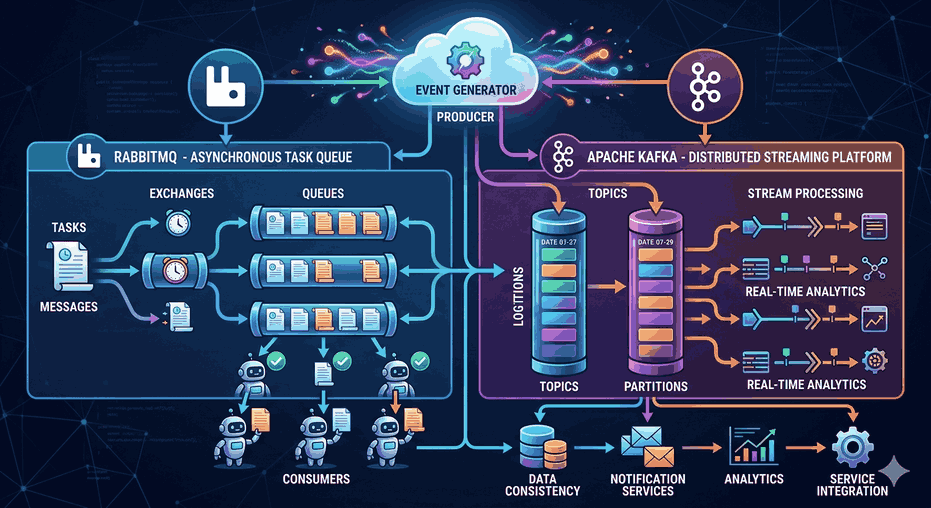
Figure 1: Event-Driven Architecture and Asynchronous Messaging in Modern Systems.
What Is Event-Driven Architecture
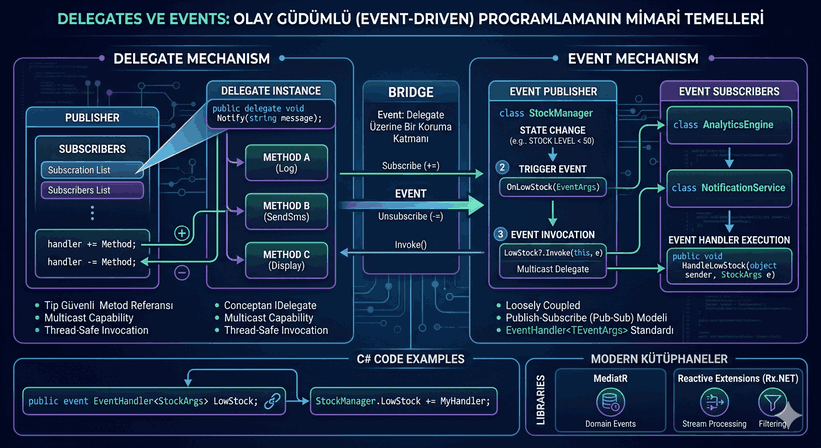
Event-driven architecture is based on the logic that a state change (event) in a system is triggered and processed by other services. The critical point here is that the producer is unaware of the consumer. Services are decoupled; there is a message broker in between.
Advantages of Asynchronous Communication
Low Latency: The service continues with its other tasks without waiting for the operation to finish.
Resilience: Even if the consumer service is down, the message is kept in the queue and processed when the service is back up.
Scalability: When the load increases, you can perform horizontal scaling (scale-out) by simply increasing the number of services consuming the queue.
Message Queue Management with RabbitMQ
RabbitMQ is a traditional message broker based on AMQP (Advanced Message Queuing Protocol). It has an intelligent queuing logic and is preferred for work queues that require more complex routing rules.
Basic Concepts of RabbitMQ
Exchange: The place where messages arrive. It decides which queue to send the incoming message to (Direct, Fanout, Topic, Headers).
Queue: Memory or disk-based structures where messages wait to be processed.
Application Example: RabbitMQ Producer with C# (.NET)
Let’s imagine an order service. When an order is created, we need to trigger the email sending service.
var factory = new ConnectionFactory() { HostName = "localhost" };
using (var connection = factory.CreateConnection())
using (var channel = connection.CreateModel())
{
    channel.QueueDeclare(queue: "email_queue", durable: true, exclusive: false, autoDelete: false);

    var message = "Your order is confirmed: #12345";
    var body = Encoding.UTF8.GetBytes(message);

    channel.BasicPublish(exchange: "", routingKey: "email_queue", basicProperties: null, body: body);
}
Note: RabbitMQ works with a “Smart Broker, Dumb Consumer” logic. That is, the status of the message is managed by the broker.
High-Performance Stream Management with Apache Kafka
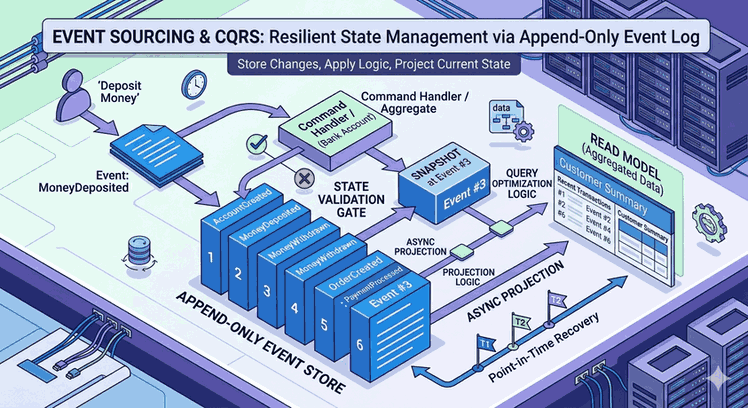
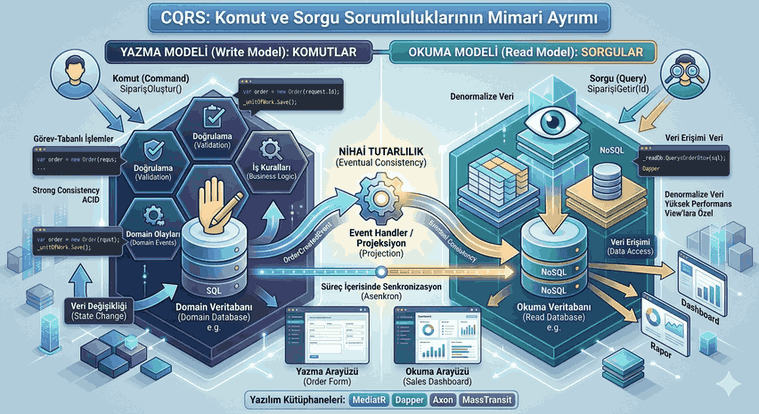
Kafka is more of a Distributed Log structure than a message queue. Kafka does not delete messages; it keeps them on disk for a configured period (retention policy). This makes it perfect for “Event Sourcing” and “CQRS” architectures.
Why is Kafka Different?
Partitioning: Data is divided into partitions, which increases parallel processing capacity immensely.
Consumer Group: Ensures that a message is read by only one consumer within a group.
Pull Model: The consumer pulls the data from the broker at its own pace (in RabbitMQ, the broker pushes the data).
Application Example: Kafka Producer with Java
Kafka is ideal for high-volume data transfer. For example, for a log analysis system:
Although these two technologies appear to be competitors, they actually serve different use cases.
Feature
RabbitMQ
Apache Kafka
Architecture
Message Broker (Smart)
Distributed Log (Passive)
Data Processing
Deleted when finished
Kept for a certain period
Message Routing
Very flexible (Routing key)
Topic-based only
Performance
Moderate (Low latency)
Very high (High throughput)
When to Use RabbitMQ?
If complex routing of operations is required.
For classic “task queue” needs where the message needs to be processed and deleted.
When compatibility with legacy systems is required.
When to Use Kafka?
For Big Data processing or real-time stream processing needs.
In situations like Event Sourcing where historical events need to be replayed.
In systems that require high throughput (millions of messages per second).
Advanced Topics: Error Management and Idempotency
The biggest problem in asynchronous architecture is that the message cannot be processed in case of network errors or service crashes.
Dead Letter Queues (DLQ): Messages that cannot be processed are thrown into a “trash” queue. They are then examined with manual intervention.
Idempotency (Duplicate Transaction Protection): The same message may be consumed twice due to a network error. The system needs to understand when it processes a transaction with the same ID for the second time and not return an error (or not process it). This problem is solved by using UNIQUE constraints at the database level or keeping “processed” flags on Redis.
Conclusion
The right architecture choice determines your project’s growth capacity for the coming years. RabbitMQ is an excellent solution partner for direct communication between microservices with its flexibility and easy setup, while Kafka is indispensable for modern high-traffic architectures where data is accepted as a stream.
The most important rule to remember when moving to an asynchronous structure: “Eventual Consistency.” Writing code with the acceptance that all data in your system will adapt to each other with a delay of a few milliseconds or seconds, not instantly, ensures your survival in the EDA world.