We use cookies and other tracking technologies to improve your browsing experience on our website, to show you personalized content and targeted ads, to analyze our website traffic, and to understand where our visitors are coming from.
⚠️
GDPR & Cookie Policy Notice
In accordance with data protection regulations; the use of mandatory cookies is required for the core functions of our website to operate, ensure data security, and perform analytics. If you reject the use of cookies, it is not possible to benefit from the services on our website due to technical limitations and data synchronization interruptions. You must consent to the use of cookies to access the content on our site.
Boxing and Unboxing Costs: Type Conversions in Performance-Critical Systems
In modern programming languages, especially managed languages like C# and Java, the Object type sits at the top of the type system hierarchy. While this structure allows every type to behave like an object, it creates a significant memory management burden in the background. Boxing and Unboxing operations bridge the gap between Value Types and Reference Types. However, in performance-critical systems (high-frequency trading systems, game engines, or real-time data processing units), these operations are referred to as “silent performance killers.”
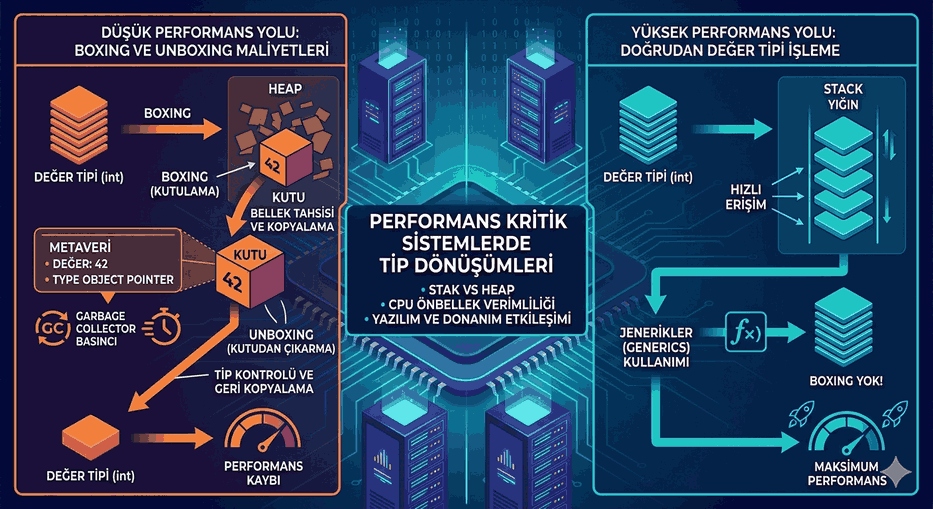
Figure 1: Boxing and Unboxing Costs: Type Conversions in Performance-Critical Systems.
1. Memory Anatomy: Stack vs. Heap
To understand boxing and unboxing, it is first necessary to grasp CPU and RAM interaction.
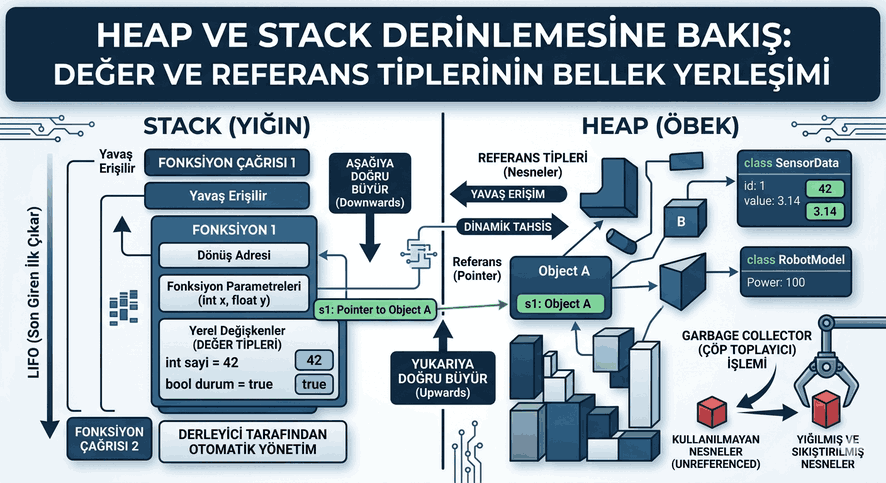
Stack: Operates on the LIFO (Last-In-First-Out) principle. Value types (int, struct, bool, double) are stored here. Access speed is extremely high because it is very close to the CPU’s L1/L2 cache mechanisms and is managed by shifting the Stack Pointer.
Heap: The place where reference types (class, string, array) live. It is dynamically allocated. To access data on the Heap, one must first go to the address (pointer) on the Stack, and then to the actual data pointed to by that address. This entails the cost of Indirection and the potential risk of a Cache Miss.
2. Mechanism of the Boxing Process
Boxing is the process of converting a value type (e.g., an int) into a reference type (object). The steps that occur during this conversion are:
Heap Allocation: The runtime allocates an area large enough to contain the value type, as well as metadata such as “Type Object Pointer” and “Sync Block Index”.
Data Copying: The value on the Stack is copied bit-by-bit to this newly created Heap area.
Reference Return: The address of the new object on the Heap is stored on the Stack.
Technical Example (C#):
int number = 42; // Built-in on the Stackobject boxed = number; // Boxing occurred
This simple operation is as costly as a new operator call in the background. Each boxing operation imposes an additional load on the Garbage Collector (GC).
3. Unboxing: Hidden Dangers of Unboxing
Unboxing is the transfer of the value inside a boxed object back to a value type. Although it appears less costly than boxing, it consumes processor cycles due to type safety checks:
Type Checking: The runtime checks whether the object actually belongs to the target type. If it is an incorrect type, an InvalidCastException is thrown.
Pointer Dereferencing: The starting address of the data on the Heap is found.
Copying Back: The data is copied from the Heap back to the Stack.
4. Performance Analysis and CPU Costs
We can examine the effects of boxing operations on the system under three main headings:
A. GC Pressure (Garbage Collection Pressure)
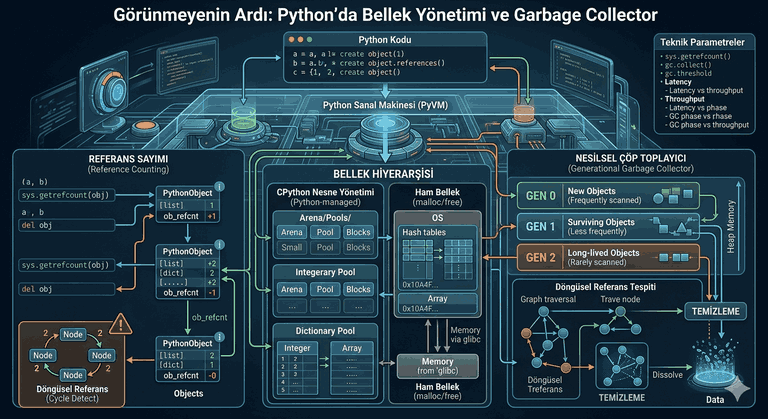
Since the boxing operation creates objects on the Heap, it causes the creation of thousands of short-lived objects. This leads to more frequent Gen 0 collections and causes the application to experience “Stop-the-world” pauses.
B. Memory Fragmentation
Allocating a large amount of small objects can cause the managed heap to become fragmented. This triggers issues where space cannot be found for large object allocations.
C. Cache Locality
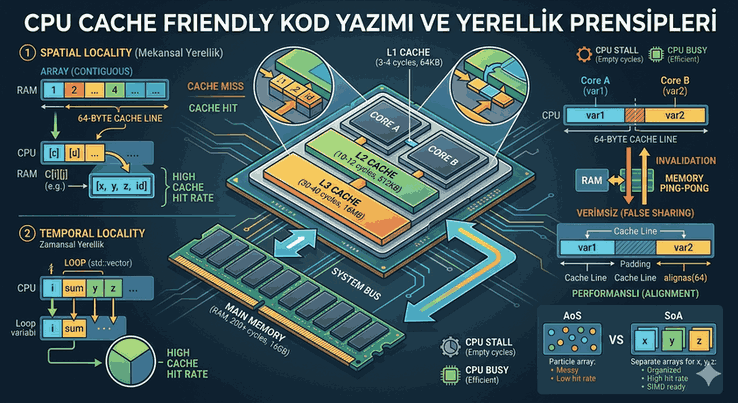
Modern processors are very fast at sequential data access (like an Array of structs). Because boxing distributes data across the Heap, it blunts the CPU’s ability to prefetch data.
5. Critical Scenarios: Where Mistakes Are Made?
Collections and the Pre-Generic Era
Legacy collections like ArrayList or Hashtable hold their elements as object. Every int, float, or struct added to these collections is subjected to boxing.
Bad Practice:
ArrayList list = new ArrayList();
for (int i = 0; i < 1000000; i++) {
list.Add(i); // 1 Million Boxings!}
String Concatenation
When methods like String.Format or Console.WriteLine expect an object as a parameter, boxing is triggered unknowingly.
int speed = 100;
string message = string.Format("Speed: {0}", speed); // speed is boxed here.
6. Optimization Strategies
To avoid boxing in performance-critical systems, the following techniques should be applied:
1. Use of Generics
The System.Collections.Generic library, introduced with .NET 2.0, eliminates boxing by moving type safety to compile-time. When T is a value type, the List<T> structure allocates memory directly according to the size of that type.
List<int> optimizeList = new List<int>(); // No boxing.
2. Caution in Interface Implementations
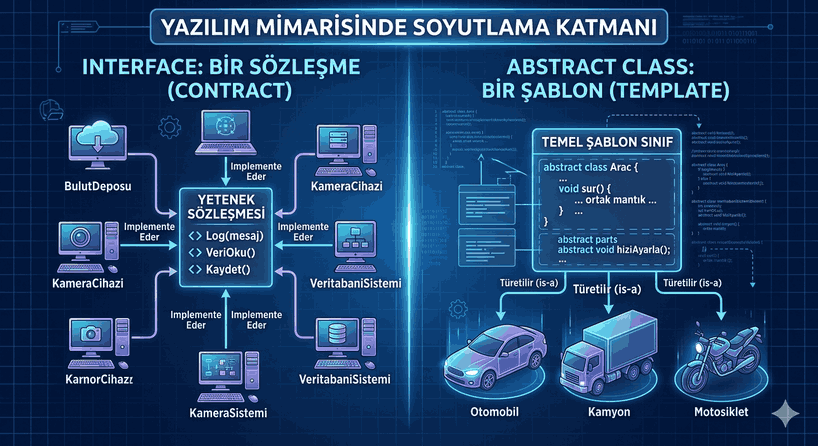
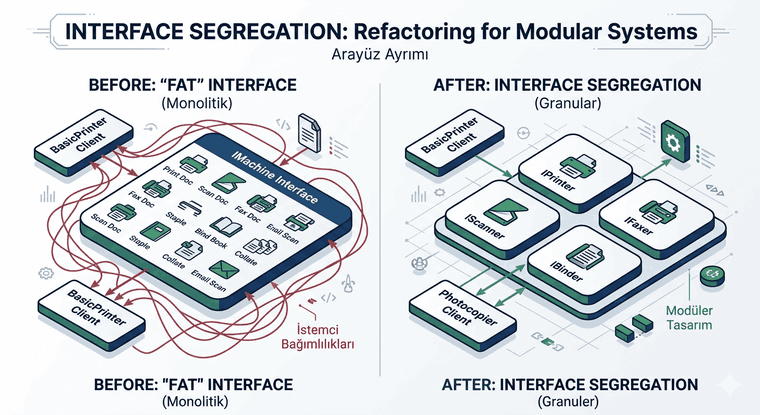
If a struct implements an interface and is called through that interface, boxing occurs.
interfaceIData { void Display(); }
structMyStruct : IData { publicvoid Display() {} }
MyStruct s = new MyStruct();
IData i = s; // Boxing!
Solution: Minimize the cost of copying by designing methods with generic constraints (where T : IData).
3. Enum and Dictionary Relationship
When enums are used as keys in a Dictionary<TKey, TValue>, the default EqualityComparer may perform boxing in the background. Although this is resolved in modern frameworks, writing a custom IEqualityComparer<T> is standard practice in high-performance systems.
7. Hardware-Level Observation: IL Code Analysis
To definitively detect the presence of boxing, one must look at the intermediate language (IL) code. When a code block is compiled, the box instruction is seen where boxing occurs, and the unbox.any instruction is seen where unboxing occurs.
Example IL Output:
IL_0001: ldc.i4.s 42
IL_0003: stloc.0 // int a = 42
IL_0004: ldloc.0
IL_0005: box [mscorlib]System.Int32 // Critical Performance Loss
IL_000a: stloc.1 // object o = a
In low-level optimizations, whether these instructions are inside a loop should be analyzed with libraries like benchmarkdotnot.
8. Benchmark Example: Boxing vs Non-Boxing
The C# code below is designed to measure the cost of two different approaches:
using BenchmarkDotNet.Attributes;
using System.Collections.Generic;
using System.Linq;
publicclassBoxingBenchmark{
[Benchmark]publicint WithBoxing()
{
object val = 0;
for (int i = 0; i < 1000; i++)
{
val = i; // Constant boxing }
return (int)val;
}
[Benchmark]publicint WithoutBoxing()
{
int val = 0;
for (int i = 0; i < 1000; i++)
{
val = i; // No boxing }
return val;
}
}
The results of this test typically show that the WithBoxing method is 5 to 10 times slower than the WithoutBoxing method and produces hundreds of bytes of garbage memory in each loop.
9. Libraries and Tools
The following libraries are essential for tracking boxing in performance-oriented development:
BenchmarkDotNet: Generates reports for your code based on milliseconds and memory allocation.
Clarity/Rider Heap Allocations Plugin: Shows which line is performing boxing with red marks on the editor while writing code.
StructLinq: A library designed to reduce boxing operations in LINQ queries to zero.
Conclusion
Boxing and Unboxing are processes that increase the flexibility of languages but undermine the scalability of software when used uncontrollably. In modern software architecture, “Alloc-Free” programming techniques are on the rise. Especially in fields such as game development (Unity/Unreal), embedded systems, and financial bots, managing value types with struct and ref keywords whenever possible, using generic structures correctly, and minimizing dependence on the object type are the keys to maximizing system performance.
It should not be forgotten that the fastest code is code that is never executed; the most efficient memory is memory that is never allocated.
Notes:
Value Types: Transferred by copy-by-value.
Reference Types: Transferred by copy-by-reference.
ReadOnly Struct: This structure, which comes with C# 7.2+, should be used to prevent hidden costs in struct copies.