We use cookies and other tracking technologies to improve your browsing experience on our website, to show you personalized content and targeted ads, to analyze our website traffic, and to understand where our visitors are coming from.
⚠️
GDPR & Cookie Policy Notice
In accordance with data protection regulations; the use of mandatory cookies is required for the core functions of our website to operate, ensure data security, and perform analytics. If you reject the use of cookies, it is not possible to benefit from the services on our website due to technical limitations and data synchronization interruptions. You must consent to the use of cookies to access the content on our site.
Microservices Orchestration: Containerized System Management with Kubernetes and Docker
As modern software architectures evolve from monolithic structures to microservices-based distributed systems, the management, scaling, and communication of these services have become one of the most critical challenges. Microservices orchestration is a process that automates the lifecycle of containerized applications. In this article, we will discuss industry standards and advanced technical configurations, specifically focusing on Docker and Kubernetes (K8s).
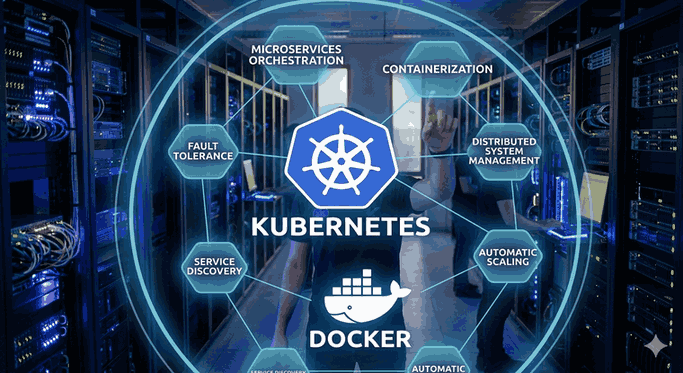
Figure 1: Microservices Orchestration: Containerized System Management with Kubernetes and Docker.
1. Foundation of Containerization: Docker Engine and Advanced Image Optimization
Microservice portability relies on the isolation capabilities provided by Docker. However, in a production environment, image size and security are top priorities.
Layered Structure and Multi-Stage Builds
Docker images consist of read-only layers. The multi-stage build technique reduces the attack surface and improves performance by keeping build tools outside the final image.
# Stage 1: Build environmentFROMgolang:1.21-alpineASbuilderWORKDIR/appCOPY go.mod go.sum ./RUN go mod downloadCOPY . .RUN CGO_ENABLED=0 GOOS=linux go build -o main ./cmd/api# Stage 2: Runtime environmentFROMscratchCOPY --from=builder /app/main /mainCOPY --from=builder /etc/ssl/certs/ca-certificates.crt /etc/ssl/certs/ENTRYPOINT ["/main"]
Note: Using the scratch image eliminates operating system layers entirely, running only the binary file, which maximizes security.
Docker Networking and Namespace Isolation
Docker utilizes the namespaces and cgroups features of the Linux kernel. On the networking side, bridge, host, overlay, and macvlan drivers allow microservices to communicate with each other in either an isolated or shared manner.
2. Kubernetes Architecture: Control Plane and Data Plane
Kubernetes offers a declarative approach for the deployment and management of containers.
Control Plane: Consists of kube-apiserver, etcd (distributed data store), kube-scheduler, and kube-controller-manager components.
Worker Nodes (Data Plane): Hosts kubelet, kube-proxy, and the container runtime (Containerd or CRI-O).
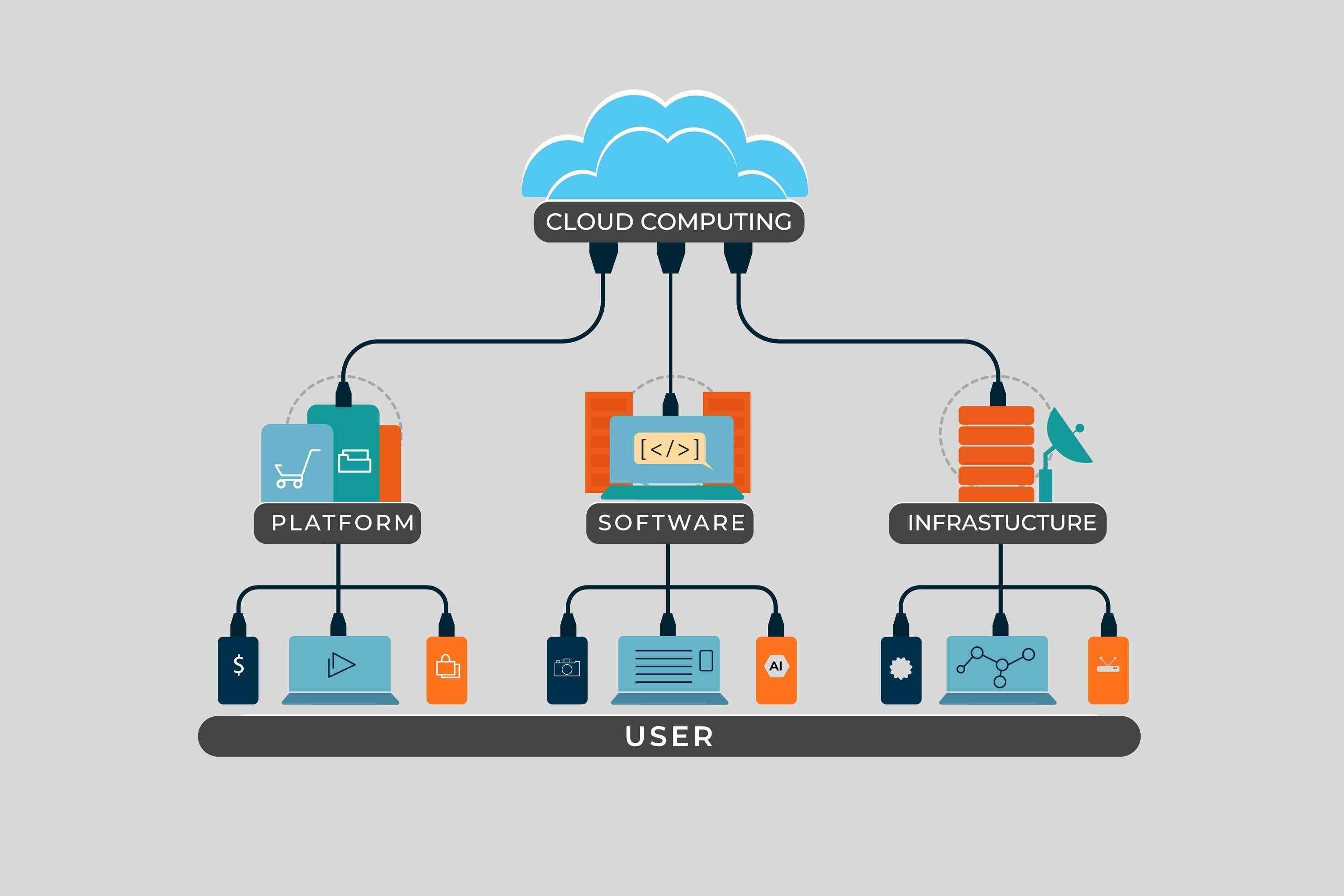
Figure 2: This image explains the three main cloud computing service models: Platform as a Service (PaaS), Software as a Service (SaaS), and Infrastructure as a Service (IaaS). Cloud computing is the delivery of computing services offered on-demand.
Etcd and State Management
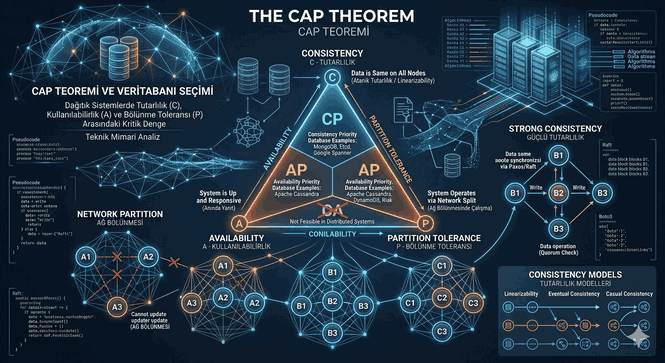
The entire cluster state of Kubernetes is stored in etcd. etcd is a high-availability key-value store that uses the Raft consensus algorithm. Data consistency is a fundamental requirement for orchestration to function without errors.
3. Resource Management and Scheduling Strategies
The kube-scheduler determines which node a Pod will run on in K8s. It uses Resources Requests and Limits parameters when making this decision.
Guaranteed: When Request and Limit values are equal.
Burstable: When Request and Limit values are different.
BestEffort: When no resource definition is provided.
Ensuring critical services are always in the Guaranteed class protects them from resource bottlenecks (OOM Kill scenarios) on the node.
4. Service Discovery and Traffic Management
Microservices have dynamic IP addresses. The Kubernetes Service object provides a stable abstraction layer over this dynamic structure.
CoreDNS and Cluster-Internal DNS
Every service within K8s receives a DNS record in the format <service-name>.<namespace>.svc.cluster.local. This allows microservices to find each other using fixed names.
Ingress Controller and Layer 7 (L7) Routing
Ingress manages HTTP/HTTPS traffic coming from the outside world. Nginx Ingress Controller or HAProxy are commonly used.
5. Service Mesh: Inter-Microservice Communication Security
Standard K8s network management may be insufficient for advanced traffic control (canary deployment, circuit breaking) and observability. At this point, Service Mesh structures like Istio or Linkerd come into play.
Sidecar Proxy Model
An Envoy proxy container is placed next to every Pod. All traffic passes through this proxy.
mTLS (Mutual TLS): Communication between services is encrypted by default.
Circuit Breaking: When a service starts to fail, it cuts off traffic to prevent the entire system from crashing.
6. Persistent Data Management: PV, PVC, and StorageClass
Containers are ephemeral by nature. Kubernetes offers PersistentVolume (PV) and PersistentVolumeClaim (PVC) mechanisms to make data persistent.
Dynamic Provisioning: By working in integration with cloud providers (AWS EBS, GCE Persistent Disk), a disk space of appropriate size is created automatically when a PVC is requested.
Access Modes:ReadWriteOnce (single node access), ReadOnlyMany (multiple read), ReadWriteMany (shared write/read - such as NFS/Ceph).
7. Automation: Horizontal Pod Autoscaler (HPA) and VPA
The system must react automatically when the load increases.
HPA Algorithm
HPA monitors CPU or memory usage and increases the number of replicas.
Seamless updates are essential in a microservice architecture.
Rolling Update: New Pods are opened while old version Pods are slowly shut down. It is the default method for K8s.
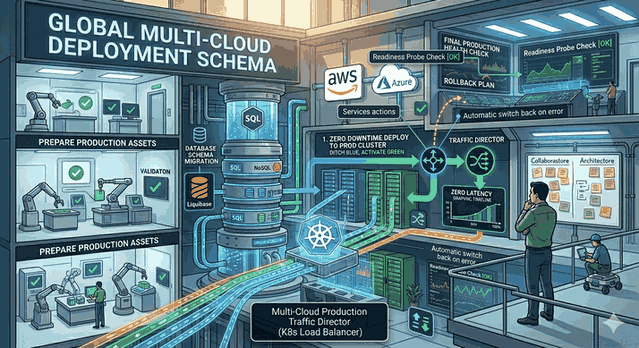
Blue/Green Deployment: Two full environments (Blue and Green) are ready. Traffic is shifted from the old to the new at once.
Canary Release: The new version is distributed to receive only a small portion (5%-10%) of the total traffic.
Conclusion and Technical Assessment
Microservice orchestration is not just about running containers, but ensuring that these containers interact with each other in a secure, scalable, and manageable way. While Docker sets the packaging standard, Kubernetes manages the operational complexity of these packages at production scale.
For an advanced system architect, it is not enough to just write YAML files; every detail from packet transmission at the network layer (iptables/ipvs) to the latency of storage units, from mTLS overhead on the service mesh to the write density on etcd must be optimized. This ecosystem continues to form the backbone of modern cloud-native applications, supported by constantly evolving CNCF (Cloud Native Computing Foundation) projects.
Technical Note: For apiServer security in Kubernetes configurations, disabling anonymous access and encrypting etcd data at rest are enterprise-level requirements. Furthermore, configuration management should be templated using tools like Helm or Kustomize and integrated into CI/CD processes (GitOps - ArgoCD/Flux).