We use cookies and other tracking technologies to improve your browsing experience on our website, to show you personalized content and targeted ads, to analyze our website traffic, and to understand where our visitors are coming from.
⚠️
GDPR & Cookie Policy Notice
In accordance with data protection regulations; the use of mandatory cookies is required for the core functions of our website to operate, ensure data security, and perform analytics. If you reject the use of cookies, it is not possible to benefit from the services on our website due to technical limitations and data synchronization interruptions. You must consent to the use of cookies to access the content on our site.
OAuth2, OpenID Connect, and Zero Trust: Modern Authentication and Network Security Architectures
In the modern digital ecosystem, security is no longer about building a perimeter defense; it is based on the continuous verification of every data packet and identity credential. The traditional “trust but verify” approach has been replaced by the “never trust, always verify” principle, known as Zero Trust architecture. The cornerstones of this architecture are the OAuth 2.0 and OpenID Connect (OIDC) protocols.
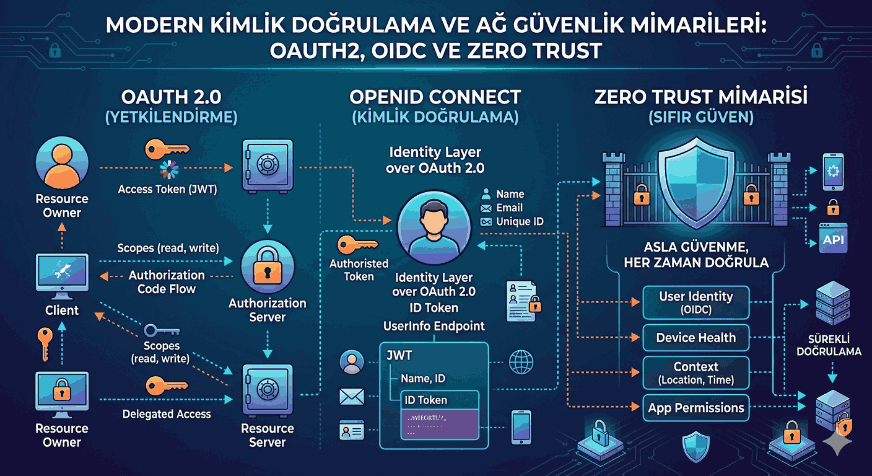
Figure 1: OAuth2, OpenID Connect, and Zero Trust: Modern Authentication and Network Security Architectures
1. OAuth 2.0: Delegated Authorization
OAuth 2.0 is an authorization framework that allows a user to grant limited access to third-party applications without sharing their password. Technically, it is an “authorization” protocol, not an “authentication” protocol.
Key Actors and Grant Types
There are four main roles in the OAuth 2.0 architecture:
Resource Owner: The user who grants access to the data.
Client: The application that wants to access the resource.
Authorization Server: The server that authenticates the user and issues tokens.
Resource Server: The API where the data resides and which is accessed using an Access Token.
Technical Implementation: Authorization Code Flow
The process of obtaining a token via Authorization Code Flow, which is the most secure method in modern web applications, is as follows:
# 1. Redirecting the user to the authorization pageGET /authorize?
response_type=code&
client_id=CLIENT_ID&
redirect_uri=CALLBACK_URL&
scope=read_profile&
state=xyz123
# 2. Exchanging the authorization code for an Access Token (server-side)POST /token
grant_type=authorization_code&
code=AUTHORIZATION_CODE&
redirect_uri=CALLBACK_URL&
client_id=CLIENT_ID&
client_secret=CLIENT_SECRET
2. OpenID Connect (OIDC): Identity Layer
While OAuth 2.0 provides authorization, it does not specify who is logging in. OIDC is an authentication layer built on top of OAuth 2.0. The fundamental difference is the introduction of the ID Token concept.
ID Token and JWT Structure
OIDC uses the JSON Web Token (JWT) format to carry identity information. A JWT consists of three parts: Header, Payload, and Signature.
Header: Information about the algorithm and type.
Payload: User claims (name, email, issuer, expiration).
Signature: The signature that proves the token has not been altered.
Token Verification Example with Python (PyJWT):
import jwt
# Token verification on the Resource Server sidedefverify_token(token, public_key):
try:
payload = jwt.decode(token, public_key, algorithms=['RS256'], audience='my-api')
return payload
except jwt.ExpiredSignatureError:
return"Token expired."except jwt.InvalidTokenError:
return"Invalid token."
3. Zero Trust Networking (ZTN): Perimeterless Security
Zero Trust is a strategic model where no one inside or outside the network is trusted by default. It is built on “micro-segmentation” and the “Principle of Least Privilege.”
Three Pillars of Zero Trust Architecture
Verify Explicitly: Always verify based on all available data points, such as user identity, location, device health, and data classification.
Use Least Privileged Access: Limit risks with Just-In-Time and Just-Enough-Access (JIT/JEA).
Assume Breach: Divide the network into small segments (micro-segmentation) to minimize the attack surface. Apply end-to-end encryption and analytics.
4. Technical Integration: OAuth2/OIDC and Zero Trust Relationship
In a Zero Trust architecture, OAuth2 and OIDC act as the Policy Enforcement Point (PEP). When a user requests access to a resource, the system does not just check the password; it examines the “context” information in the ID Token provided via OIDC.
Security Libraries and Tools
Popular libraries used to implement these protocols in modern architectures:
In “public client” architectures like mobile and Single Page Applications (SPA), the client_secret cannot be kept secure. PKCE uses a temporary secret key (code verifier) to prevent code interception attacks.
mTLS (Mutual TLS)
In a Zero Trust architecture, not only does the client verify the server, but the server also checks the client’s certificate. In OAuth 2.0, with the Sender-Constrained Tokens mechanism, the token is bound to the client’s TLS certificate, preventing it from being used on another device even if stolen.
6. Identity Management in Microservices
In a microservices architecture, each service is a Resource Server on its own. Requests generally pass through an API Gateway.
Edge Authentication: The API Gateway uses OIDC to verify requests coming from the outside world.
Internal Token Exchange: In communication between internal services, the original token can be exchanged for a new token with more restricted permissions.
Notes and Critical Warnings
NOTE 1: Never use the Implicit Grant flow; this flow has been removed from the OAuth 2.1 specification due to security vulnerabilities. Instead, the Authorization Code Flow with PKCE support should be preferred.
NOTE 2: Keep the token expiration time short. For long-term sessions, use Refresh Tokens and store these tokens in secure (HttpOnly, Secure cookies) areas.
NOTE 3: Zero Trust is a process, not a product. Using only OIDC does not make you “Zero Trust”; it must be supported by device health checks and behavioral analytics (UEBA).
Conclusion
Modern security architecture has evolved into the Zero Trust philosophy, where authentication (OIDC) and authorization (OAuth 2.0) are dynamically re-evaluated with every transaction. For developers, this means more than just library integration; it means controlling data and access down to the smallest level of granularity. Strong encryption, strict identity verification, and continuous monitoring are indispensable for the success of this tripartite structure.