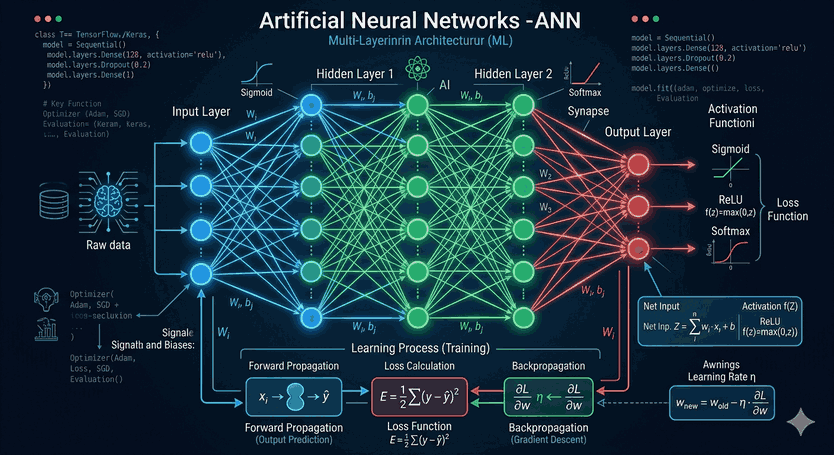
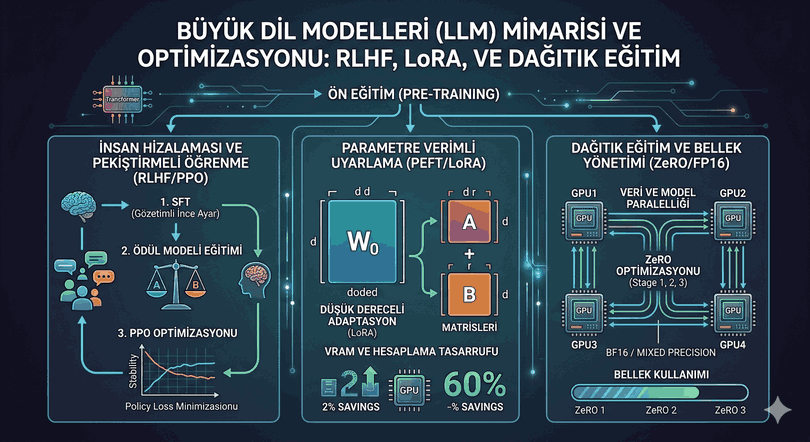
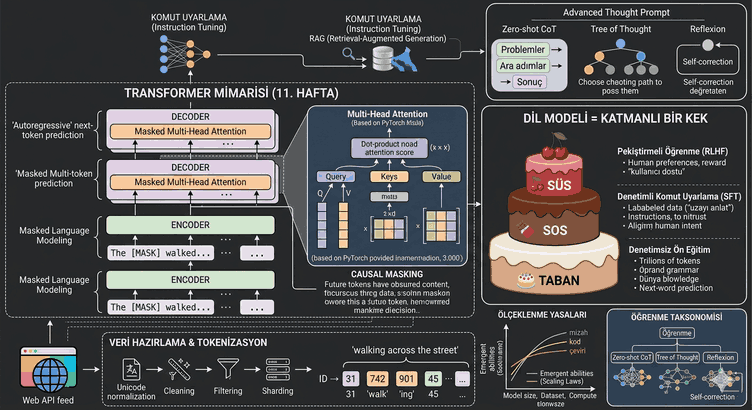
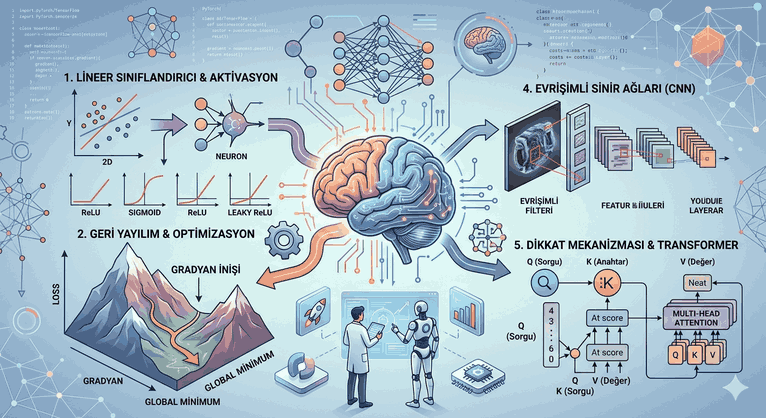
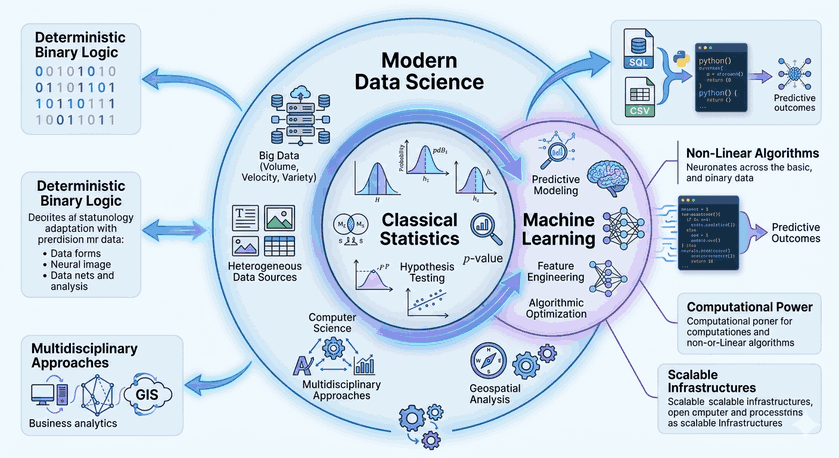
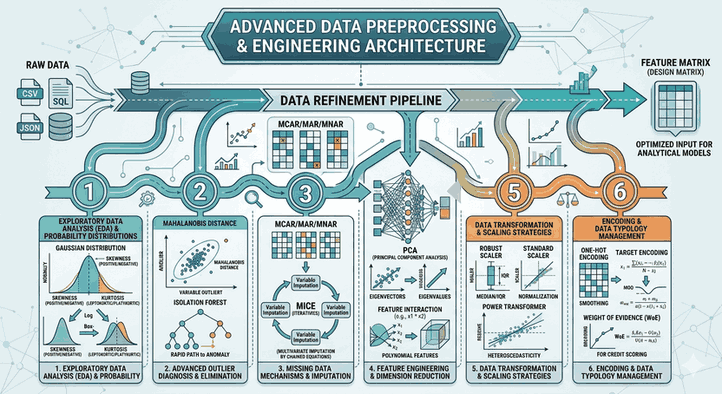
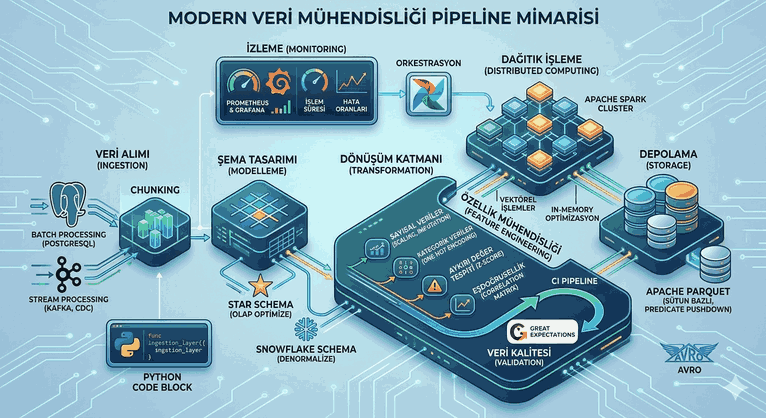
The Layered Architecture and Algorithmic Depth of Machine Learning

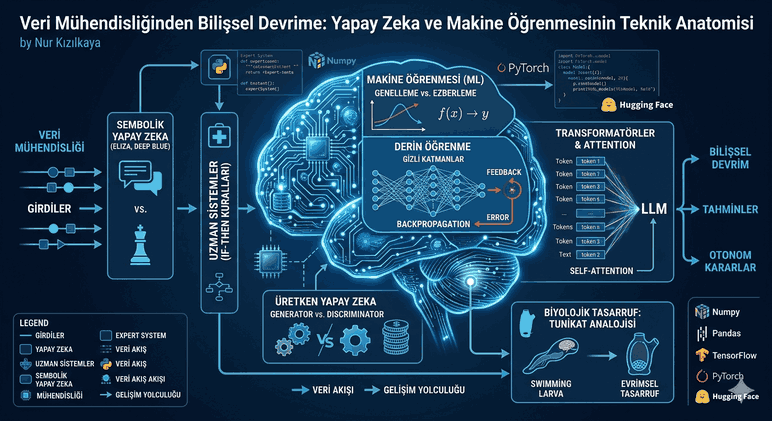
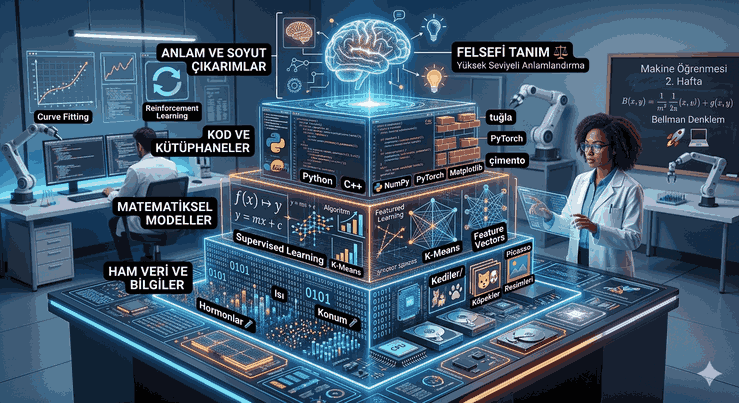
The artificial intelligence and machine learning ecosystem is built upon a vertical hierarchy that extends from raw data to abstract inferences. This journey begins at the lowest level with hardware and machine language, and concludes at the highest level with philosophical deductions and high-level cognitive modeling. For an engineer, understanding the transition between these layers means not just writing code, but mastering the behavioral mechanics of the system.

The Layered Architecture and Algorithmic Depth of Machine Learning

Figure 1: The Layered Architecture and Algorithmic Depth of Machine Learning.


The Hierarchical Ladder from Data to Understanding

Information is inherently layered. While the lower layers represent concrete, measurable, and deterministic data (e.g., hormone levels in a biological process), the upper layers contain abstract concepts (like the philosophical definition of happiness) that emerge from processing this data. In machine learning, this hierarchy is the process of transitioning from low-level features to high-level representations.

In a technical context, proceeding to the coding phase without absorbing the mathematical models is akin to setting sail on the ocean without a compass. In debugging and model optimization processes, one must master the underlying calculus and linear algebra structures to understand why an algorithm fails.

The Role of Programming Languages and Memory Management

In the software world, languages are distinguished by their levels of abstraction. While languages like C++ offer high efficiency in terms of memory management (heap/stack control) and writing CPU-friendly code, the learning curve is steep. The reason Python dominates modern machine learning projects is the rich library ecosystem it offers.

Python conceals low-level complexity through “wrapper” libraries, allowing researchers to focus on algorithmic logic. For instance, while NumPy accelerates matrix calculations with vectorized operations, libraries like PyTorch and TensorFlow automate tensor operations and gradient calculations.

import numpy as np

# Matrix operations: The basis of linear algebra
def optimize_weights(X, y):
    # Closed-form solution (Normal Equation): theta = (X^T * X)^-1 * X^T * y
    weights = np.linalg.inv(X.T @ X) @ X.T @ y
    return weights

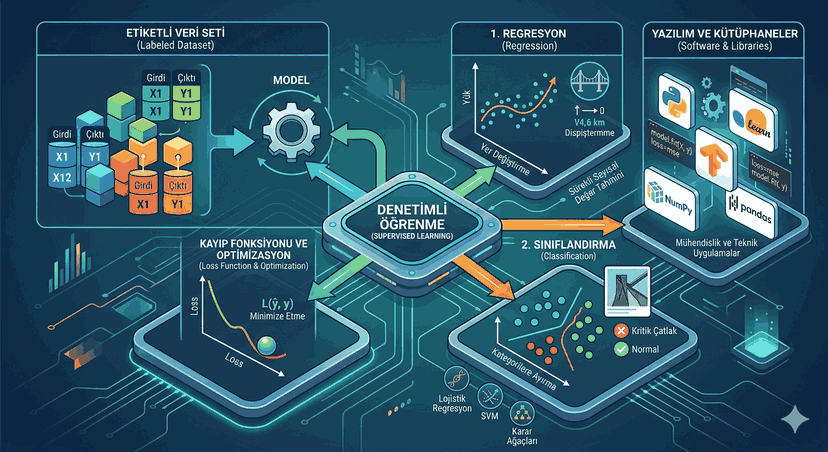
Supervised Learning and Function Convergence

Supervised Learning is the process of establishing a mapping $f(x) \rightarrow y$. Here, as the input dimension increases, the model’s capacity to capture complex relationships within the data also increases. Today’s massive language models (LLMs) are essentially performing a multi-dimensional “curve fitting” operation.

Two critical concepts emerge in this process: Interpolation and Extrapolation.

  • Interpolation: The model generating new predictions by filling in the gaps within the training data range. The “creativity” of artificial intelligence usually occurs in this safe zone between existing data points.
  • Extrapolation: Making predictions in regions outside the scope covered by the training data. It is statistically risky because the model is expected to generalize in a distribution it has not seen. The fundamental difference that distinguishes human intelligence from machines is the ability to perform accurate extrapolation starting from limited data.

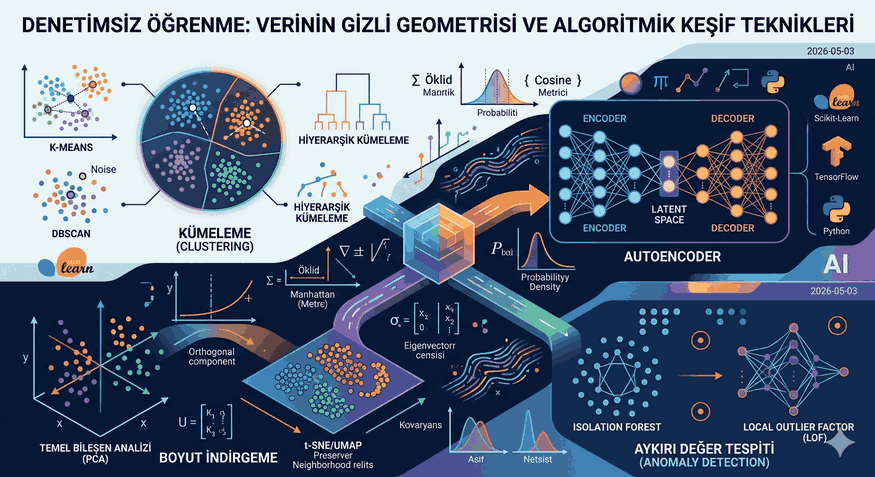
Unsupervised Learning: The Hidden Geometry of Data

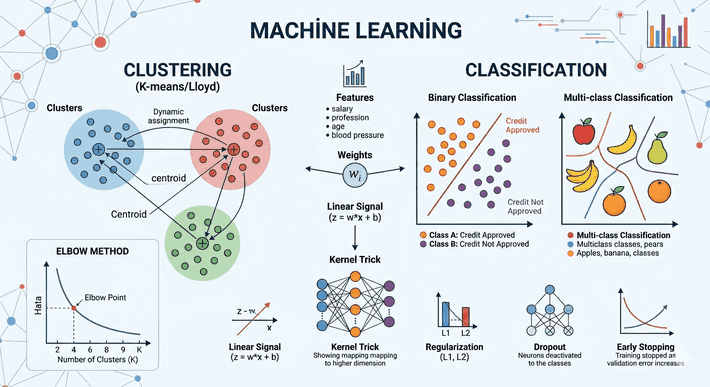
In scenarios where data is unlabeled, Unsupervised Learning comes into play. This approach analyzes the topological structure and clustering tendencies of the data. For example, manually labeling half a million images of cats and dogs is an operational nightmare. Unsupervised models separate data into their natural groups by analyzing feature vectors (color distribution, ear structure, size).

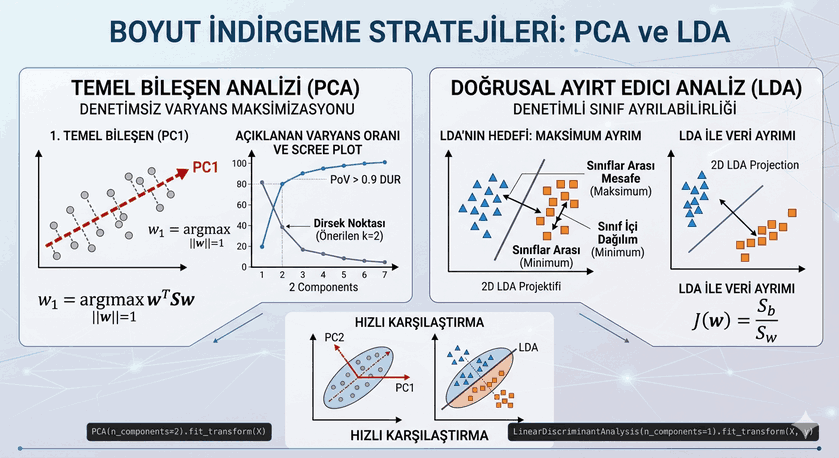
Techniques like K-Means or PCA (Principal Component Analysis) aim to preserve the most important information (variance) by reducing the dimensionality in the data.

from sklearn.cluster import KMeans

# Clustering data based on features without labeling
model = KMeans(n_clusters=2)
clusters = model.fit_predict(image_features)

Reinforcement Learning: Dynamic Decision Mechanisms

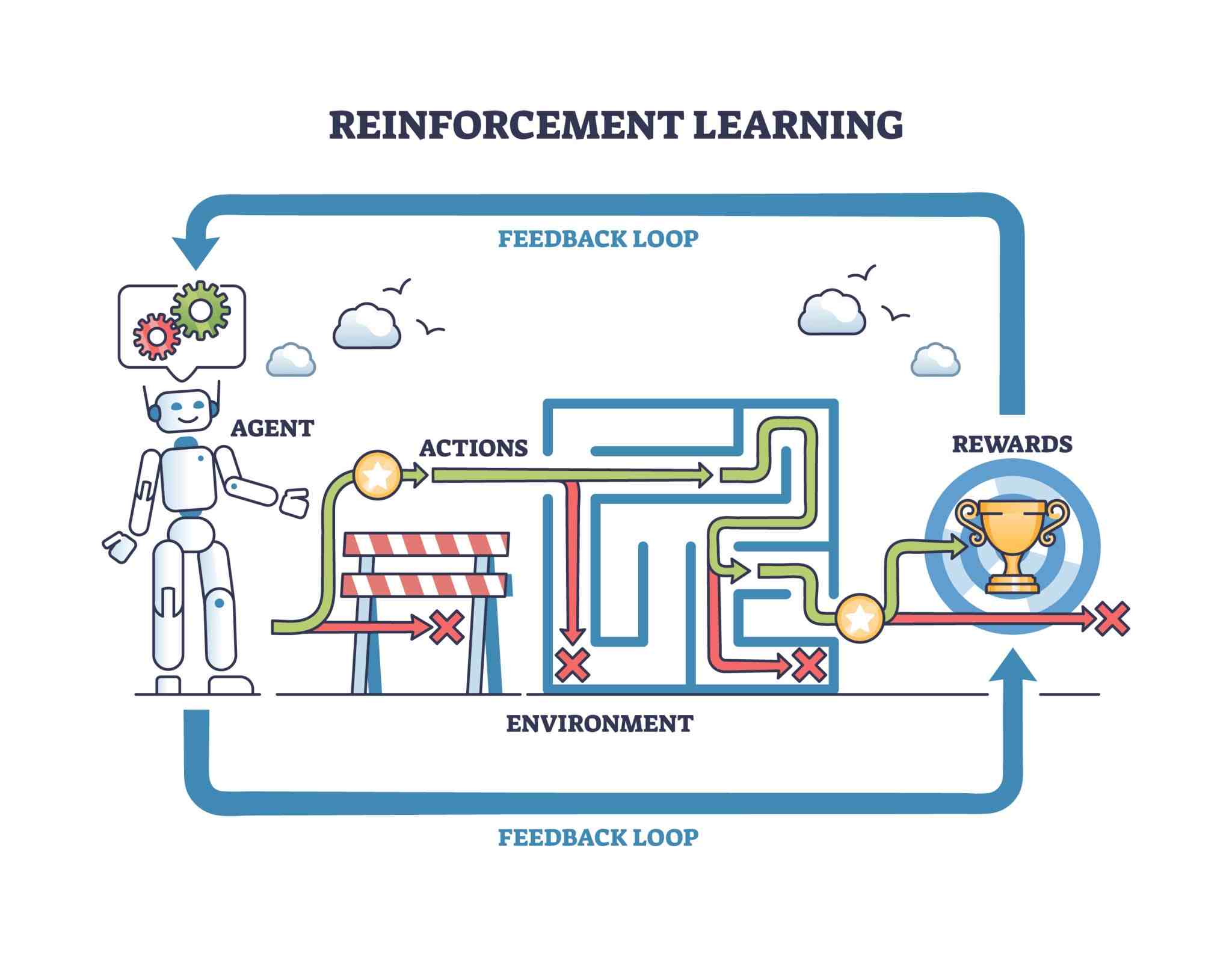
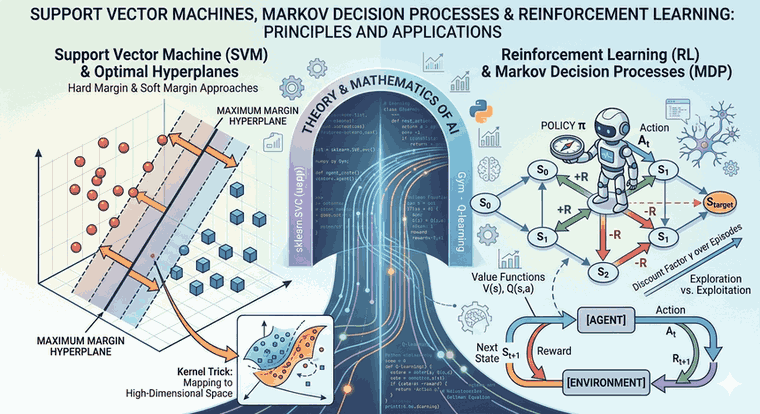
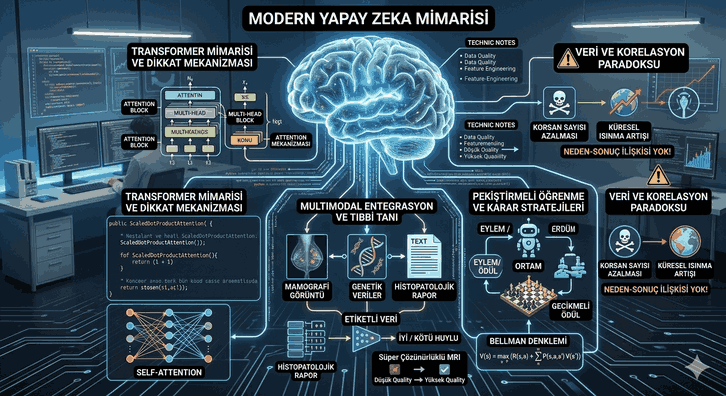
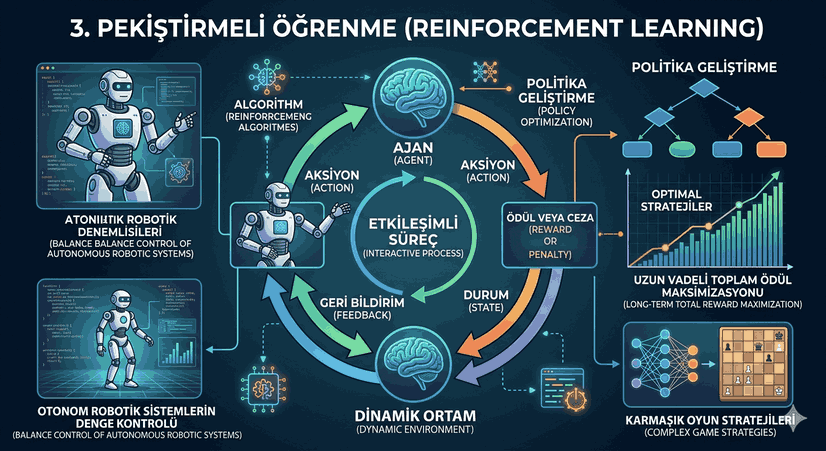
Reinforcement Learning (RL) is the process of an agent learning the strategy (policy) it must follow to collect the maximum reward in an environment. RL is unrivaled in delayed reward problems. In games like Chess or Go, the correctness of a move made is not apparent immediately, but rather at the end of the game.

The fundamental components of RL:

  1. State: The agent’s current position or data.
  2. Action: The moves the agent can perform.
  3. Reward: The feedback received as a result of an action.
  4. Policy: The mapping function from states to actions ($\pi$).
Reinforcement Learning

Figure 2: Reinforcement Learning.

Mathematically, RL is built upon Bellman equations. The value of a state ($V(s)$) is the sum of the immediate reward to be received from that state and the expected future rewards.

Note: The “Exploration vs. Exploitation” balance is critical in RL algorithms. The agent must choose between following the path it knows (exploitation) and exploring new and potentially more profitable paths (exploration).

Convex Optimization and Stability

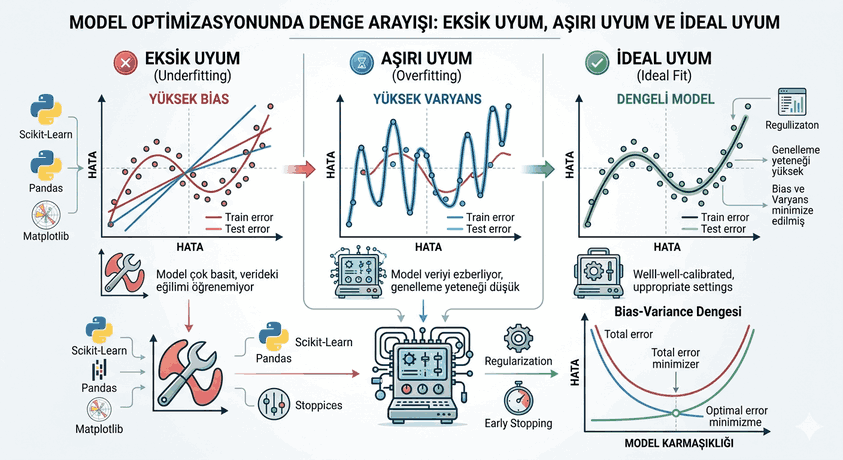
In machine learning, training models is essentially an optimization problem. We try to minimize a cost function (loss function). If the function is Convex, local minima are equal to the global minimum; this guarantees that the algorithm will stably reach the best result. In more complex fields like RL, functions are generally not convex, which is why hyperparameter management and architectural design are vital.

Conclusion and Future Projection

Machine learning is a field inspired by nature but shaped by mathematical discipline. From the neurobiological origins of neural networks to the attention mechanisms of modern Transformer architectures, data gains meaning layer by layer. Future systems will be “intelligent” structures capable of making logical inferences not just by processing existing data, but in areas where no data exists (extrapolation).

To succeed in this journey, one must never forget how the low-level mathematical engine works while taking advantage of the conveniences offered by high-level libraries.


Technical Notes:

  • Model Complexity: Using unnecessarily high-dimensional input increases the risk of “Overfitting.”
  • Data Quality: The “Garbage in, garbage out” principle always applies; cleaning and normalizing data is more critical than algorithm selection.
  • Hardware Acceleration: Using GPU (CUDA) or TPU instead of CPU for large datasets can shorten training times by thousands of times.
#ai #veri-analizi-okulu #vao #python #deep-learning #reinforcement-learning #data-science #machine-learning

Related Contents

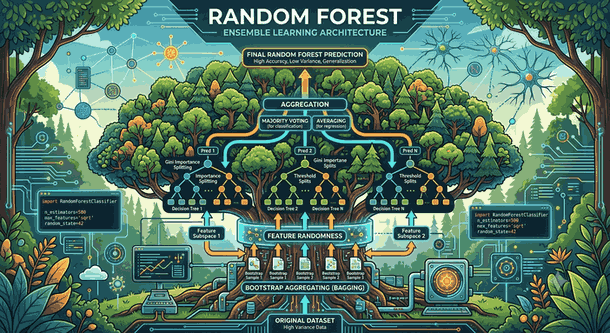
Technical Architecture and Implementation Principles of the Random Forest Algorithm

Random Forest is a powerful "Ensemble Learning" algorithm that achieves more stable and high-accuracy results by combining the predictions of numerous "Decision Tree" structures. By utilizing "Bagging" and "Feature Randomness" techniques, it minimizes the "overfitting" tendency of a single tree; thus, it is a "robust" model that exhibits high "generalization" success even with noisy data and does not require scaling.

ai machine-learning random-forest python decision-tree ensemble-learning supervised-learning feature-importance hyperparameter-tuning artificial-intelligence deep-learning ai-engineering

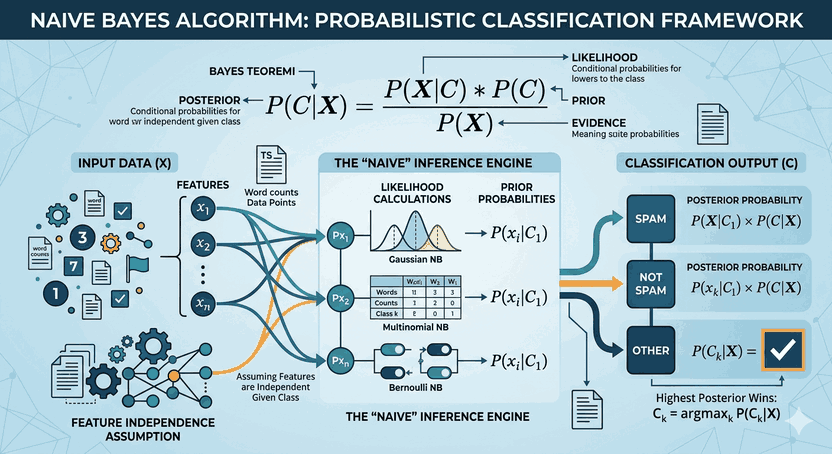
Theoretical Foundations and Application Strategies of the Naive Bayes Algorithm

Naive Bayes is a fast and effective probabilistic classification algorithm based on Bayes' Theorem that assumes full independence between features. It provides a strong foundation for problems such as text classification, spam filtering, and sentiment analysis, especially in high-dimensional datasets, with low computational cost.

ai naive-bayes bayes-theorem scikit-learn gaussian-naive-bayes multinomial-naive-bayes bernoulli-naive-bayes machine-learning deep-learning ai-engineering

Artificial Neural Networks: A Journey from Biological Inspiration to Mathematical Architecture

A technical article detailing the biological foundations, advanced mathematical architecture, backpropagation algorithms, and deep learning optimization techniques of artificial neural networks, complete with Python code examples.

ai artificial-neural-networks deep-learning python ai-technologies nlp data-science machine-learning

Architectural Depth of Large Language Models: Alignment, Optimization, and Efficient Adaptation

[-Veri Analiz Okulu, Notes 11-] A deep technical article covering the alignment of Large Language Models (LLMs) with human feedback, their efficient adaptation via Low-Rank Adaptation (LoRA), and their optimization in distributed hardware architectures.

ai veri-analizi-okulu vao python llm rlhf nlp lora deep-learning ai-engineering machine-learning

The Neural Architecture of Modern Language Models and Their Evolution from Token-Level to Reasoning

[-Veri Analiz Okulu, Notes 10-] This article is a comprehensive examination covering the mathematical foundations of the Transformer architecture, the vectorial operations of attention mechanisms, and the processes by which large language models (LLMs) derive meaning from data with technical depth.

ai veri-analizi-okulu vao python transformer-architecture nlp llm tokenization attention-mechanism neural-networks ai-alignment pytorch machine-learning

The Anatomy of Modern Deep Learning: A Technical Journey from Gradients to Attention Mechanisms

[-Veri Analiz Okulu, Notes 9-] A technical article covering the mathematical background of backpropagation, CNNs, and attention mechanisms, which form the foundation of deep learning, along with optimization algorithms and modern architectural structures.

ai veri-analizi-okulu vao python back-propagation cnn transformer attention-mechanism pytorch machine-learning

Delicate Balances and Strategic Approaches in Modern Machine Learning

[-Veri Analiz Okulu, Notes 8-] This article analyzes the geometric optimization strategies of Support Vector Machines, the reward-oriented decision-making mechanisms of Reinforcement Learning, and the mathematical foundations of Markov Decision Processes with technical depth.

ai veri-analizi-okulu vao python svm deep-learning reinforcement-learning algorithm-analysis machine-learning

Engineering Analysis of Statistical Approaches and Ensemble Methods in Machine Learning

[-Veri Analiz Okulu, Notes 7-] A technical article analyzing the mathematical depth of Naive Bayes and Random Forest algorithms, based on Bayesian probability theory and ensemble learning methods, with model performance metrics.

ai veri-analizi-okulu vao python naive-bayes random-forest confusion-matrix python-coding statistical-learning algorithm-analysis machine-learning

Dimensionality Reduction Strategies and Algorithmic Depth in Machine Learning

[-Veri Analiz Okulu, Notes 6-] Examines PCA and LDA techniques used to reduce the complexity of high-dimensional data, covering their mathematical foundations, impact on classification performance, and in-depth Python-based technical implementation examples.

ai veri-analizi-okulu vao python dimensionality-reduction pca lda classification statistical-analysis data-science machine-learning

Modern Clustering and Classification Strategies in Machine Learning

[-Veri Analiz Okulu, Notes 5-] A comprehensive and technical article covering everything from linear classification models to K-means clustering algorithms, and from model optimization to regularization techniques that prevent overfitting.

ai veri-analizi-okulu vao python deep-learning kmeans clustering classification lloyd-algorithm data-science machine-learning

The Quest for Balance in Model Optimization: A Stability Analysis of Machine Learning from Underfitting to Overfitting

[-Veri Analiz Okulu, Notes 4-] This article examines the balance between model complexity and generalization capability in machine learning, exploring the concepts of underfitting and overfitting with technical depth.

ai veri-analizi-okulu vao python deep-learning model-fitting over-fitting under-fitting data-science machine-learning

Architectural Foundations and Algorithmic Strategies of Modern Artificial Intelligence

[-Veri Analiz Okulu, Notes 3-] A technical paper on the attention mechanism of the Transformer architecture, multimodal data integration, and the mathematical decision strategies of reinforcement learning.

ai veri-analizi-okulu vao python deep-learning transformer-architecture multi-modal-ai bellman-equation data-science machine-learning

From Data Engineering to Cognitive Revolution: The Technical Anatomy of AI and Machine Learning

[-Veri Analiz Okulu, Notes 1-] This comprehensive technical review analyzes the evolutionary process of artificial intelligence, from rule-based expert systems to modern transformer architectures and generative networks, through biological analogies and practical application layers in the software world.

ai veri-analizi-okulu vao python deep-learning pytorch transformer data-science machine-learning

Advanced Analytical Modeling and Algorithmic Visualization Strategies in High-Dimensional Data Spaces

This is a technical guide for processing high-dimensional data with maximum efficiency using hardware-based memory optimization, advanced feature engineering, and algorithmic pipelines.

ai data-engineering big-data statistical-analysis data-mining algorithmic-visualization machine-learning

In-Depth Technical Analysis of AI Architecture and Development Processes

Explore AI development processes in-depth, from Transformer architecture to RAG systems, Onion Architecture integration, and Edge AI/TinyML optimizations. A comprehensive technical analysis supported by code examples and mathematical models.

ai data-engineering big-data ai-architecture transformer-architecture deep-learning machine-learning

The Digital Ontology of Data: A Deep Look from Binary Logic to Quantum Superposition

A technical examination of the transformation process of data from its raw form to strategic insight, viewed through the perspectives of deterministic systems, algorithmic depth, and computational social sciences.

ai data-science machine-learning computational-analysis quantum-computers nlp gis digital-transformation

Advanced Data Preprocessing and Engineering Architecture in Data Science

A technical examination of the transformation of data from raw form into a processed feature matrix in analytical modeling processes; a synthesis of statistical methodologies and computational techniques.

ai data-science machine-learning data-preprocessing feature-engineering statistical-analysis data-mining

Reinforcement Learning: Dynamic Decision Mechanisms and the Mathematics of Autonomous Systems

A technical guide detailing the mathematical foundations, deep architectures, and technical implementation methods of reinforcement learning, which optimizes optimal decision strategies through reward mechanisms in dynamic environments.

ai data-engineering big-data reinforcement-learning deep-learning python machine-learning

Engineering Architecture of Autonomous Systems: SLAM, Sensor Fusion, and Reinforcement Learning Processes

A comprehensive guide examining the technical depth of localization, data integration, and machine learning algorithms in robotic systems, along with C++ and Python implementations.

ai autonomous-systems big-data slam reinforcement-learning robotics robotics machine-learning

Modern Data Engineering: Scalable Pipeline Architectures and Analytical Transformation Strategies

A comprehensive guide to end-to-end high-performance data pipeline design, covering distributed computing engines, in-memory optimization techniques, and complex feature engineering processes.

ai data-engineering big-data statistical-analysis distributed-computing statistical-modeling machine-learning

In-Memory Computing and Low-Latency Data Processing Strategies in Modern Data Architectures

Optimizing performance at the hardware level in the data ecosystem: In-memory architectures, CPU cache hierarchy, and low-latency data processing techniques.

ai data-architecture memory-management low-latency system-design performance-optimization

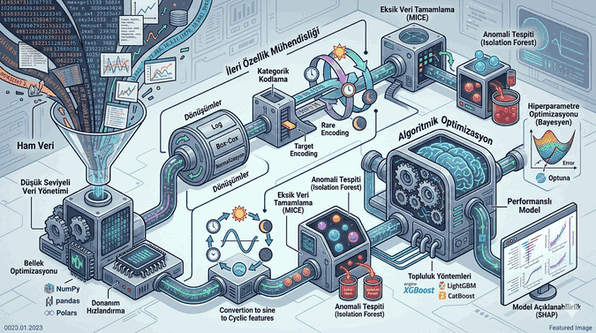
Advanced Data Preprocessing and Algorithmic Optimization Strategies in Machine Learning Pipelines

A guide to maximizing model performance through advanced feature engineering, statistical imputation techniques, ensemble modeling strategies, and Bayesian optimization. Engineering discipline in data analytics using modern tools like SHAP and Isolation Forest.

ai data-engineering big-data data-analytics algorithm-optimization feature-engineering machine-learning

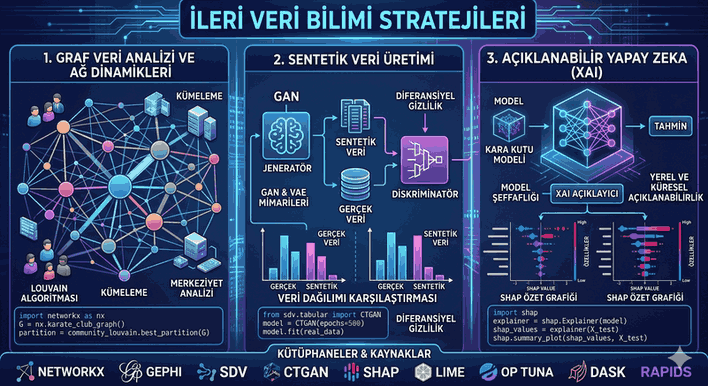
Advanced Data Science Strategies: Graph Analytics, Synthetic Data, and XAI Architectures

A comprehensive technical analysis of network theory, data generation techniques, and model transparency that provides depth in modern data analytics.

ai data-engineering big-data graph-analysis xai synthetic-data machine-learning

Unsupervised Learning: The Hidden Geometry of Data and Algorithmic Discovery Techniques

This article details methodologies used to extract meaningful patterns from unlabeled datasets, including clustering, dimensionality reduction, and anomaly detection, along with their mathematical foundations and modern software implementations.

ai data-engineering big-data unsupervised-learning pca clustering machine-learning

Mathematical Optimization and Applied Algorithm Strategies in Supervised Learning Architecture

A mathematical modeling method that learns a mapping function from labeled data consisting of input-output pairs, aiming to predict continuous or categorical values.

ai data-engineering supervised-learning algorithm python machine-learning