Delicate Balances and Strategic Approaches in Modern Machine Learning

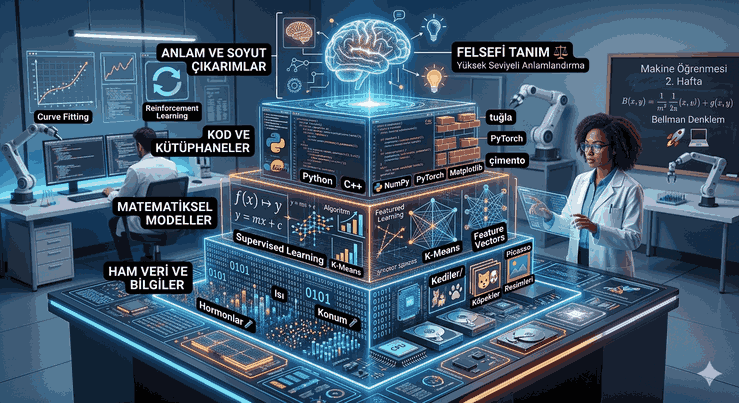
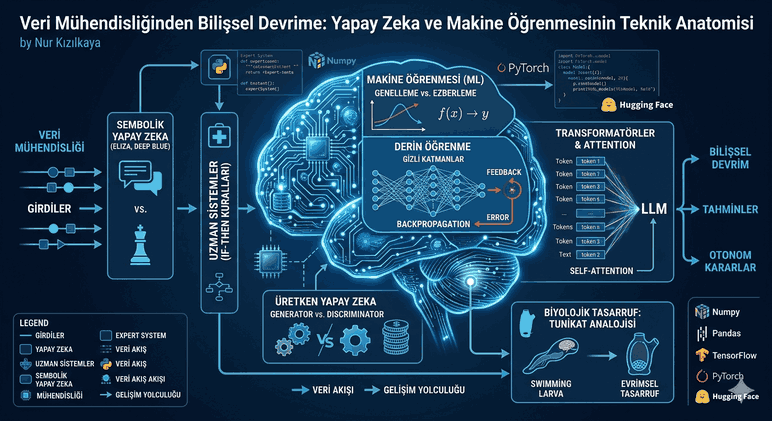
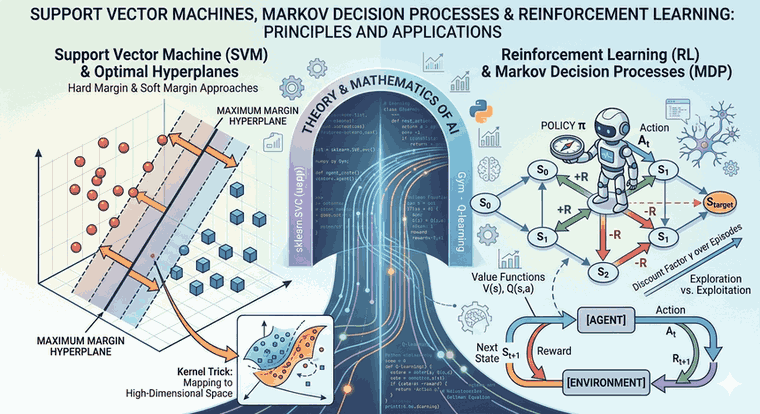
The artificial intelligence ecosystem is built upon two massive pillars in the processes of extracting meaning from data and transforming that meaning into action: supervised learning algorithms that draw geometric boundaries, and reinforcement learning models that act as experience-oriented decision-making mechanisms. In today’s complex datasets, making accurate predictions is not enough; it is vital to show resistance against noise and to develop the best strategy in dynamic environments.

Delicate Balances and Strategic Approaches in Modern Machine Learning

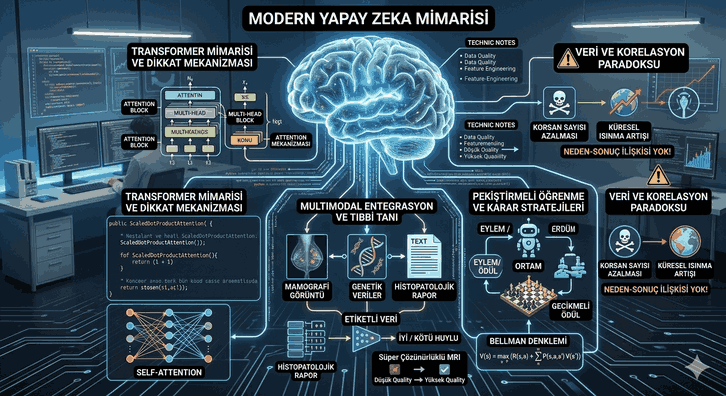
Figure 1: Delicate Balances and Strategic Approaches in Modern Machine Learning.


Support Vector Machines and Maximum Margin Optimization

Support Vector Machine (SVM) fundamentally reduces a classification problem to the problem of finding the optimal hyperplane in a high-dimensional space. However, the fundamental difference that distinguishes SVM from an ordinary logistic regression is the “maximum margin” principle.

Hyperplane and Geometric Robustness

An infinite number of lines (or hyperplanes) can be drawn that separate a dataset into two classes. However, most of these lines are prone to misclassification when faced with a noisy data point. SVM selects the hyperplane that keeps the gap (buffer zone) between classes the widest. This width is mathematically expressed by the formula $2/\|w\|$. Here, $\|w\|$ is the norm of the normal vector of the plane. Maximizing the margin is equivalent to minimizing the value $\|w\|^2/2$, and this is a quadratic programming problem.

Hard Margin and Soft Margin Distinction

If our dataset is perfectly linearly separable, Hard Margin SVM is used. There is no tolerance for error here:

$$y_i(w \cdot x_i + b) \geq 1$$

However, real-world data is noisy, and sometimes classes overlap. In this case, Soft Margin comes into play. By adding slack variables called $\xi$, some points are allowed to violate the margin in exchange for a certain penalty ($C$ parameter). The $C$ parameter is a critical hyperparameter that balances margin width with training error.

Kernel Trick: Leap from Low Dimension to High Dimension

When data is not linearly separable (e.g., a circular distribution), it is necessary to move the data to a higher dimension. However, calculating coordinates in high dimension is costly. The Kernel Trick allows us to calculate the interaction in high dimension using the inner products of points in low dimension without actually moving the data.

Common Kernel Functions:

  • Linear Kernel: $K(x, y) = x \cdot y$
  • Polynomial Kernel: $K(x, y) = (x \cdot y + c)^d$
  • RBF (Gaussian) Kernel: $K(x, y) = \exp(-\gamma \|x - y\|^2)$

SVM Implementation Example with Python

import numpy as np
from sklearn import svm
from sklearn.preprocessing import StandardScaler
from sklearn.model_selection import train_test_split

# Data Preparation and Scaling
# SVM is very sensitive to scale differences, so StandardScaler is essential.
scaler = StandardScaler()
X_scaled = scaler.fit_transform(X)

# Model Building (with RBF Kernel and C Parameter)
clf = svm.SVC(kernel='rbf', C=1.0, gamma='scale')
clf.fit(X_train, y_train)

# Accessing Support Vectors
support_vectors = clf.support_vectors_
print(f"Number of Support Vectors: {len(support_vectors)}")

Reinforcement Learning and Decision Making Mechanisms

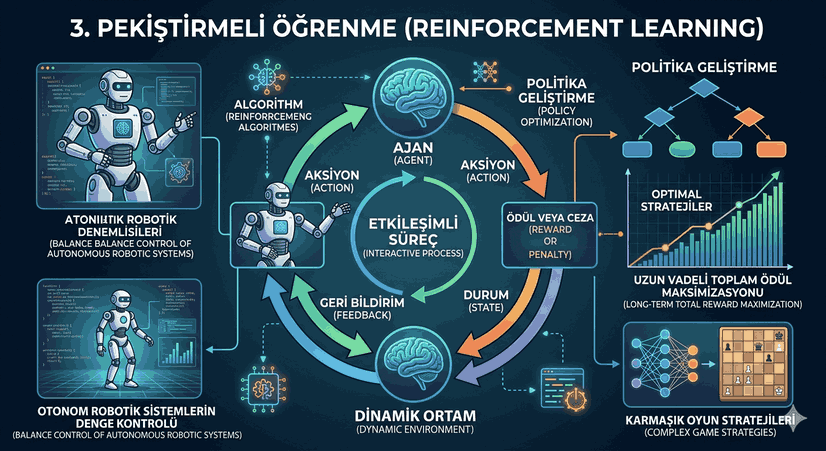
Reinforcement Learning (RL) is a learning paradigm where an agent performs actions within an environment to maximize rewards. Unlike supervised learning, the agent is not told what to do; the agent discovers which action brings more reward by trial and error.

Agent and Environment Interaction

The process begins with the agent observing the current state ($S_t$). The agent chooses an action ($A_t$), and the environment returns the next state ($S_{t+1}$) and a reward ($R_{t+1}$) in response. This cycle continues until the agent develops a policy ($\pi$) that maximizes cumulative reward.

Episodic and Continuing Tasks

  1. Episodic Tasks: There is a start and end point (e.g., a chess match). The total return is the sum of the steps.
  2. Continuing Tasks: There is no natural end (e.g., energy management of a factory). Here, the discount factor ($\gamma$) is used for the convergence of the infinite sum:
$$G_t = R_{t+1} + \gamma R_{t+2} + \gamma^2 R_{t+3} + \dots$$

If $\gamma = 0$, the agent is myopic (looks only at immediate reward); if $\gamma \to 1$, the agent thinks strategically and long-term.


Markov Decision Processes: The Mathematical Skeleton of RL

Most RL problems are modeled within the framework of Markov Decision Processes (MDP). A process having the “Markov” property means that the future depends only on the present moment, and the past is irrelevant.

MDP Components

  • State Set ($S$): All positions where the agent can be.
  • Action Set ($A$): Moves that can be made.
  • Transition Probability ($P$): Expressed by the formula $P(s' | s, a)$; it is the probability of transitioning to state $s'$ when action $a$ is taken in state $s$.
  • Reward Function ($R$): The numerical value determining the quality of the action taken.

Value Functions and Bellman Equations

The State-Value Function ($V(s)$) is used to understand how “good” a state is, and the Action-Value Function ($Q(s, a)$) is used to understand how good it is to take a specific action in a state. Optimal value functions are solved recursively via Bellman equations.


Exploration vs. Exploitation Trade-off

This is the biggest paradox of RL. Should the agent follow the best path it knows (exploitation), or should it try new paths to see if there is a better way (exploration)?

The most common solution is the $\epsilon$-greedy approach:

  • With a small probability ($\epsilon$), a random action is chosen (Exploration).
  • With the remaining large probability ($1-\epsilon$), the current best action is chosen (Exploitation).

A Simple Q-Learning Structure

import numpy as np

# Initialize Q-table (in State x Action dimensions)
q_table = np.zeros([state_space_size, action_space_size])

# Hyperparameters
learning_rate = 0.1
discount_factor = 0.95
epsilon = 0.1

for episode in range(1000):
    state = env.reset()
    done = False
    
    while not done:
        # Action selection with Epsilon-greedy
        if np.random.uniform(0, 1) < epsilon:
            action = env.action_space.sample()
        else:
            action = np.argmax(q_table[state])
            
        next_state, reward, done, _ = env.step(action)
        
        # Q-Value Update (Based on Bellman Equation)
        old_value = q_table[state, action]
        next_max = np.max(q_table[next_state])
        
        new_value = (1 - learning_rate) * old_value + learning_rate * (reward + discount_factor * next_max)
        q_table[state, action] = new_value
        state = next_state

Key Differences and Use Cases Between SVM and RL

Although both technologies are part of artificial intelligence, their application areas and logic are polar opposites:

Feature Support Vector Machines (SVM) Reinforcement Learning (RL)
Learning Type Supervised Interactive
Data Requirement Labeled datasets Live interaction with environment
Fundamental Goal Separate data with a hyperplane Maximize cumulative reward
Decision Structure Static (One-time prediction) Dynamic (Sequential decisions)
Sensitivity Highly sensitive to feature scaling Sensitive to exploration/exploitation balance

Final Notes and Technical Recommendations

Success in data science comes from mastering the internal mechanisms of an algorithm rather than just choosing the right one. When using SVM, data normalization and choosing the right kernel determine the model’s noise resistance. On the RL side, the design of the reward function (reward shaping) determines whether the agent will “cheat” or truly learn the goal.

Especially in high-dimensional and noisy data, solving SVM via the Dual Form reduces computational cost by utilizing the kernel trick advantage. In RL projects, preferring modern architectures such as Deep Q-Networks (DQN), which is the combination of deep learning and RL, to manage complex state spaces will increase the agent’s generalization ability.

#ai #veri-analizi-okulu #vao #python #svm #deep-learning #reinforcement-learning #algorithm-analysis #machine-learning

Related Contents

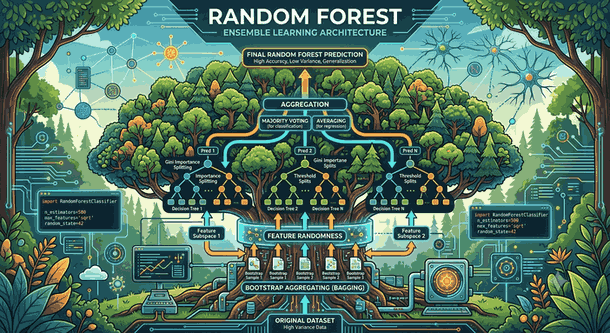
Technical Architecture and Implementation Principles of the Random Forest Algorithm

Random Forest is a powerful "Ensemble Learning" algorithm that achieves more stable and high-accuracy results by combining the predictions of numerous "Decision Tree" structures. By utilizing "Bagging" and "Feature Randomness" techniques, it minimizes the "overfitting" tendency of a single tree; thus, it is a "robust" model that exhibits high "generalization" success even with noisy data and does not require scaling.

ai machine-learning random-forest python decision-tree ensemble-learning supervised-learning feature-importance hyperparameter-tuning artificial-intelligence deep-learning ai-engineering

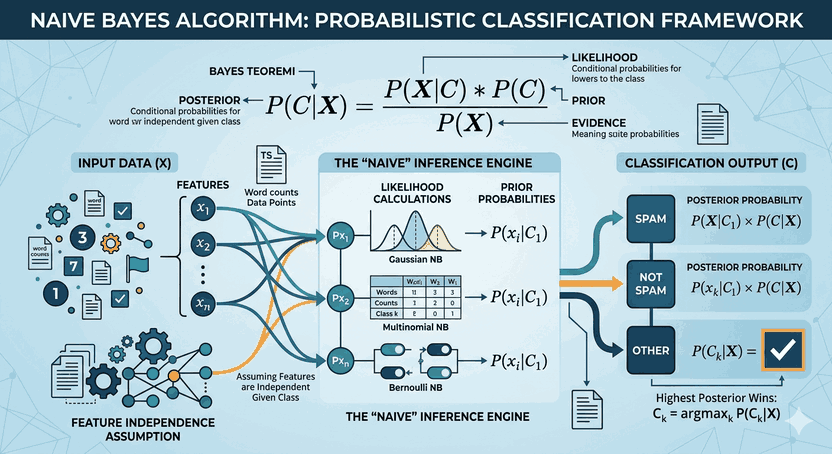
Theoretical Foundations and Application Strategies of the Naive Bayes Algorithm

Naive Bayes is a fast and effective probabilistic classification algorithm based on Bayes' Theorem that assumes full independence between features. It provides a strong foundation for problems such as text classification, spam filtering, and sentiment analysis, especially in high-dimensional datasets, with low computational cost.

ai naive-bayes bayes-theorem scikit-learn gaussian-naive-bayes multinomial-naive-bayes bernoulli-naive-bayes machine-learning deep-learning ai-engineering

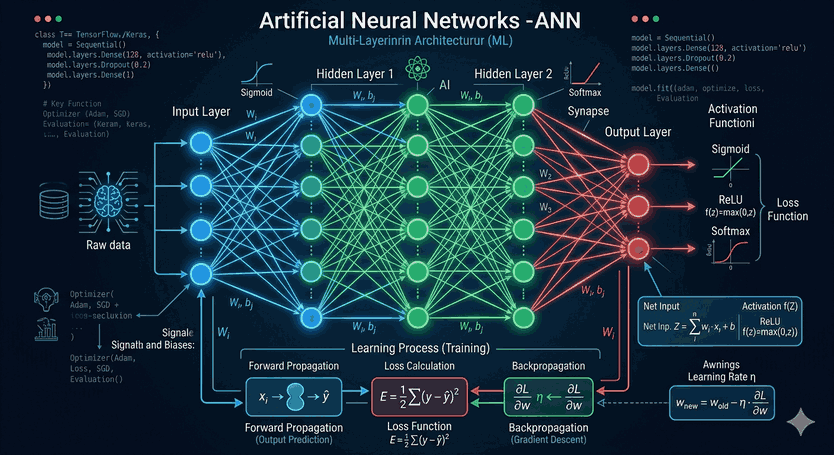
Artificial Neural Networks: A Journey from Biological Inspiration to Mathematical Architecture

A technical article detailing the biological foundations, advanced mathematical architecture, backpropagation algorithms, and deep learning optimization techniques of artificial neural networks, complete with Python code examples.

ai artificial-neural-networks deep-learning python ai-technologies nlp data-science machine-learning

Architectural Depth of Large Language Models: Alignment, Optimization, and Efficient Adaptation

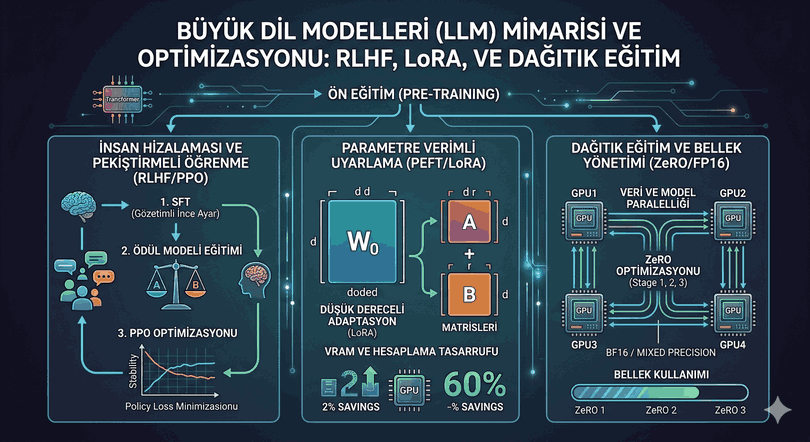
[-Veri Analiz Okulu, Notes 11-] A deep technical article covering the alignment of Large Language Models (LLMs) with human feedback, their efficient adaptation via Low-Rank Adaptation (LoRA), and their optimization in distributed hardware architectures.

ai veri-analizi-okulu vao python llm rlhf nlp lora deep-learning ai-engineering machine-learning

The Neural Architecture of Modern Language Models and Their Evolution from Token-Level to Reasoning

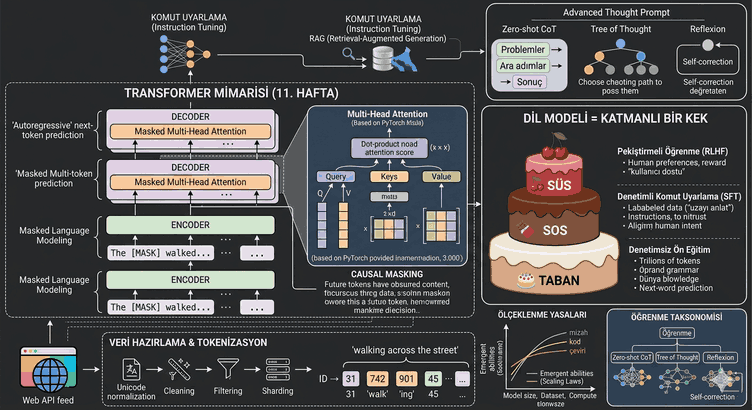
[-Veri Analiz Okulu, Notes 10-] This article is a comprehensive examination covering the mathematical foundations of the Transformer architecture, the vectorial operations of attention mechanisms, and the processes by which large language models (LLMs) derive meaning from data with technical depth.

ai veri-analizi-okulu vao python transformer-architecture nlp llm tokenization attention-mechanism neural-networks ai-alignment pytorch machine-learning

The Anatomy of Modern Deep Learning: A Technical Journey from Gradients to Attention Mechanisms

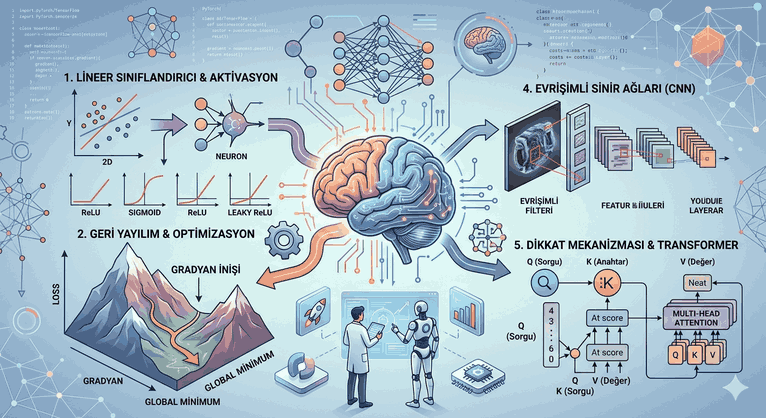
[-Veri Analiz Okulu, Notes 9-] A technical article covering the mathematical background of backpropagation, CNNs, and attention mechanisms, which form the foundation of deep learning, along with optimization algorithms and modern architectural structures.

ai veri-analizi-okulu vao python back-propagation cnn transformer attention-mechanism pytorch machine-learning

Engineering Analysis of Statistical Approaches and Ensemble Methods in Machine Learning

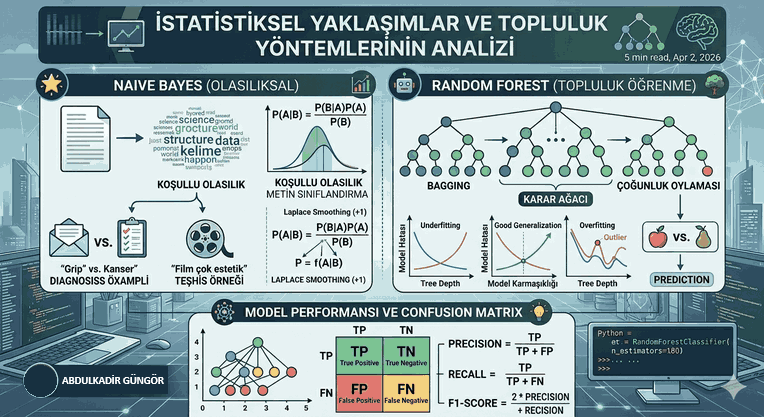
[-Veri Analiz Okulu, Notes 7-] A technical article analyzing the mathematical depth of Naive Bayes and Random Forest algorithms, based on Bayesian probability theory and ensemble learning methods, with model performance metrics.

ai veri-analizi-okulu vao python naive-bayes random-forest confusion-matrix python-coding statistical-learning algorithm-analysis machine-learning

Dimensionality Reduction Strategies and Algorithmic Depth in Machine Learning

[-Veri Analiz Okulu, Notes 6-] Examines PCA and LDA techniques used to reduce the complexity of high-dimensional data, covering their mathematical foundations, impact on classification performance, and in-depth Python-based technical implementation examples.

ai veri-analizi-okulu vao python dimensionality-reduction pca lda classification statistical-analysis data-science machine-learning

Modern Clustering and Classification Strategies in Machine Learning

[-Veri Analiz Okulu, Notes 5-] A comprehensive and technical article covering everything from linear classification models to K-means clustering algorithms, and from model optimization to regularization techniques that prevent overfitting.

ai veri-analizi-okulu vao python deep-learning kmeans clustering classification lloyd-algorithm data-science machine-learning

The Quest for Balance in Model Optimization: A Stability Analysis of Machine Learning from Underfitting to Overfitting

[-Veri Analiz Okulu, Notes 4-] This article examines the balance between model complexity and generalization capability in machine learning, exploring the concepts of underfitting and overfitting with technical depth.

ai veri-analizi-okulu vao python deep-learning model-fitting over-fitting under-fitting data-science machine-learning

Architectural Foundations and Algorithmic Strategies of Modern Artificial Intelligence

[-Veri Analiz Okulu, Notes 3-] A technical paper on the attention mechanism of the Transformer architecture, multimodal data integration, and the mathematical decision strategies of reinforcement learning.

ai veri-analizi-okulu vao python deep-learning transformer-architecture multi-modal-ai bellman-equation data-science machine-learning

The Layered Architecture and Algorithmic Depth of Machine Learning

[-Veri Analiz Okulu, Notes 2-] A technical and mathematical analysis of the hierarchical structure of machine learning, data processing layers, and fundamental learning paradigms (supervised, unsupervised, reinforcement).

ai veri-analizi-okulu vao python deep-learning reinforcement-learning data-science machine-learning

From Data Engineering to Cognitive Revolution: The Technical Anatomy of AI and Machine Learning

[-Veri Analiz Okulu, Notes 1-] This comprehensive technical review analyzes the evolutionary process of artificial intelligence, from rule-based expert systems to modern transformer architectures and generative networks, through biological analogies and practical application layers in the software world.

ai veri-analizi-okulu vao python deep-learning pytorch transformer data-science machine-learning

Advanced Analytical Modeling and Algorithmic Visualization Strategies in High-Dimensional Data Spaces

This is a technical guide for processing high-dimensional data with maximum efficiency using hardware-based memory optimization, advanced feature engineering, and algorithmic pipelines.

ai data-engineering big-data statistical-analysis data-mining algorithmic-visualization machine-learning

In-Depth Technical Analysis of AI Architecture and Development Processes

Explore AI development processes in-depth, from Transformer architecture to RAG systems, Onion Architecture integration, and Edge AI/TinyML optimizations. A comprehensive technical analysis supported by code examples and mathematical models.

ai data-engineering big-data ai-architecture transformer-architecture deep-learning machine-learning

The Digital Ontology of Data: A Deep Look from Binary Logic to Quantum Superposition

A technical examination of the transformation process of data from its raw form to strategic insight, viewed through the perspectives of deterministic systems, algorithmic depth, and computational social sciences.

ai data-science machine-learning computational-analysis quantum-computers nlp gis digital-transformation

Advanced Data Preprocessing and Engineering Architecture in Data Science

A technical examination of the transformation of data from raw form into a processed feature matrix in analytical modeling processes; a synthesis of statistical methodologies and computational techniques.

ai data-science machine-learning data-preprocessing feature-engineering statistical-analysis data-mining

Reinforcement Learning: Dynamic Decision Mechanisms and the Mathematics of Autonomous Systems

A technical guide detailing the mathematical foundations, deep architectures, and technical implementation methods of reinforcement learning, which optimizes optimal decision strategies through reward mechanisms in dynamic environments.

ai data-engineering big-data reinforcement-learning deep-learning python machine-learning

Engineering Architecture of Autonomous Systems: SLAM, Sensor Fusion, and Reinforcement Learning Processes

A comprehensive guide examining the technical depth of localization, data integration, and machine learning algorithms in robotic systems, along with C++ and Python implementations.

ai autonomous-systems big-data slam reinforcement-learning robotics robotics machine-learning

Modern Data Engineering: Scalable Pipeline Architectures and Analytical Transformation Strategies

A comprehensive guide to end-to-end high-performance data pipeline design, covering distributed computing engines, in-memory optimization techniques, and complex feature engineering processes.

ai data-engineering big-data statistical-analysis distributed-computing statistical-modeling machine-learning

In-Memory Computing and Low-Latency Data Processing Strategies in Modern Data Architectures

Optimizing performance at the hardware level in the data ecosystem: In-memory architectures, CPU cache hierarchy, and low-latency data processing techniques.

ai data-architecture memory-management low-latency system-design performance-optimization

Advanced Data Preprocessing and Algorithmic Optimization Strategies in Machine Learning Pipelines

A guide to maximizing model performance through advanced feature engineering, statistical imputation techniques, ensemble modeling strategies, and Bayesian optimization. Engineering discipline in data analytics using modern tools like SHAP and Isolation Forest.

ai data-engineering big-data data-analytics algorithm-optimization feature-engineering machine-learning

Advanced Data Science Strategies: Graph Analytics, Synthetic Data, and XAI Architectures

A comprehensive technical analysis of network theory, data generation techniques, and model transparency that provides depth in modern data analytics.

ai data-engineering big-data graph-analysis xai synthetic-data machine-learning

Unsupervised Learning: The Hidden Geometry of Data and Algorithmic Discovery Techniques

This article details methodologies used to extract meaningful patterns from unlabeled datasets, including clustering, dimensionality reduction, and anomaly detection, along with their mathematical foundations and modern software implementations.

ai data-engineering big-data unsupervised-learning pca clustering machine-learning

Mathematical Optimization and Applied Algorithm Strategies in Supervised Learning Architecture

A mathematical modeling method that learns a mapping function from labeled data consisting of input-output pairs, aiming to predict continuous or categorical values.

ai data-engineering supervised-learning algorithm python machine-learning