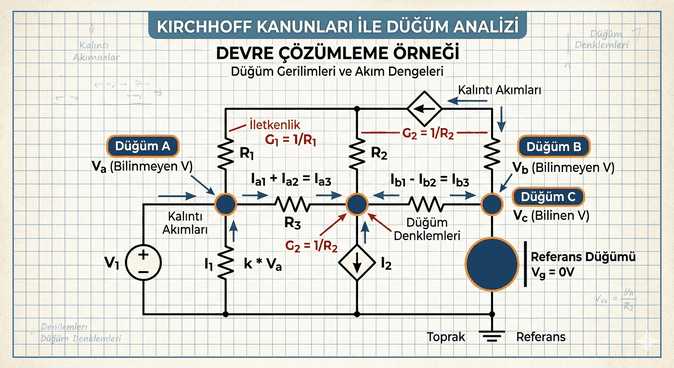
Mathematical Architecture of Complex Circuits and Nodal Analysis Method

The analysis of electrical circuits is an interdisciplinary process where fundamental physical laws are blended with linear algebra. In modern engineering applications, especially in integrated circuit design and power systems simulation, it is necessary to adopt a systematic approach rather than examining the circuit on a component-by-component basis. At this point, Nodal Analysis, built upon Kirchhoff’s Current Law (KCL), allows us to reach the solution set by reducing unknown voltages in the circuit to a systematic matrix form.

Mathematical Architecture of Complex Circuits and Nodal Analysis Method

Figure 1: Mathematical Architecture of Complex Circuits and Nodal Analysis Method.


Kirchhoff’s Laws and Theoretical Foundation

Kirchhoff’s Current Law, which lies at the heart of nodal analysis, is based on the principle of conservation of charge. The algebraic sum of currents entering a closed node must be equal to the sum of currents leaving that node. Expressed mathematically:

$$\sum_{k=1}^{n} I_k = 0$$

This equation allows for the generation of an independent linear equation for each node in the circuit. In nodal analysis, the primary goal is to determine the potential differences of all nodes relative to a reference (chassis/ground) point on the circuit.

Selection and Importance of the Reference Node

Before beginning the analysis, the potential of one point in the circuit is assumed to be $0V$. Usually, the point where the most components are connected or where the negative terminals of voltage sources meet is selected as the “reference node.” This choice reduces the number of unknowns in the system of equations by one, thereby easing the computational burden.


Nodal Analysis Implementation Steps

A systematic solution process minimizes the margin of error. Using an engineering approach, we can break this process down into the following steps:

  1. Identification of Nodes: All points where more than two components meet (essential nodes) are marked.
  2. Assignment of Reference Node: One point is designated as ground ($V_g = 0$).
  3. Writing KCL Equations: Kirchhoff’s Current Law is applied to each $n$ node other than the reference. Currents are expressed in terms of node voltages using Ohm’s Law ($I = V/R$).
  4. Matrix Formulation: The resulting linear equations are converted into the form $[G][V] = [I]$. Here, $[G]$ represents the conductance matrix, $[V]$ represents the node voltages, and $[I]$ represents the current sources.
  5. Numerical Solution: Unknown voltages are found using methods such as Cramer’s rule, Gaussian elimination, or LU decomposition.

The Concept of a Supernode

If there is only an independent or dependent voltage source between two nodes and this source is not connected to the reference node, the “Supernode” technique is applied. In this case, the two nodes are treated as a single surface, and the KCL equation is written for the entire surface. Additionally, a “constraint equation” defining the source voltage is included in the system.


Practical Circuit Example and Analytical Solution

Let us consider a circuit with three basic nodes and two different current sources. Let our resistance values be $R_1, R_2, R_3$ and our node voltages be $V_1, V_2$.

KCL for Node 1:

$$\frac{V_1 - 0}{R_1} + \frac{V_1 - V_2}{R_2} = I_{source1}$$

KCL for Node 2:

$$\frac{V_2 - V_1}{R_2} + \frac{V_2 - 0}{R_3} = -I_{source2}$$

When these equations are arranged, the variables take on a matrix structure. Modern circuit simulators (SPICE, etc.) generate results by solving these exact conductance matrices in the background.


Software Approach: Automated Solution with Python and NumPy

Nowadays, it is impossible to solve large-scale circuits by hand. Engineering tools treat circuit topology as a matrix. Below, a professional approach is presented on how a circuit matrix can be solved using the NumPy library.

import numpy as np

def solve_nodal_analysis(conductance_matrix, current_vector):
    """
    Solves node voltage equations in the form [G][V] = [I].
    G: Conductance matrix (Siemens)
    I: Node current vector (Amperes)
    """
    try:
        # Instead of inverting the matrix, we use the more stable solve method
        node_voltages = np.linalg.solve(conductance_matrix, current_vector)
        return node_voltages
    except np.linalg.LinAlgError:
        return "Matrix is singular. Check circuit topology."

# Example Circuit Parameters
# Let R1=10, R2=5, R3=20 ohms. Conductance G = 1/R
g1, g2, g3 = 1/10, 1/5, 1/20

# Node 1 equation: (g1 + g2)V1 - g2V2 = I1
# Node 2 equation: -g2V1 + (g2 + g3)V2 = I2

G = np.array([
    [(g1 + g2), -g2],
    [-g2, (g2 + g3)]
])

I = np.array([2, -1]) # Net currents entering nodes (Amperes)

voltages = solve_nodal_analysis(G, I)

print("--- Circuit Analysis Results ---")
for i, v in enumerate(voltages):
    print(f"Node V{i+1} Voltage: {v:.4f} Volts")

Technical Analysis of the Code

The algorithm above is the direct equivalent of linear algebra in electrical theory. The np.linalg.solve function uses low-level LAPACK routines to solve systems in the form $Ax = B$. This maximizes performance, especially in the analysis of high-density circuits (LSI) with thousands of nodes.


Advanced Circuit Analysis Libraries

If you require not just simple matrix solutions, but also frequency response (AC Analysis) or transient analysis, more specific libraries in the Python ecosystem come into play:

  • PySpice: Provides full access to the Berkeley SPICE simulator via Python. It is an industry standard when working with realistic circuit elements (transistors, diodes).
  • SciPy (Signal Module): Ideal for analyzing the transfer functions ($H(s)$) of circuits and plotting Bode diagrams.
  • Lcapy: Performs symbolic circuit analysis, presenting results directly as mathematical equations.

Engineering Notes and Optimization Strategies

  • Conductance Instead of Resistance: When performing nodal analysis, using conductance ($G = 1/R$) values instead of resistance ($R$) values simplifies addition operations during matrix setup and reduces calculation errors.
  • Dependent Sources: If there is a dependent source (VCVS, CCVS, etc.) in the circuit, the control variables of these sources must be added to the system in terms of node voltages. This may break the symmetric structure of the matrix, but it does not change the solution method.
  • Sensitivity Analysis: The effect of parametric changes (e.g., the tolerance margin of a resistor) on the total voltage distribution should be examined by creating a Jacobian matrix with the help of partial derivatives.

Conclusion and Future Projection

Nodal analysis is not just a theoretical course topic; it is also the core of modern automation and simulation software. This deterministic approach offered by Kirchhoff’s Laws is even used in the hardware modeling of artificial neural networks (Neuromorphic Computing) along with the development of semiconductor technology. For engineers, the ability to integrate these methods with software tools is one of the most critical skills that accelerate design processes.

As the complexity of electronic systems increases, algorithmic solutions built upon these fundamental laws will remain the only way to ensure system stability. An efficient analysis process is born from the combination of accurate topological modeling and powerful computational tools.

#blog #electric #electronic #circuit-analysis #kirchhoff-laws #nodal-analysis #numpy #circuit-simulation #circuit-theory #supernode

Related Contents

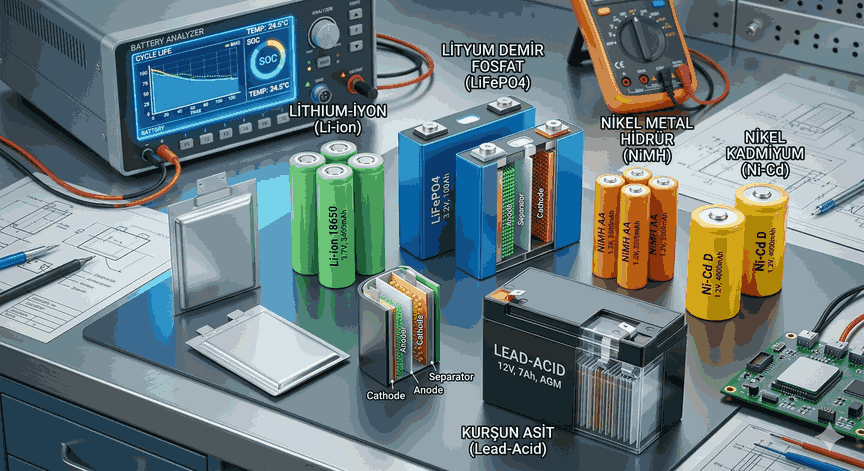
Modern Rechargeable Battery Technologies and Electrochemical Performance Analysis

This blog post, which details modern battery technologies and the electrochemical operating principles of these systems, examines the technical specifications, performance metrics, and usage advantages of Li-ion, LiFePO4, NiMH, Ni-Cd, and lead-acid batteries from an engineering perspective.

blog electronics battery-technologies lithium-ion li-ion battery-performance lifepo4 nickel-metal-hydride rechargeable-batteries battery-management-systems ni-cd ni-mh energy-systems battery-analysis

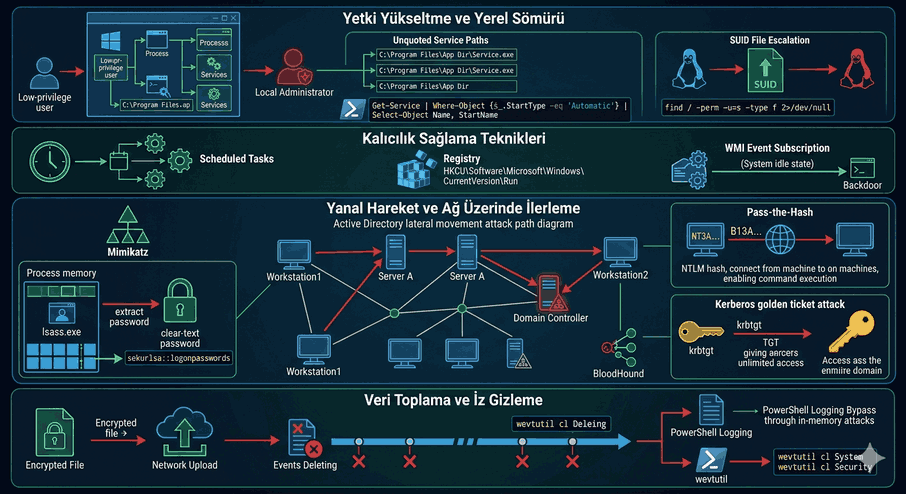
Post-Exploitation Strategies and In-Depth Analysis in Internal Network Penetration Tests

This article analyzes post-exploitation techniques in internal network penetration tests, including privilege escalation methods, persistence mechanisms, and lateral movement processes within Active Directory with technical code examples. Professional tools such as Mimikatz, Impacket, and BloodHound are covered.

blog cyber-security network-security information-security cloud-security network privilege-escalation penetration-testing red-team post-exploitation active-directory lateral-movement intranet internal-network local-network

OWASP Top 10 Security Strategies in .NET 8 Projects

A critical guide for secure coding in .NET 8 projects! Discover how to protect your application using tools like EF Core, Data Protection API, and policy-based authorization against OWASP Top 10 threats with technical examples. Learn fundamental strategies for secure software architecture.

blog cyber-security dotnet owasp network-security information-security cloud-security

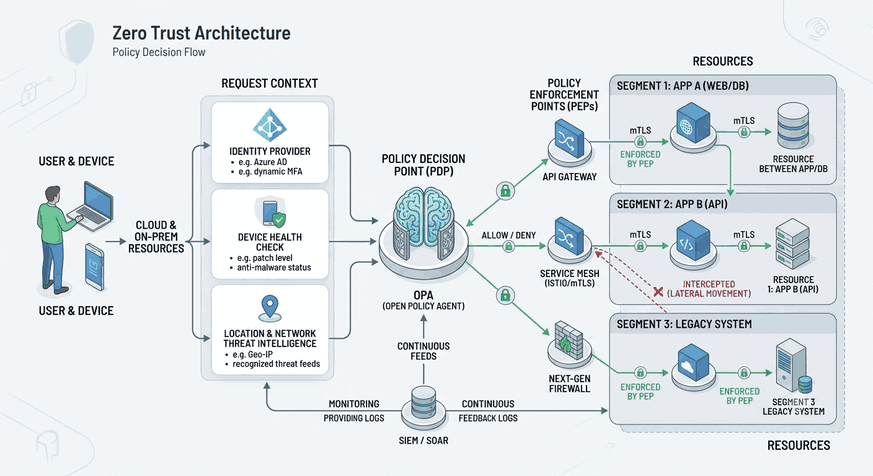
Modern Network Strategies with Zero Trust Architecture

Zero Trust architecture is a modern security strategy that dismantles the 'default trust' paradigm in today's hybrid world, where network boundaries have become increasingly blurred. This approach treats every user, device, and service as a potential risk factor—whether inside or outside the network—by subjecting access requests to continuous, contextual, and rigorous verification.

blog cyber-security zero-trust network-security information-security cloud-security

Veri Analizi Okulu: Data Science and Artificial Intelligence Training

Operating under the coordination of Yükseköğretim Kurumu (YÖK), the Veri Analizi Okulu (VAO) combines theoretical knowledge with practice through modules in Basic Statistics, Computational Social Sciences, Panel Data Analysis, Artificial Intelligence, Digital Humanities, and Psychometrics. Check out our blog post for both a high-quality education and your career.

blog veri-analizi-okulu vao basic-statistics computational-social-sciences panel-data-analysis artificial-intelligence ai-and-facilitating-tools ai ai-and-machine-learning digital-humanities psychometrics

Nur-o-link: Remote-Controlled Robotic Arm and Vehicle System

The Nur-o-link project is an innovative robotics study that combines remote-controllable robotic arm and autonomous vehicle features, highlighting the interaction between hardware and software.

blog robotic robotic-arm robotik iot embedded cplusplus arduino esp32 remote-control software-hardware rex-8in1-v2 electronic

Gungor-robot-car: ESP32 Camera-Controlled Robot Car

A robotic vehicle project capable of live video streaming via WiFi and remote control through a browser-based interface, powered by the ESP32-WROVER module.

blog robotics robotic iot embedded cplusplus arduino esp32 esp32-cam esp32-camera remote-control robotic-car electronic electronics software-hardware

Engineering Fundamentals and Mechanical Analysis of Flexible Structures in Soft Robotic Systems

A high-technical-depth blog post focusing on control algorithms and material mechanics, exploring the transformation of traditional rigid robotic systems through flexible elastomers and bio-mimetic approaches.

blog robotics soft-robotics mechatronics control-systems simulation engineering

Collective Intelligence and Dynamic Task Allocation in Swarm Robotic Systems

A technical blog post examining the technical foundations, algorithmic approaches, and software libraries for collective intelligence, dynamic task sharing, and distributed control mechanisms in swarm robotic systems.

blog robotics autonomous swarm-robotics multi-agent-systems task-allocation ros2 collective-decision-making distributed-systems swarm-intelligence intelligent-robots

The Evolution of Robotic Systems and Modern Migration Strategies to the ROS 2 Ecosystem

This blog post addresses the architectural changes in the transition process from ROS 1 to ROS 2, the technical advantages of the DDS-based communication layer, and system modernization strategies using modern software libraries in a technical language.

blog robotic robotics autonomous ros2 dds industrial-automation real-time-systems control-systems microservices

Agriculture 4.0 and Next-Generation Approaches in Autonomous Robotic Systems

A blog post covering navigation strategies for autonomous vehicles in the Agriculture 4.0 ecosystem, deep learning-based crop monitoring algorithms, and ROS 2-based software architectures.

blog robotics autonomous agriculture-4-0 path-planning crop-monitoring ros2 smart-farming precision-agriculture ai lidar image-processing sensor-fusion edge-computing

Topological Approaches in Data Science and Graph Theory-Based Network Analysis with Gephi

This technical blog post provides an in-depth analysis of how to visualize complex relationships in big data sets using graph theory and the Gephi software, accompanied by mathematical metrics and software libraries.

blog gephi network-analysis data-visualization graph-theory network-analysis python data-science centrality-metrics complex-systems

Deep Learning-Based Object Detection and Manipulation Techniques in Autonomous Robotic Systems

A technical review and software integration of modern robotic systems equipped with deep learning architectures, 6-DoF grasping strategies, and real-time object recognition algorithms.

blog robotics autonomous ai python pytorch ros2 yolo opencv autonomous-robots deep-learning machine-learning

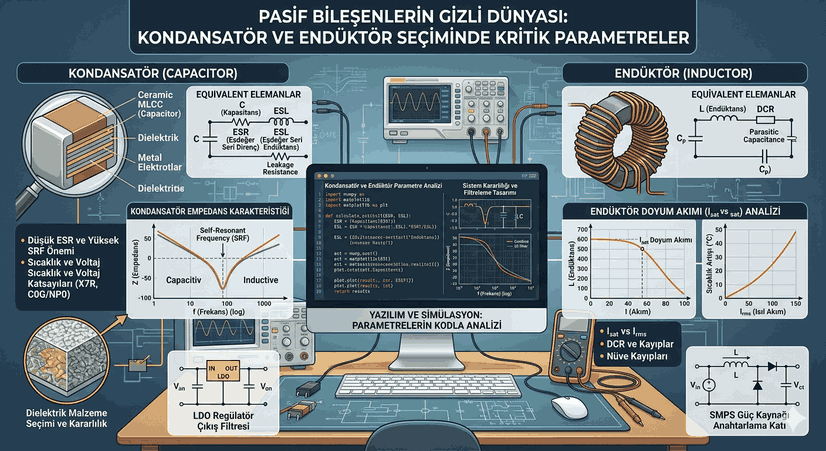
Deep Dive into the Fundamental Building Blocks of Electronic Design: Engineering Foundations of Passive Component Selection

This blog post covers the non-ideal parasitic parameters, frequency-dependent behaviors, and modern engineering selection criteria for capacitors and inductors, which are critical in electronic circuit design, along with Python-based analysis methods.

blog electronics passive-components capacitor-selection inductor-parameters esr esl frequency-analysis circuit-simulation

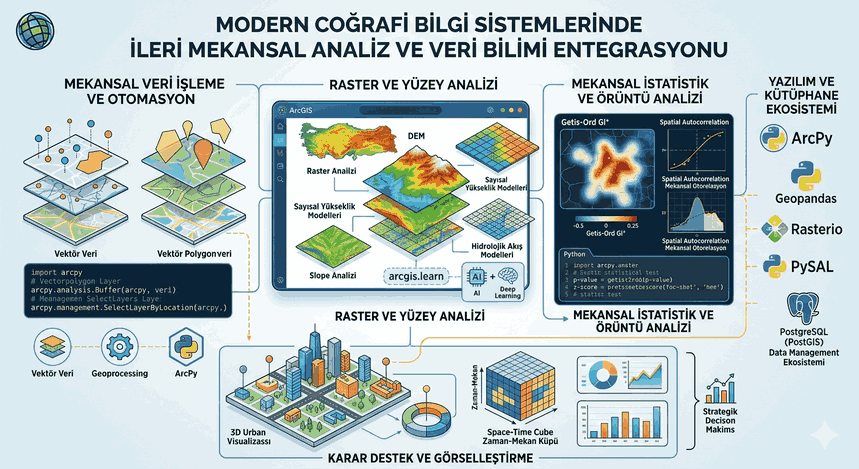
Advanced Spatial Analysis and Data Science Integration in Modern Geographic Information Systems

A blog post covering data mining in the ArcGIS ecosystem, Python-based automation processes, and spatial statistics methods to transform raw location data into strategic decision support mechanisms.

blog arcgis spatial-analysis geographic-information-systems python arcpy mapping spatial-statistics data-science big-data

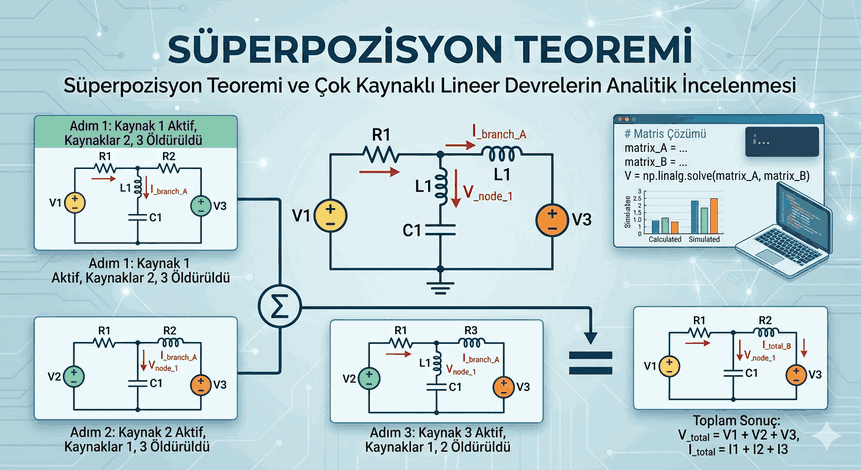
Superposition Theorem and Analytical Investigation of Multi-Source Linear Circuits

A blog post examining the theoretical foundations, mathematical modeling, and Python-based simulation approaches of the Superposition Theorem, which analyzes the effect of each source individually and combines them in linear circuits containing multiple independent sources.

blog electric electronics superposition-theorem circuit-analysis linear-systems circuit-solution kirchhoff-laws

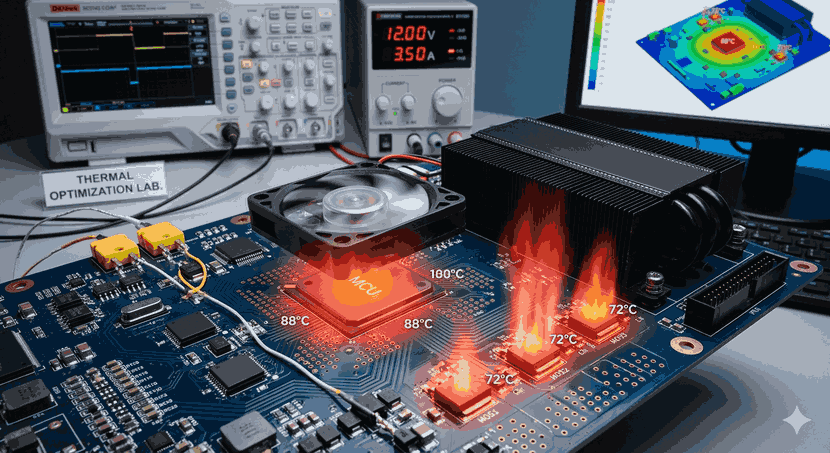
Joule Heating and Advanced Thermal Management Strategies in Modern Electronics

A blog post covering the physical foundations of Joule heating, advanced PCB design techniques for optimizing thermal management in modern circuits, PID-based cooling algorithms, and embedded software control mechanisms.

blog electricity electronics joule joule-heating thermal-management heat-distribution power-electronics

Engineering Analysis and Selection Strategies for Resistor Parameters in Circuit Design

A technical blog post examining critical resistor parameters beyond Ohm's Law in real-world circuit designs, including parasitic effects and engineering calculations.

blog electrical electronics ohms-law circuit-analysis electronic-design resistor-selection engineering

Reduction Methods and Numerical Analysis Approaches in Linear Circuit Analysis

This article examines methods for simplifying complex electrical circuits using Thevenin and Norton theorems, mathematical analysis steps, and Python-based numerical analysis techniques from a detailed engineering perspective.

blog electric electrical-circuits circuit-analysis thevenin-theorem norton-theorem circuit-reduction linear-circuits

Professional Debugging Strategies and In-Depth Analysis Techniques in Embedded Systems Development

A technical article covering professional debugging processes in embedded systems under hardware constraints and real-time requirements, using critical methods such as JTAG/SWD analysis, memory management, and signal integrity.

blog electronics embedded-systems debugging troubleshooting jtag rtos microcontroller hardware

Communication Layers and Protocol Analysis in Modern Smart Home Ecosystems

An in-depth analysis of the technical architectures of Wi-Fi, BLE, and Zigbee protocols, mesh network structures, and software integration processes in smart home ecosystems.

blog iot zigbee wi-fi bluetooth bluetooth-ble communication-protocols electronics mesh-network

Power Management and Efficiency Strategies in Arduino Projects

A comprehensive technical article on reducing energy consumption to the microampere level in Arduino projects through hardware interventions, deep sleep modes, and the use of low-power regulators.

blog electronics arduino power-optimization embedded-systems deep-sleep battery-life avr

Raspberry Pi and Hardware Integration in Industrial Systems

A comprehensive article examining the use of Raspberry Pi in industrial automation, covering technical details from hardware isolation to RTOS kernel optimization and Modbus/MQTT communication protocols.

blog electronics raspberry-pi iiot iot industrial-automation mqtt rtos plc sensor-data-processing python

Architectural Decision Processes in IoT Projects: A Technical Analysis of ESP32 and ESP8266 Microcontrollers

A comprehensive guide providing an optimized selection strategy for IoT projects by technically analyzing the architectural differences, connectivity capabilities, and hardware features of ESP32 and ESP8266 microcontrollers.

blog iot esp32 esp8266 arduino free-rtos microcontroller electronics wi-fi bluetooth