Collective Intelligence and Dynamic Task Allocation in Swarm Robotic Systems

Swarm robotics is a sub-branch of robotics that focuses on decentralized control mechanisms, based on the collective behaviors exhibited by social organisms in nature (ants, bees, or birds). Instead of a single sophisticated robot, the goal is to perform complex tasks through the interaction of a large number of agents with limited capabilities.

Collective Intelligence and Dynamic Task Allocation in Swarm Robotic Systems

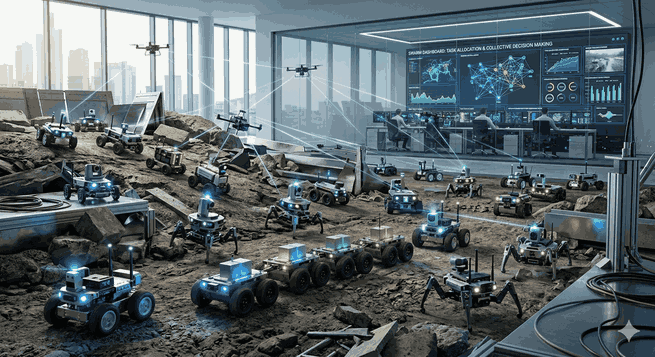
Figure 1: Collective Intelligence and Dynamic Task Allocation in Swarm Robotic Systems.


1. Architectural Foundations: Transition from Centralization to Distributed Systems

In classical robotics approaches, a “Central Control Unit” (MCU) collects all data and sends commands to each individual unit. However, in swarm systems, this leads to a single point of failure that can cause the entire system to crash. In distributed systems, on the other hand, each agent acts based on local information.

Principles of Swarm Robotics:

  • Scalability: An increase in the number of agents should not affect the complexity of the algorithm in a non-linear way.
  • Robustness: The failure of a few robots should not hinder the success of the mission.
  • Locality: Robots should only interact with peers in their immediate vicinity and the environment.

2. Collective Decision-Making Mechanisms

In swarm robots, decisions are not made by a leader; rather, they emerge as a result of individual interactions. This is explained through statistical mechanics and probabilistic models.

Majority Rule and Threshold Models

Agents observe the states of other agents in their environment. If a certain threshold of agents is exhibiting the same behavior, the individual also changes their decision in that direction. This is critical, especially in situations requiring “consensus.”

Probabilistic State Transitions

Robots transition from one state to another using Markov Chain models. For example, in a task involving transporting an object, the probability of calling for more assistance increases based on the weight of the object.


3. Dynamic Task Allocation Algorithms

Task allocation is the process of assigning roles to agents to maximize the total efficiency of the system. The most commonly used methods in the technical literature are:

Pheromone-Based Allocation (Stigmergy)

Inspired by the trail-following behavior of ants. Digital “pheromones” are data packets left by robots on the paths they traverse or on the tasks they complete. High pheromone density signifies the priority of that task or the efficiency of the path.

Market-Based Approaches (Auction-Based)

Agents “bid” for tasks. The robot capable of completing a task at the lowest cost (closest distance or highest energy level) takes on the task.


4. Software and Library Ecosystem

Specialized libraries exist to simulate swarm robotic systems and deploy them to real hardware:

  1. ROS 2 (Robot Operating System): It is the standard for multi-robot communication with its distributed architecture and DDS (Data Distribution Service) layer.
  2. ARGoS: A high-performance physics engine where thousands of robots can be simulated simultaneously.
  3. Swarm-Sim: A Python-based tool used primarily for algorithmic tests and 2D/3D visualizations.
  4. Mesa: A Python library used for agent-based modeling.

5. Technical Implementation: A Simple Task Allocation Simulation with Python

The code block below simulates a basic threshold algorithm where agents make decisions based on task density in their environment.

import numpy as np

class RobotAgent:
    def __init__(self, id, threshold):
        self.id = id
        self.threshold = threshold
        self.state = "IDLE"  # Initial state is idle
        self.energy = 100

    def decide_task(self, stimulus):
        """
        As the stimulus increases, the probability of the robot taking on the task increases.
        P(active) = S^2 / (S^2 + T^2)
        """
        probability = (stimulus**2) / (stimulus**2 + self.threshold**2)
        if np.random.rand() < probability:
            self.state = "WORKING"
        else:
            self.state = "IDLE"

class SwarmController:
    def __init__(self, num_robots):
        self.robots = [RobotAgent(i, np.random.randint(10, 50)) for i in range(num_robots)]
        self.task_demand = 100 # Initial task demand

    def update_system(self):
        active_workers = 0
        for robot in self.robots:
            robot.decide_task(self.task_demand)
            if robot.state == "WORKING":
                active_workers += 1
        
        # Task demand decreases based on the number of workers but increases over time
        self.task_demand = max(0, self.task_demand - active_workers + 5)
        print(f"Active Robots: {active_workers}, Remaining Demand: {self.task_demand}")

# Start the simulation
swarm = SwarmController(50)
for step in range(10):
    swarm.update_system()

6. Communication Protocols and Synchronization

In multi-agent systems, data transmission is generally carried out via UDP (User Datagram Protocol). The “handshake” overhead introduced by TCP leads to significant latency in an environment where hundreds of robots share real-time location data.

Pub/Sub Model

Robots subscribe to specific “topics.” For example, all robots subscribed to the /environment/obstacle channel are immediately notified of any obstacle detected by any agent. At this point, libraries such as Zenoh or FastDDS work integrated with ROS 2 for low-latency communication.


7. Collective Decision-Making: Swarm Intelligence Algorithms

Particle Swarm Optimization (PSO)

A mathematical model used for swarm robots to find the optimal solution (e.g., the source of a gas leak). Each robot (particle) tracks its own best position ($p_{best}$) and the swarm’s global best position ($g_{best}$).

The velocity update formula is as follows:

$$v_{i}(t+1) = w \cdot v_{i}(t) + c_{1} \cdot r_{1} \cdot (p_{best,i} - x_{i}(t)) + c_{2} \cdot r_{2} \cdot (g_{best} - x_{i}(t))$$

Here, $w$ represents the inertia coefficient, and $c_1$ and $c_2$ represent the learning parameters.


8. Swarm Robotics at the Hardware Level

No matter how powerful software algorithms are, physical constraints always exist. In swarm studies, platforms that are low-cost but have high sensor capacity are generally preferred.

  • Kilobots: Miniature robots developed by Harvard University that can be used in the thousands.
  • e-puck2: Micro-robots focused on education and research with a rich sensor set.
  • Crazyflie: An open-source platform ideal for flying robot (drone) swarm studies.

Important Note: In real-world applications, collision avoidance algorithms such as Artificial Potential Fields (APF) or Velocity Obstacles (VO) must be integrated into the task allocation code to prevent robots from colliding with each other.


9. Future Perspective: Heterogeneous Swarms

Current research is shifting from “homogeneous” swarms, where all robots have the same characteristics, to “heterogeneous” swarms with different capabilities (some flying, some ground-based, some with high processing power). In these systems, task allocation becomes not just distance-based, but capability-aware.

For example, in a search and rescue scenario, drones are optimized to scan the area (reconnaissance mission), while tracked robots are optimized to transport objects under debris (manipulation mission).


10. Conclusion and Assessment

Swarm robotic systems are an engineering marvel where individual simplicity transforms into collective complexity. Dynamic task allocation provided by multi-agent algorithms increases the flexibility and survival capability of the system. On the software side, modern libraries like ROS 2 and mathematical models like PSO enable these systems to move from theory to practice. In the future, these systems will take on critical roles across a wide spectrum, from agricultural automation to the defense industry, and even to microrobots delivering medication within the human body.

#blog #robotics #autonomous #swarm-robotics #multi-agent-systems #task-allocation #ros2 #collective-decision-making #distributed-systems #swarm-intelligence #intelligent-robots

Related Contents

Modern Rechargeable Battery Technologies and Electrochemical Performance Analysis

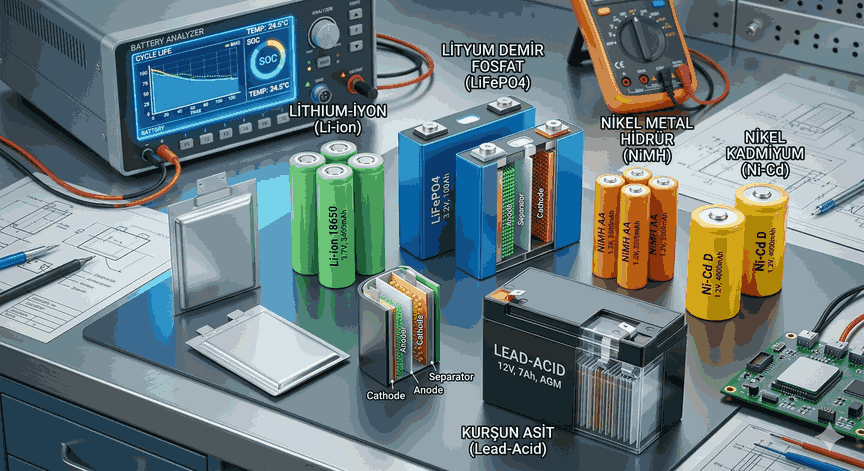
This blog post, which details modern battery technologies and the electrochemical operating principles of these systems, examines the technical specifications, performance metrics, and usage advantages of Li-ion, LiFePO4, NiMH, Ni-Cd, and lead-acid batteries from an engineering perspective.

blog electronics battery-technologies lithium-ion li-ion battery-performance lifepo4 nickel-metal-hydride rechargeable-batteries battery-management-systems ni-cd ni-mh energy-systems battery-analysis

Post-Exploitation Strategies and In-Depth Analysis in Internal Network Penetration Tests

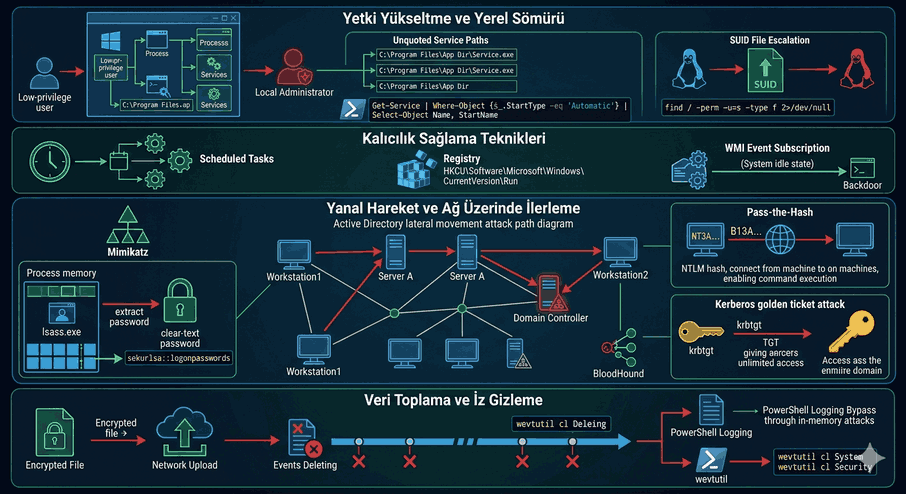
This article analyzes post-exploitation techniques in internal network penetration tests, including privilege escalation methods, persistence mechanisms, and lateral movement processes within Active Directory with technical code examples. Professional tools such as Mimikatz, Impacket, and BloodHound are covered.

blog cyber-security network-security information-security cloud-security network privilege-escalation penetration-testing red-team post-exploitation active-directory lateral-movement intranet internal-network local-network

OWASP Top 10 Security Strategies in .NET 8 Projects

A critical guide for secure coding in .NET 8 projects! Discover how to protect your application using tools like EF Core, Data Protection API, and policy-based authorization against OWASP Top 10 threats with technical examples. Learn fundamental strategies for secure software architecture.

blog cyber-security dotnet owasp network-security information-security cloud-security

Modern Network Strategies with Zero Trust Architecture

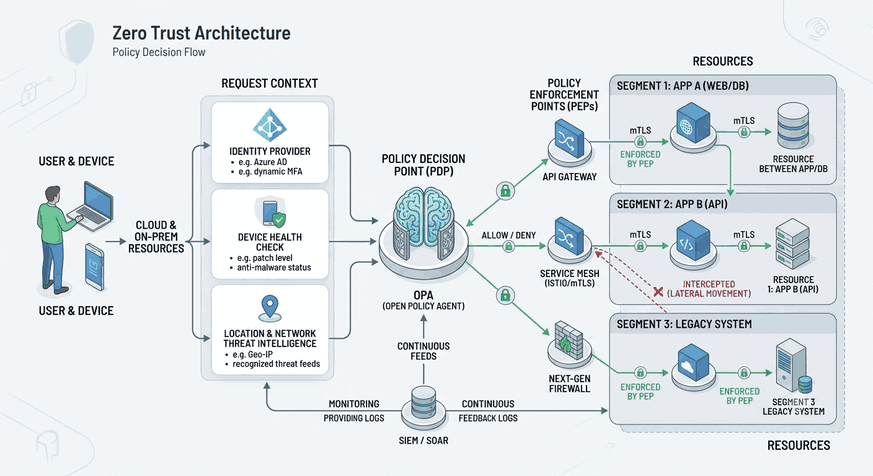
Zero Trust architecture is a modern security strategy that dismantles the 'default trust' paradigm in today's hybrid world, where network boundaries have become increasingly blurred. This approach treats every user, device, and service as a potential risk factor—whether inside or outside the network—by subjecting access requests to continuous, contextual, and rigorous verification.

blog cyber-security zero-trust network-security information-security cloud-security

Veri Analizi Okulu: Data Science and Artificial Intelligence Training

Operating under the coordination of Yükseköğretim Kurumu (YÖK), the Veri Analizi Okulu (VAO) combines theoretical knowledge with practice through modules in Basic Statistics, Computational Social Sciences, Panel Data Analysis, Artificial Intelligence, Digital Humanities, and Psychometrics. Check out our blog post for both a high-quality education and your career.

blog veri-analizi-okulu vao basic-statistics computational-social-sciences panel-data-analysis artificial-intelligence ai-and-facilitating-tools ai ai-and-machine-learning digital-humanities psychometrics

Nur-o-link: Remote-Controlled Robotic Arm and Vehicle System

The Nur-o-link project is an innovative robotics study that combines remote-controllable robotic arm and autonomous vehicle features, highlighting the interaction between hardware and software.

blog robotic robotic-arm robotik iot embedded cplusplus arduino esp32 remote-control software-hardware rex-8in1-v2 electronic

Gungor-robot-car: ESP32 Camera-Controlled Robot Car

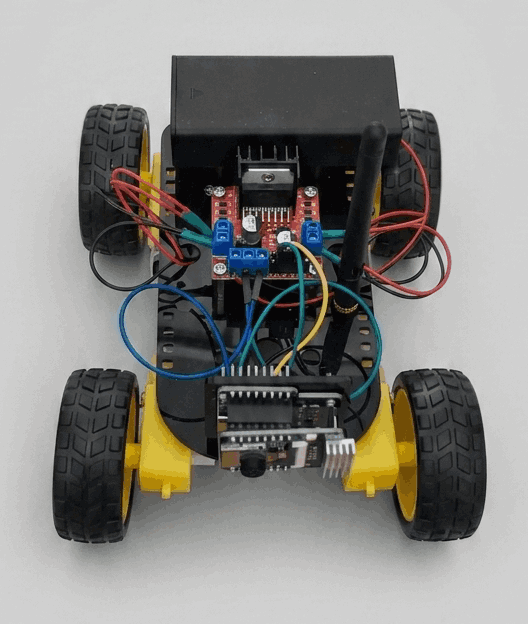
A robotic vehicle project capable of live video streaming via WiFi and remote control through a browser-based interface, powered by the ESP32-WROVER module.

blog robotics robotic iot embedded cplusplus arduino esp32 esp32-cam esp32-camera remote-control robotic-car electronic electronics software-hardware

Engineering Fundamentals and Mechanical Analysis of Flexible Structures in Soft Robotic Systems

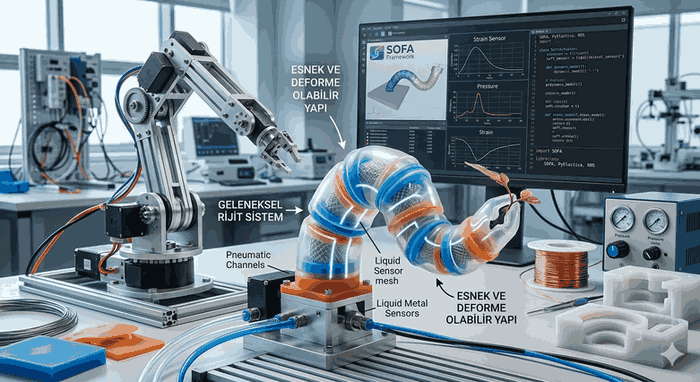
A high-technical-depth blog post focusing on control algorithms and material mechanics, exploring the transformation of traditional rigid robotic systems through flexible elastomers and bio-mimetic approaches.

blog robotics soft-robotics mechatronics control-systems simulation engineering

The Evolution of Robotic Systems and Modern Migration Strategies to the ROS 2 Ecosystem

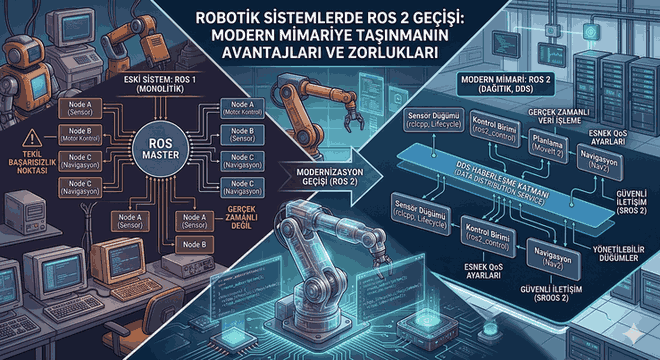
This blog post addresses the architectural changes in the transition process from ROS 1 to ROS 2, the technical advantages of the DDS-based communication layer, and system modernization strategies using modern software libraries in a technical language.

blog robotic robotics autonomous ros2 dds industrial-automation real-time-systems control-systems microservices

Agriculture 4.0 and Next-Generation Approaches in Autonomous Robotic Systems

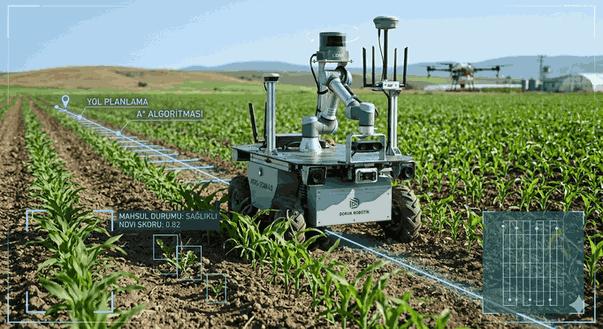
A blog post covering navigation strategies for autonomous vehicles in the Agriculture 4.0 ecosystem, deep learning-based crop monitoring algorithms, and ROS 2-based software architectures.

blog robotics autonomous agriculture-4-0 path-planning crop-monitoring ros2 smart-farming precision-agriculture ai lidar image-processing sensor-fusion edge-computing

Topological Approaches in Data Science and Graph Theory-Based Network Analysis with Gephi

This technical blog post provides an in-depth analysis of how to visualize complex relationships in big data sets using graph theory and the Gephi software, accompanied by mathematical metrics and software libraries.

blog gephi network-analysis data-visualization graph-theory network-analysis python data-science centrality-metrics complex-systems

Deep Learning-Based Object Detection and Manipulation Techniques in Autonomous Robotic Systems

A technical review and software integration of modern robotic systems equipped with deep learning architectures, 6-DoF grasping strategies, and real-time object recognition algorithms.

blog robotics autonomous ai python pytorch ros2 yolo opencv autonomous-robots deep-learning machine-learning

Deep Dive into the Fundamental Building Blocks of Electronic Design: Engineering Foundations of Passive Component Selection

This blog post covers the non-ideal parasitic parameters, frequency-dependent behaviors, and modern engineering selection criteria for capacitors and inductors, which are critical in electronic circuit design, along with Python-based analysis methods.

blog electronics passive-components capacitor-selection inductor-parameters esr esl frequency-analysis circuit-simulation

Advanced Spatial Analysis and Data Science Integration in Modern Geographic Information Systems

A blog post covering data mining in the ArcGIS ecosystem, Python-based automation processes, and spatial statistics methods to transform raw location data into strategic decision support mechanisms.

blog arcgis spatial-analysis geographic-information-systems python arcpy mapping spatial-statistics data-science big-data

Superposition Theorem and Analytical Investigation of Multi-Source Linear Circuits

A blog post examining the theoretical foundations, mathematical modeling, and Python-based simulation approaches of the Superposition Theorem, which analyzes the effect of each source individually and combines them in linear circuits containing multiple independent sources.

blog electric electronics superposition-theorem circuit-analysis linear-systems circuit-solution kirchhoff-laws

Mathematical Architecture of Complex Circuits and Nodal Analysis Method

Theoretical analysis of the nodal analysis method based on Kirchhoff's Current Law, the supernode concept, and modeling of circuit solutions with computational engineering approaches using the NumPy library.

blog electric electronic circuit-analysis kirchhoff-laws nodal-analysis numpy circuit-simulation circuit-theory supernode

Joule Heating and Advanced Thermal Management Strategies in Modern Electronics

A blog post covering the physical foundations of Joule heating, advanced PCB design techniques for optimizing thermal management in modern circuits, PID-based cooling algorithms, and embedded software control mechanisms.

blog electricity electronics joule joule-heating thermal-management heat-distribution power-electronics

Engineering Analysis and Selection Strategies for Resistor Parameters in Circuit Design

A technical blog post examining critical resistor parameters beyond Ohm's Law in real-world circuit designs, including parasitic effects and engineering calculations.

blog electrical electronics ohms-law circuit-analysis electronic-design resistor-selection engineering

Reduction Methods and Numerical Analysis Approaches in Linear Circuit Analysis

This article examines methods for simplifying complex electrical circuits using Thevenin and Norton theorems, mathematical analysis steps, and Python-based numerical analysis techniques from a detailed engineering perspective.

blog electric electrical-circuits circuit-analysis thevenin-theorem norton-theorem circuit-reduction linear-circuits

Professional Debugging Strategies and In-Depth Analysis Techniques in Embedded Systems Development

A technical article covering professional debugging processes in embedded systems under hardware constraints and real-time requirements, using critical methods such as JTAG/SWD analysis, memory management, and signal integrity.

blog electronics embedded-systems debugging troubleshooting jtag rtos microcontroller hardware

Communication Layers and Protocol Analysis in Modern Smart Home Ecosystems

An in-depth analysis of the technical architectures of Wi-Fi, BLE, and Zigbee protocols, mesh network structures, and software integration processes in smart home ecosystems.

blog iot zigbee wi-fi bluetooth bluetooth-ble communication-protocols electronics mesh-network

Power Management and Efficiency Strategies in Arduino Projects

A comprehensive technical article on reducing energy consumption to the microampere level in Arduino projects through hardware interventions, deep sleep modes, and the use of low-power regulators.

blog electronics arduino power-optimization embedded-systems deep-sleep battery-life avr

Raspberry Pi and Hardware Integration in Industrial Systems

A comprehensive article examining the use of Raspberry Pi in industrial automation, covering technical details from hardware isolation to RTOS kernel optimization and Modbus/MQTT communication protocols.

blog electronics raspberry-pi iiot iot industrial-automation mqtt rtos plc sensor-data-processing python

Architectural Decision Processes in IoT Projects: A Technical Analysis of ESP32 and ESP8266 Microcontrollers

A comprehensive guide providing an optimized selection strategy for IoT projects by technically analyzing the architectural differences, connectivity capabilities, and hardware features of ESP32 and ESP8266 microcontrollers.

blog iot esp32 esp8266 arduino free-rtos microcontroller electronics wi-fi bluetooth