Raspberry Pi and Hardware Integration in Industrial Systems

The traditional world of industrial automation has long been dominated by the rigid and closed ecosystem of PLC (Programmable Logic Controller) systems. However, with the Industry 4.0 wave, the presence of open-source hardware and high-level programming languages on the field has evolved from a hobby project into a professional necessity. With its Broadcom-based SoC architecture and rich GPIO (General Purpose Input/Output) capabilities, Raspberry Pi offers solutions across a wide scale, from the prototyping phase to edge computing controllers.

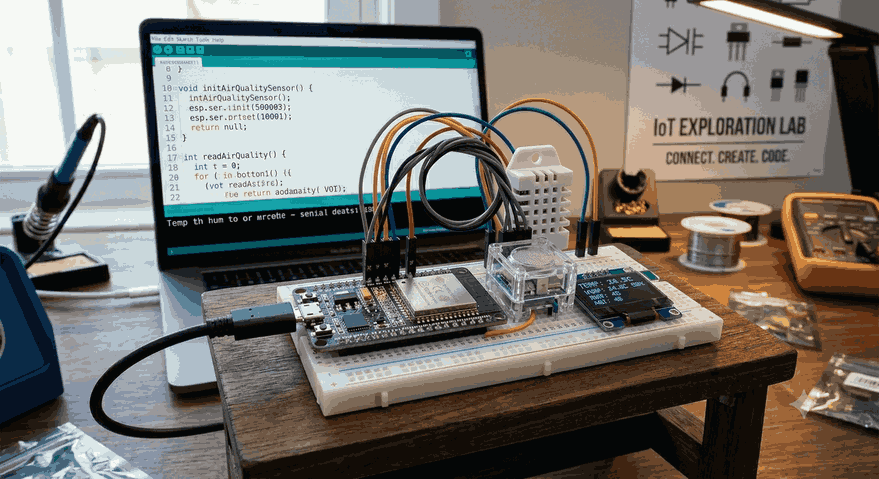
Raspberry Pi and Hardware Integration in Industrial Systems

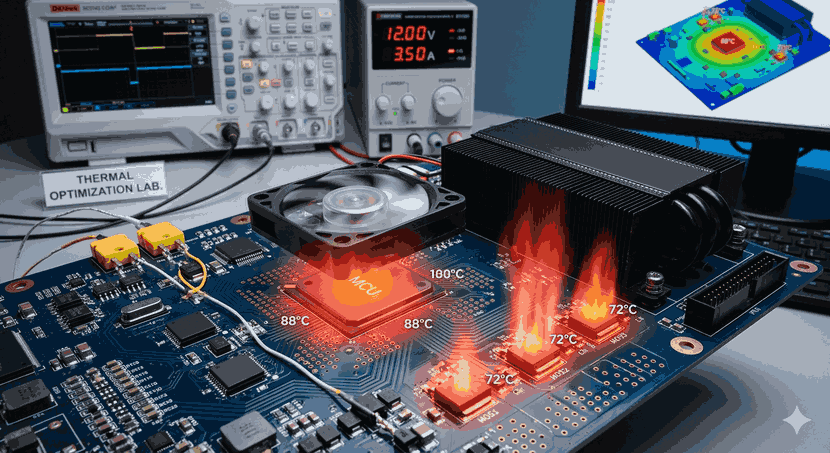
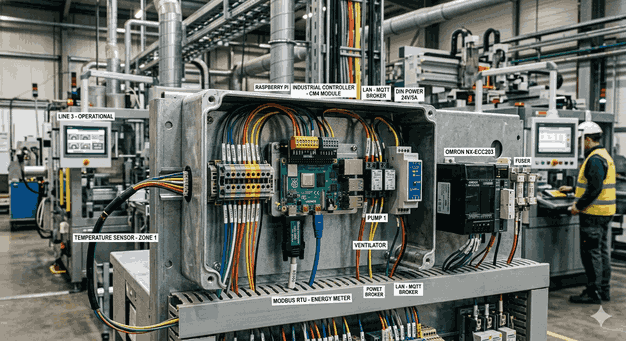
Figure 1: Raspberry Pi and Hardware Integration in Industrial Systems.


Adaptation of Embedded System Architecture to Industrial Standards

The biggest obstacle to using Raspberry Pi in industrial environments is not the hardware itself, but environmental isolation and stability. The sensitive 3.3V GPIO pins of a standard model are vulnerable to 24V logic levels and high electromagnetic interference (EMI) in industrial fields. At this point, for professional applications, carrier boards based on Compute Module 4 (CM4) that offer galvanic isolation and are suitable for DIN rail mounting should be preferred.

In an industrial Raspberry Pi solution, the architecture consists of the following layers:

  1. Power Layer: 9-30V DC input range, reverse polarity protection, and high-efficiency buck-converter circuits.
  2. Isolation Layer: Use of optocouplers (e.g., PC817 or 6N137) on inputs and outputs.
  3. Communication Layer: Specialized transceiver units for RS485, RS232, and CAN-Bus protocols.

Data Communication Protocols and Field Integration

In industrial automation, Raspberry Pi is not just a controller, but also a gateway. Most devices used in modern factories utilize Modbus TCP/RTU or OPC UA protocols.

Modbus RTU Implementation (Python/C++)

To establish Modbus communication over RS485 on a Raspberry Pi, the minimalmodbus (Python) or libmodbus (C/C++) libraries are the gold standard. Below is a professional-grade Python script example that reads data from an energy analyzer:

import minimalmodbus
import serial

# Instrumentation settings
instrument = minimalmodbus.Instrument('/dev/ttyUSB0', 1) # Slave ID: 1
instrument.serial.baudrate = 9600
instrument.serial.bytesize = 8
instrument.serial.parity   = serial.PARITY_EVEN
instrument.serial.stopbits = 1
instrument.serial.timeout  = 0.5
instrument.mode = minimalmodbus.MODE_RTU

try:
    # Reading temperature data via Holding Register (Address 0x0001)
    temperature = instrument.read_register(1, number_of_decimals=1, functioncode=3)
    print(f"Field Temperature Data: {temperature} C")
except Exception as e:
    print(f"Communication Error: {str(e)}")

Software Architecture: Real-Time Operating Systems (RTOS)

A standard Raspberry Pi OS (Debian-based) operates on a “best-effort” principle. This means it cannot guarantee exactly when a task will be executed. For industrial-precision control loops (e.g., driving a servo motor at 10ms intervals), it is essential to use a kernel with the PREEMPT_RT patch applied.

Kernel Optimization and Stability

In industrial systems, SD card corruption is one of the biggest risks. To overcome this problem:

  • ReadOnly File System: Running the operating system in read-only mode to prevent data corruption during sudden power outages.
  • OverlayFS: Keeping changes in RAM and not writing them to the disk.
  • Watchdog Timer: Activating internal units that automatically perform a hardware reset if the system freezes.

Advanced Sensor Data Processing and MQTT Integration

The key element that transforms Raspberry Pi into an IIoT (Industrial Internet of Things) device is its ability to transmit data collected from the field to the cloud or a local SCADA system. Transporting JSON-formatted data via the MQTT protocol ensures low bandwidth consumption and high reliability.

import paho.mqtt.client as mqtt
import json
import time

MQTT_BROKER = "192.168.1.100"
MQTT_TOPIC = "factory/machine1/telemetry"

client = mqtt.Client()
client.connect(MQTT_BROKER, 1883, 60)

def publish_sensor_data(sensor_id, value):
    payload = {
        "timestamp": int(time.time()),
        "sensor_id": sensor_id,
        "value": value,
        "unit": "Celsius"
    }
    client.publish(MQTT_TOPIC, json.dumps(payload))

# Sending data within a loop
while True:
    # Data coming from AI or logic layer
    sample_value = 45.2 
    publish_sensor_data("TEMP_01", sample_value)
    time.sleep(5)

AI-Assisted Predictive Maintenance

The CPU power of Raspberry Pi 4 and 5 series is sufficient to run lightweight artificial intelligence models at the edge. By using TensorFlow Lite or ONNX Runtime, it is possible to perform fault detection based on a motor’s vibration data.

High-frequency data coming from an accelerometer (such as MPU6050) undergoes spectral analysis via Fast Fourier Transform (FFT). If the harmonics in the spectrum deviate from normal values, the system automatically sends a warning to the operator or places the line into safe mode.

Important Technical Notes

  • Thermal Management: The internal temperature of industrial panels can rise to 50-60°C. To prevent the Raspberry Pi from “throttling” (reducing performance), metal cases with passive heat sinks or active fan control systems should be used.
  • EMC Compliance: Protecting the device with CE/FCC certified industrial shields will filter the noise created by large motor drives (VFD) in the environment.
  • Security: Changing default usernames, customizing the SSH port, and disabling unnecessary services are the first steps of a cybersecurity architecture.

Database and Local Logging Strategies

In cases where internet connectivity is lost, using a local database (Edge DB) is critical to prevent data loss. InfluxDB (time-series database) and Grafana for visualization work very efficiently on Raspberry Pi.

  1. InfluxDB: Stores sensor data with timestamps.
  2. Grafana: Transforms this data into real-time graphs and generates alarms when defined thresholds are exceeded.
  3. SQLite: A lightweight SQL engine preferred for simpler configuration data and device settings.

Conclusion: A Hybrid Future

Raspberry Pi-based industrial automation complements the areas where traditional PLCs fall short—“data analytics, network communication, and flexible programming”—rather than replacing them entirely. Engineers who combine the library richness of Python with the harsh conditions of the industrial field can build much lower-cost and significantly smarter control systems. The keyword in this transformation is not hardware, but the software architecture that can optimize this hardware according to industrial standards.

#blog #electronics #raspberry-pi #iiot #iot #industrial-automation #mqtt #rtos #plc #sensor-data-processing #python

Related Contents

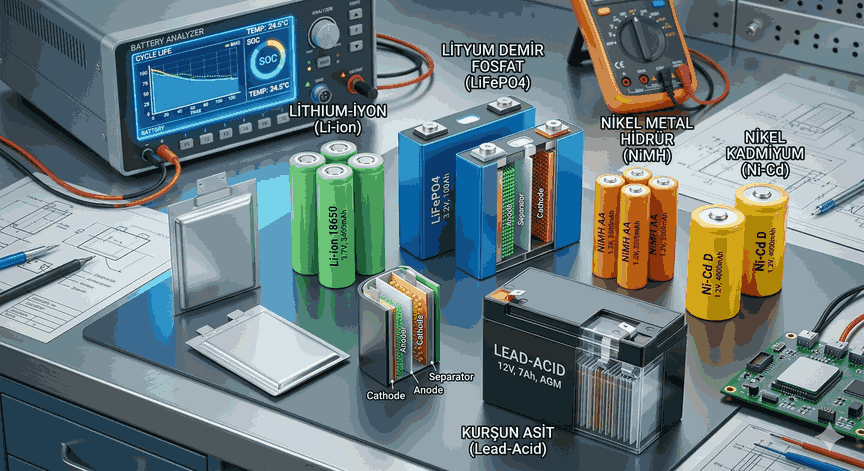
Modern Rechargeable Battery Technologies and Electrochemical Performance Analysis

This blog post, which details modern battery technologies and the electrochemical operating principles of these systems, examines the technical specifications, performance metrics, and usage advantages of Li-ion, LiFePO4, NiMH, Ni-Cd, and lead-acid batteries from an engineering perspective.

blog electronics battery-technologies lithium-ion li-ion battery-performance lifepo4 nickel-metal-hydride rechargeable-batteries battery-management-systems ni-cd ni-mh energy-systems battery-analysis

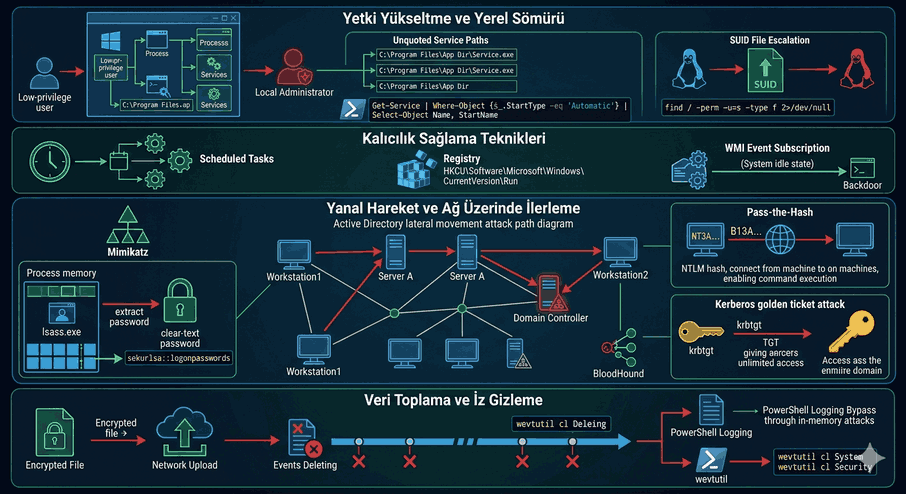
Post-Exploitation Strategies and In-Depth Analysis in Internal Network Penetration Tests

This article analyzes post-exploitation techniques in internal network penetration tests, including privilege escalation methods, persistence mechanisms, and lateral movement processes within Active Directory with technical code examples. Professional tools such as Mimikatz, Impacket, and BloodHound are covered.

blog cyber-security network-security information-security cloud-security network privilege-escalation penetration-testing red-team post-exploitation active-directory lateral-movement intranet internal-network local-network

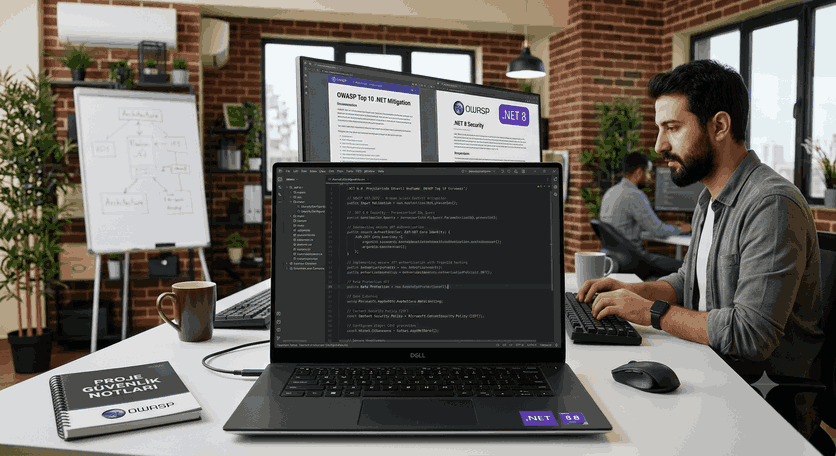
OWASP Top 10 Security Strategies in .NET 8 Projects

A critical guide for secure coding in .NET 8 projects! Discover how to protect your application using tools like EF Core, Data Protection API, and policy-based authorization against OWASP Top 10 threats with technical examples. Learn fundamental strategies for secure software architecture.

blog cyber-security dotnet owasp network-security information-security cloud-security

Modern Network Strategies with Zero Trust Architecture

Zero Trust architecture is a modern security strategy that dismantles the 'default trust' paradigm in today's hybrid world, where network boundaries have become increasingly blurred. This approach treats every user, device, and service as a potential risk factor—whether inside or outside the network—by subjecting access requests to continuous, contextual, and rigorous verification.

blog cyber-security zero-trust network-security information-security cloud-security

Veri Analizi Okulu: Data Science and Artificial Intelligence Training

Operating under the coordination of Yükseköğretim Kurumu (YÖK), the Veri Analizi Okulu (VAO) combines theoretical knowledge with practice through modules in Basic Statistics, Computational Social Sciences, Panel Data Analysis, Artificial Intelligence, Digital Humanities, and Psychometrics. Check out our blog post for both a high-quality education and your career.

blog veri-analizi-okulu vao basic-statistics computational-social-sciences panel-data-analysis artificial-intelligence ai-and-facilitating-tools ai ai-and-machine-learning digital-humanities psychometrics

Nur-o-link: Remote-Controlled Robotic Arm and Vehicle System

The Nur-o-link project is an innovative robotics study that combines remote-controllable robotic arm and autonomous vehicle features, highlighting the interaction between hardware and software.

blog robotic robotic-arm robotik iot embedded cplusplus arduino esp32 remote-control software-hardware rex-8in1-v2 electronic

Gungor-robot-car: ESP32 Camera-Controlled Robot Car

A robotic vehicle project capable of live video streaming via WiFi and remote control through a browser-based interface, powered by the ESP32-WROVER module.

blog robotics robotic iot embedded cplusplus arduino esp32 esp32-cam esp32-camera remote-control robotic-car electronic electronics software-hardware

Engineering Fundamentals and Mechanical Analysis of Flexible Structures in Soft Robotic Systems

A high-technical-depth blog post focusing on control algorithms and material mechanics, exploring the transformation of traditional rigid robotic systems through flexible elastomers and bio-mimetic approaches.

blog robotics soft-robotics mechatronics control-systems simulation engineering

Collective Intelligence and Dynamic Task Allocation in Swarm Robotic Systems

A technical blog post examining the technical foundations, algorithmic approaches, and software libraries for collective intelligence, dynamic task sharing, and distributed control mechanisms in swarm robotic systems.

blog robotics autonomous swarm-robotics multi-agent-systems task-allocation ros2 collective-decision-making distributed-systems swarm-intelligence intelligent-robots

The Evolution of Robotic Systems and Modern Migration Strategies to the ROS 2 Ecosystem

This blog post addresses the architectural changes in the transition process from ROS 1 to ROS 2, the technical advantages of the DDS-based communication layer, and system modernization strategies using modern software libraries in a technical language.

blog robotic robotics autonomous ros2 dds industrial-automation real-time-systems control-systems microservices

Agriculture 4.0 and Next-Generation Approaches in Autonomous Robotic Systems

A blog post covering navigation strategies for autonomous vehicles in the Agriculture 4.0 ecosystem, deep learning-based crop monitoring algorithms, and ROS 2-based software architectures.

blog robotics autonomous agriculture-4-0 path-planning crop-monitoring ros2 smart-farming precision-agriculture ai lidar image-processing sensor-fusion edge-computing

Topological Approaches in Data Science and Graph Theory-Based Network Analysis with Gephi

This technical blog post provides an in-depth analysis of how to visualize complex relationships in big data sets using graph theory and the Gephi software, accompanied by mathematical metrics and software libraries.

blog gephi network-analysis data-visualization graph-theory network-analysis python data-science centrality-metrics complex-systems

Deep Learning-Based Object Detection and Manipulation Techniques in Autonomous Robotic Systems

A technical review and software integration of modern robotic systems equipped with deep learning architectures, 6-DoF grasping strategies, and real-time object recognition algorithms.

blog robotics autonomous ai python pytorch ros2 yolo opencv autonomous-robots deep-learning machine-learning

Deep Dive into the Fundamental Building Blocks of Electronic Design: Engineering Foundations of Passive Component Selection

This blog post covers the non-ideal parasitic parameters, frequency-dependent behaviors, and modern engineering selection criteria for capacitors and inductors, which are critical in electronic circuit design, along with Python-based analysis methods.

blog electronics passive-components capacitor-selection inductor-parameters esr esl frequency-analysis circuit-simulation

Advanced Spatial Analysis and Data Science Integration in Modern Geographic Information Systems

A blog post covering data mining in the ArcGIS ecosystem, Python-based automation processes, and spatial statistics methods to transform raw location data into strategic decision support mechanisms.

blog arcgis spatial-analysis geographic-information-systems python arcpy mapping spatial-statistics data-science big-data

Superposition Theorem and Analytical Investigation of Multi-Source Linear Circuits

A blog post examining the theoretical foundations, mathematical modeling, and Python-based simulation approaches of the Superposition Theorem, which analyzes the effect of each source individually and combines them in linear circuits containing multiple independent sources.

blog electric electronics superposition-theorem circuit-analysis linear-systems circuit-solution kirchhoff-laws

Mathematical Architecture of Complex Circuits and Nodal Analysis Method

Theoretical analysis of the nodal analysis method based on Kirchhoff's Current Law, the supernode concept, and modeling of circuit solutions with computational engineering approaches using the NumPy library.

blog electric electronic circuit-analysis kirchhoff-laws nodal-analysis numpy circuit-simulation circuit-theory supernode

Joule Heating and Advanced Thermal Management Strategies in Modern Electronics

A blog post covering the physical foundations of Joule heating, advanced PCB design techniques for optimizing thermal management in modern circuits, PID-based cooling algorithms, and embedded software control mechanisms.

blog electricity electronics joule joule-heating thermal-management heat-distribution power-electronics

Engineering Analysis and Selection Strategies for Resistor Parameters in Circuit Design

A technical blog post examining critical resistor parameters beyond Ohm's Law in real-world circuit designs, including parasitic effects and engineering calculations.

blog electrical electronics ohms-law circuit-analysis electronic-design resistor-selection engineering

Reduction Methods and Numerical Analysis Approaches in Linear Circuit Analysis

This article examines methods for simplifying complex electrical circuits using Thevenin and Norton theorems, mathematical analysis steps, and Python-based numerical analysis techniques from a detailed engineering perspective.

blog electric electrical-circuits circuit-analysis thevenin-theorem norton-theorem circuit-reduction linear-circuits

Professional Debugging Strategies and In-Depth Analysis Techniques in Embedded Systems Development

A technical article covering professional debugging processes in embedded systems under hardware constraints and real-time requirements, using critical methods such as JTAG/SWD analysis, memory management, and signal integrity.

blog electronics embedded-systems debugging troubleshooting jtag rtos microcontroller hardware

Communication Layers and Protocol Analysis in Modern Smart Home Ecosystems

An in-depth analysis of the technical architectures of Wi-Fi, BLE, and Zigbee protocols, mesh network structures, and software integration processes in smart home ecosystems.

blog iot zigbee wi-fi bluetooth bluetooth-ble communication-protocols electronics mesh-network

Power Management and Efficiency Strategies in Arduino Projects

A comprehensive technical article on reducing energy consumption to the microampere level in Arduino projects through hardware interventions, deep sleep modes, and the use of low-power regulators.

blog electronics arduino power-optimization embedded-systems deep-sleep battery-life avr

Architectural Decision Processes in IoT Projects: A Technical Analysis of ESP32 and ESP8266 Microcontrollers

A comprehensive guide providing an optimized selection strategy for IoT projects by technically analyzing the architectural differences, connectivity capabilities, and hardware features of ESP32 and ESP8266 microcontrollers.

blog iot esp32 esp8266 arduino free-rtos microcontroller electronics wi-fi bluetooth