We use cookies and other tracking technologies to improve your browsing experience on our website, to show you personalized content and targeted ads, to analyze our website traffic, and to understand where our visitors are coming from.
⚠️
GDPR & Cookie Policy Notice
In accordance with data protection regulations; the use of mandatory cookies is required for the core functions of our website to operate, ensure data security, and perform analytics. If you reject the use of cookies, it is not possible to benefit from the services on our website due to technical limitations and data synchronization interruptions. You must consent to the use of cookies to access the content on our site.
Veri Analizi Okulu: Data Science and Artificial Intelligence Training
Data has become the most valuable strategic resource of our time. In this new era where information is equated with power, moving beyond just reading data to understanding, interpreting, and transforming it into innovative solutions has become the most critical competence in the professional world. Established under the auspices of Yükseköğretim Kurumu (YÖK) to cultivate the qualified human resources that will build Turkey’s digital future, the Veri Analizi Okulu (VAO) offers a comprehensive learning opportunity precisely for this need.
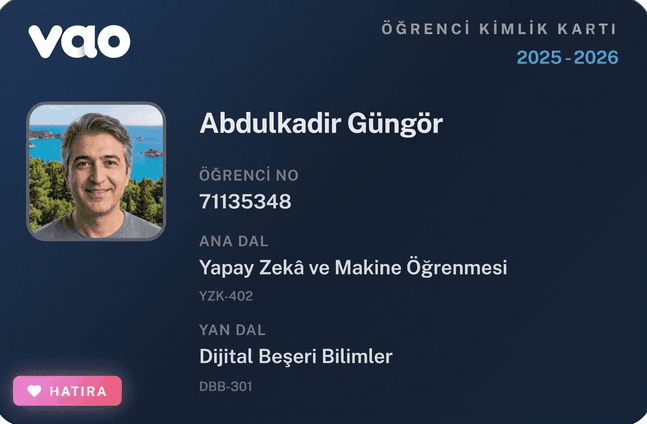
Figure 1: Veri Analizi Okulu Student Card.
What is Veri Analizi Okulu?
Veri Analizi Okulu is an educational program that starts in October and lasts until May, in which candidates selected according to certain criteria from applications made across the country are included. The main executive institution of the program is Yükseköğretim Kurumu (YÖK); Boğaziçi University, ITU, METU, and Marmara University are the coordinator universities of the program.
Application and Evaluation
The program accepts students with an evaluation model that prioritizes quality and competence, taking into account the characteristics of the candidates such as their student status, grade point average, educational background, module compatibility, and motivation letter.
Structure of the Program
The training process consists of three main stages:
I. Common Core Course
The “Introduction to Statistics and Data Analysis” course is compulsory for all participants.
Within the scope of this course, common technical concepts and the statistical infrastructure required for future modules are provided.
II. Introduction to Coding Courses
Specialized coding training is provided to participants according to the chosen specialization module:
Coding Language
Modules
R-Based
Basic Statistics, Psychometrics, Panel Data
Python-Based
Computational Social Sciences, Digital Humanities, Artificial Intelligence (All modules)
III. Specialization Modules
1. Basic Statistics
Data and variable types
Data entry, editing, visualization with Excel, SPSS, R
Chi-square test, T-test, ANOVA, Correlation
Regression models
Clustering
2. Computational Social Sciences
Natural Language Processing (NLP): Basic concepts and applications
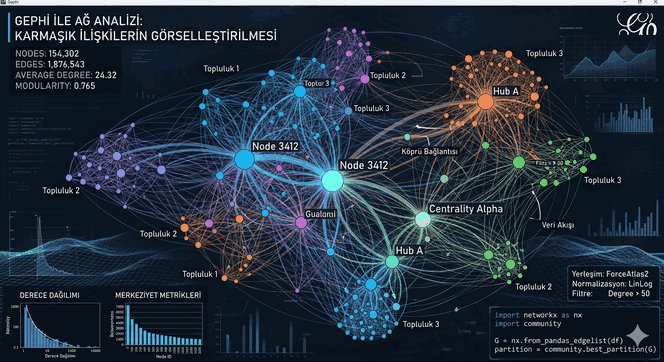
Network analysis
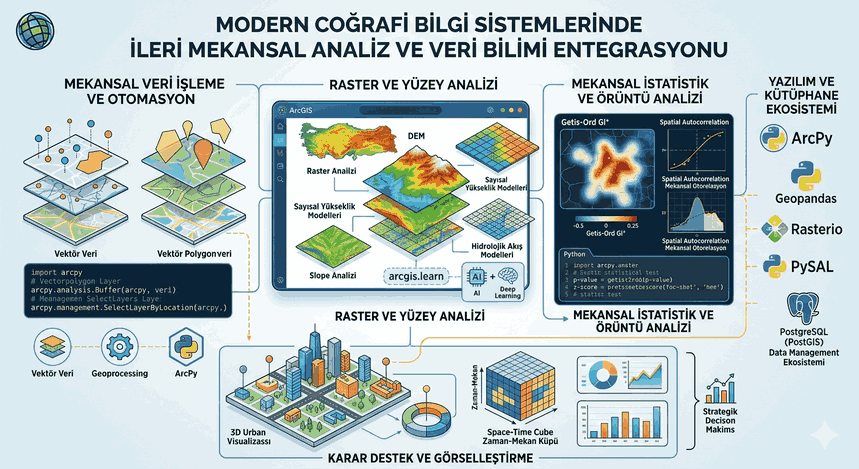
Spatial data analysis and GIS
Text processing with Python
Data visualization
3. Panel Data Analysis
Cross-sectional data analysis with R survey package
Regression with cross-sectional data
Endogeneity problem
Fixed effects vs. random effects
Regression applications with panel data
4. Artificial Intelligence
Artificial Intelligence and Facilitator Tools: A module that teaches the use of artificial intelligence concepts and tools.
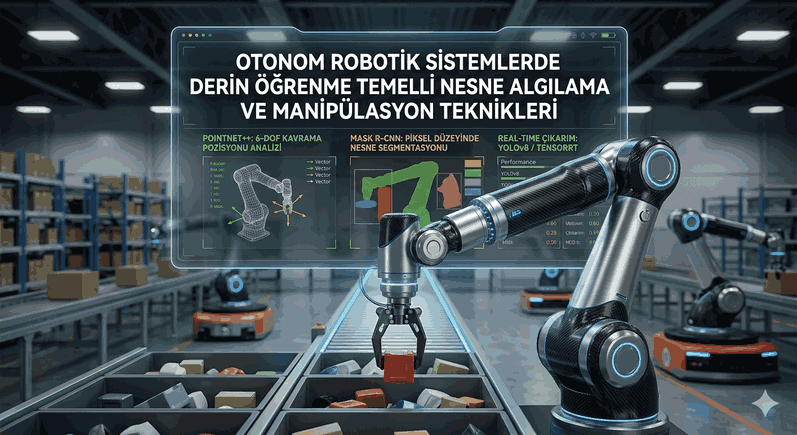
Artificial Intelligence and Machine Learning: Module for software developers. Content: Generative AI (GenAI), Large language models (LLM), Machine learning algorithms (SVM, Random Forest, Naive Bayes), Classification, regression with clustering methods, RAG systems and AI agents, supervised learning, unsupervised learning, reinforcement learning, etc.
5. Digital Humanities
Text mining, Natural Language Processing (NLP)
Spatial data analysis and GIS, Data visualization
Digital resource processing, Network Analysis, Digital history
6. Psychometrics
Validity and reliability in measurement tools
Rasch models
Item Response Theory (IRT)
Multidimensional scale development
Success Criteria
Attendance requirements, quizzes, assignments, and a final exam are among the success criteria of the program.